The Great Database Divide: SQL vs NoSQL in Scalable System Design
When your startup's user base explodes from 1,000 to 1 million overnight, your database choice becomes the difference between success and a spectacular crash. Here's how to choose wisely.*
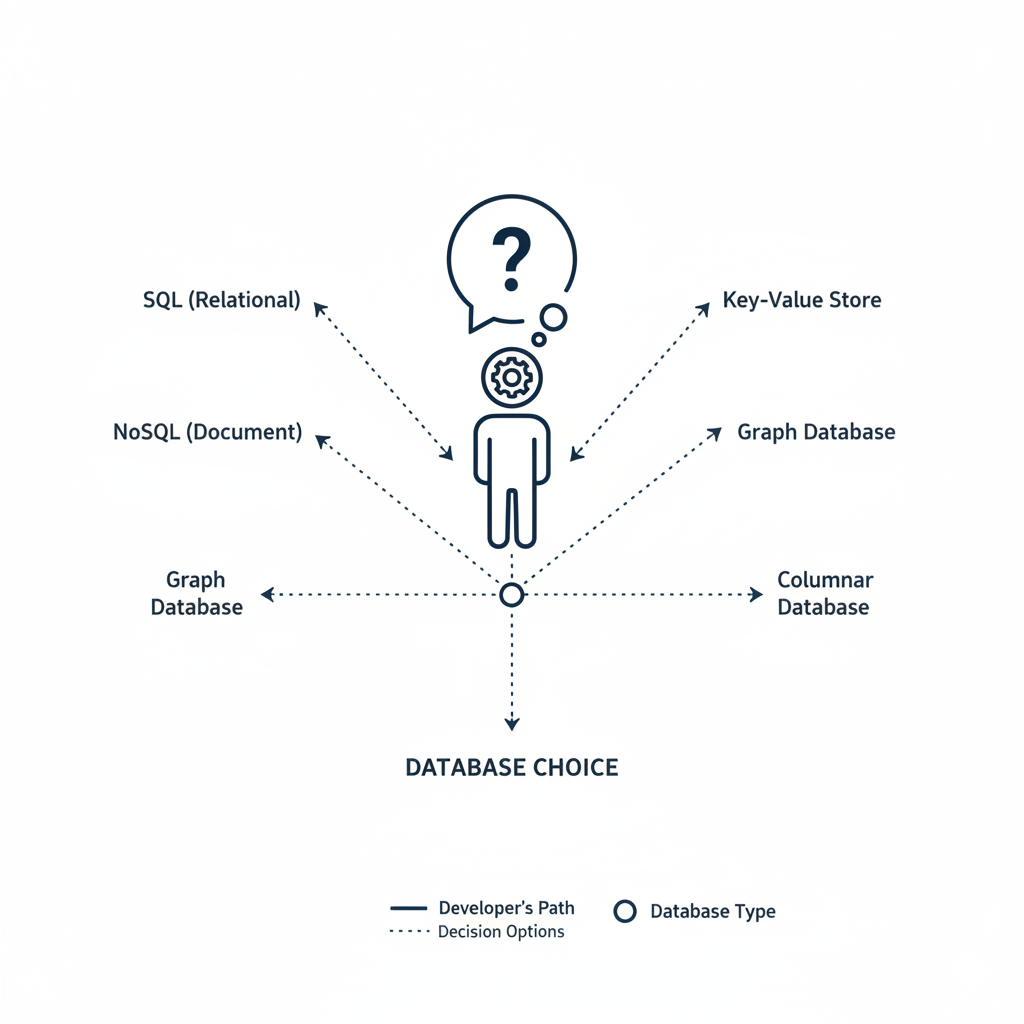
Introduction: The Database Crossroads Every Developer Faces
Picture this: You're building the next big social platform. Your MVP works perfectly with a simple PostgreSQL setup, handling a few hundred users without breaking a sweat. Then lightning strikes—your app goes viral. Suddenly, you're dealing with millions of users, terabytes of data, and your once-reliable database is gasping for air like a fish out of water.
This scenario plays out daily in tech companies worldwide, and it all boils down to one critical decision: SQL or NoSQL?
The choice between relational (SQL) and non-relational (NoSQL) databases isn't just a technical preference—it's an architectural decision that will shape your system's scalability, performance, and maintainability for years to come. But here's the thing: there's no universal "right" answer. The best choice depends on your specific use case, data patterns, and scalability requirements.
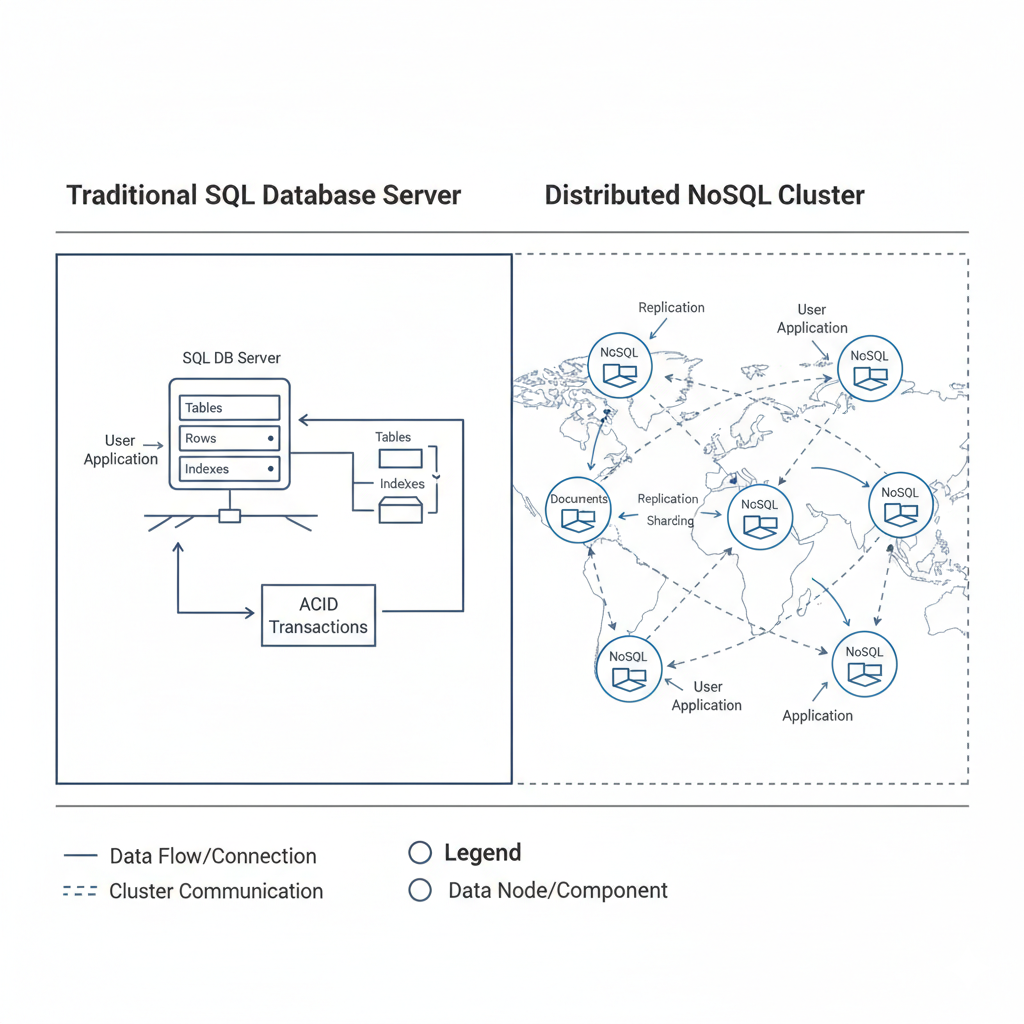
What Makes a Database "Scalable"?
Before diving into the SQL vs NoSQL debate, let's establish what we mean by scalability. Database scalability refers to a system's ability to handle increasing workloads and data volumes by adding resources or distributing load across multiple nodes.
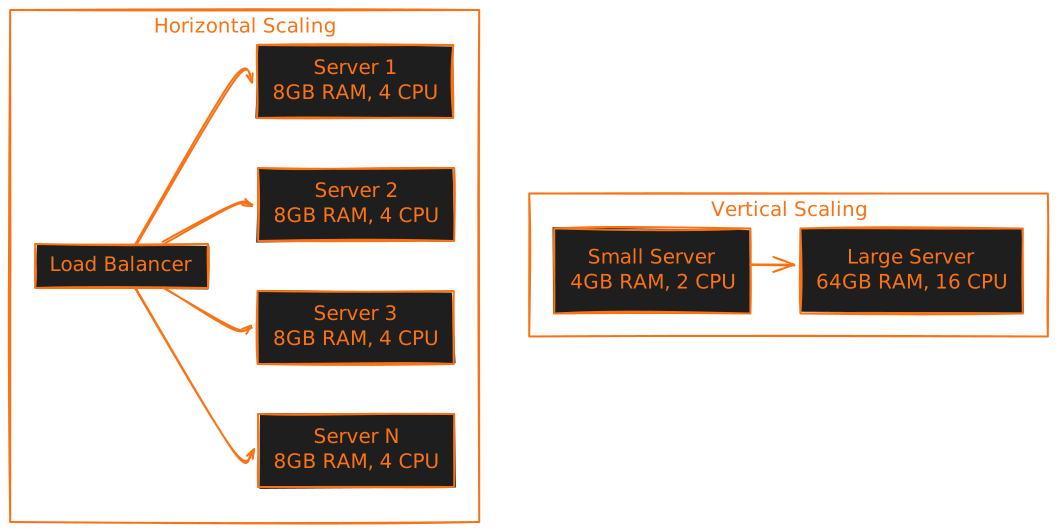
There are two fundamental approaches to scaling:
Vertical Scaling (Scaling Up)
Think of vertical scaling like upgrading your gaming rig—you add more RAM, a faster CPU, or better storage to a single machine. It's straightforward but has limits.
Horizontal Scaling (Scaling Out)
Horizontal scaling is like building a server farm—instead of making one machine more powerful, you add more machines to share the workload.
SQL Databases: The Reliable Workhorses
SQL databases have been the backbone of enterprise applications for decades. They're like the Swiss Army knife of data storage—reliable, well-understood, and capable of handling complex operations.
The ACID Promise: Why Consistency Matters
SQL databases follow ACID properties (Atomicity, Consistency, Isolation, Durability), which ensure data integrity even in the face of system failures. Think of ACID as a safety net for your data.

SQL's Scaling Challenges: The Bottleneck Reality
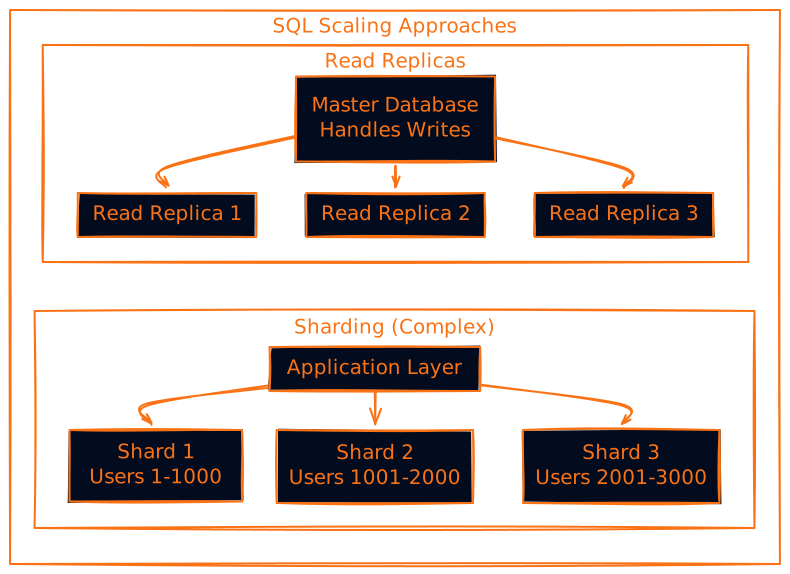
Here's where things get tricky. SQL databases traditionally scale vertically, which works until it doesn't. Imagine trying to fit an elephant through a doorway—at some point, making the elephant bigger won't help; you need a bigger doorway or multiple doorways.
The Primary Scaling Challenges:
- Single Point of Failure: Traditional SQL setups rely on one powerful server
- Complex Sharding: Distributing data across multiple SQL servers is like performing surgery with oven mitts
- Lock Contention: As concurrent users increase, databases spend more time managing locks than processing data
- Cross-Shard Queries: Joining data across multiple servers becomes a nightmare
When SQL Shines: The Perfect Use Cases
Despite scaling challenges, SQL databases excel in specific scenarios:
- Financial Systems: When you absolutely cannot afford data inconsistency
- E-commerce Platforms: Complex inventory management and order processing
- ERP Systems: Multi-table relationships and complex business logic
- Reporting and Analytics: Complex queries spanning multiple data sources
NoSQL Databases: The Horizontal Scaling Champions
NoSQL databases emerged from the need to handle web-scale applications. They're like a fleet of motorcycles instead of a single truck—individually less powerful, but collectively capable of incredible performance and flexibility.
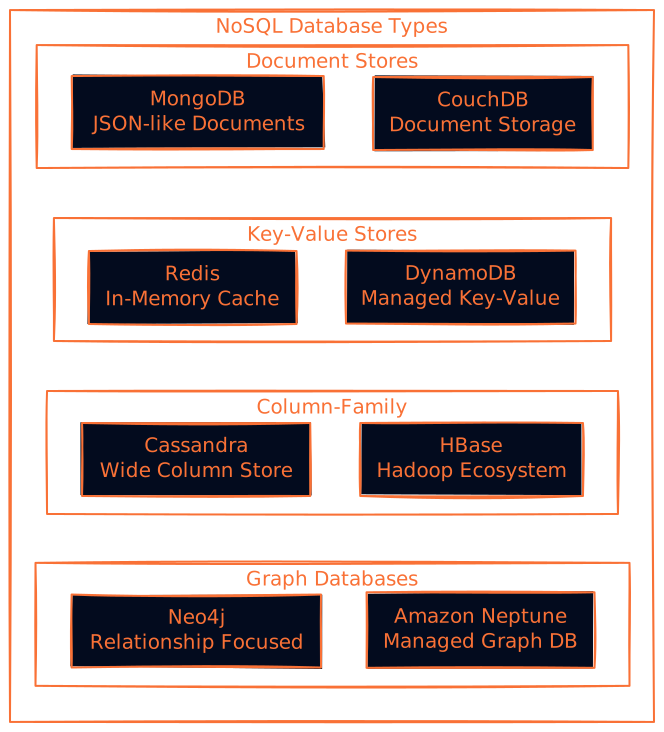
The Four Horsemen of NoSQL
NoSQL isn't a single technology but a family of database types, each optimized for specific use cases:
The BASE Philosophy: Embracing Eventual Consistency
While SQL databases follow ACID principles, NoSQL databases often embrace BASE (Basically Available, Soft state, Eventual consistency). It's like the difference between a perfectionist and a pragmatist—both have their place.
BASE Properties Explained:
- Basically Available: The system remains operational even during failures
- Soft State: Data may change over time, even without input
- Eventual Consistency: The system will become consistent over time
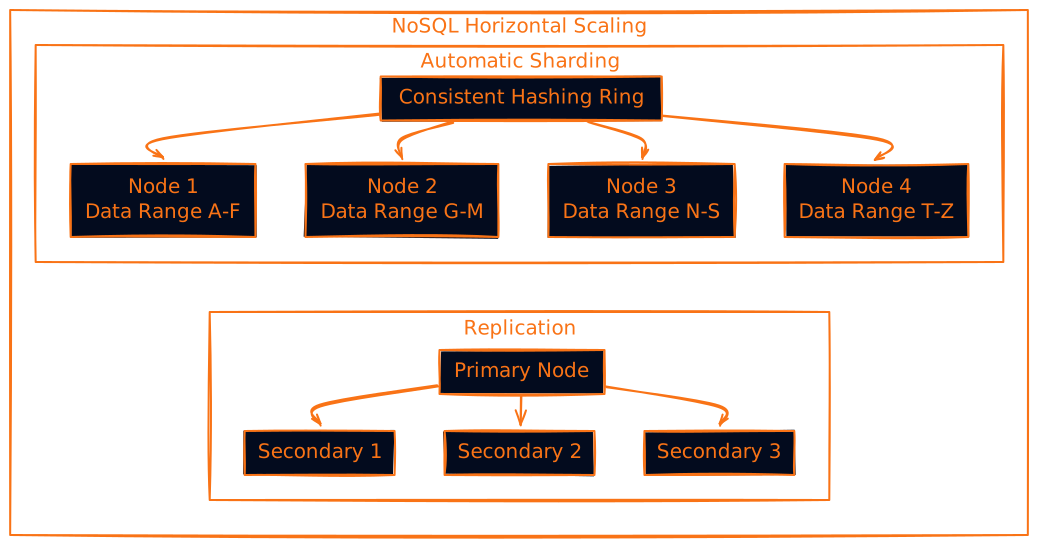
NoSQL's Scaling Superpowers
NoSQL databases are built for horizontal scaling from day one. They're like LEGO blocks—you can keep adding pieces to build something bigger.
When NoSQL Dominates: The Sweet Spots
NoSQL databases excel in scenarios where flexibility and scale matter more than strict consistency:
- Social Media Platforms: Handling millions of posts, likes, and comments
- IoT Applications: Ingesting massive streams of sensor data
- Content Management: Storing diverse content types with varying structures
- Real-time Analytics: Processing big data with high write throughput
The Data Modeling Divide: Normalization vs Denormalization
The fundamental difference between SQL and NoSQL often comes down to how you structure your data.
SQL: The Art of Normalization
SQL databases normalize data to eliminate redundancy. It's like organizing a library—every book has its place, and you use a card catalog (foreign keys) to find related information.
-- Normalized SQL Structure
CREATE TABLE users (
    user_id INT PRIMARY KEY,
    username VARCHAR(50),
    email VARCHAR(100)
);

CREATE TABLE posts (
    post_id INT PRIMARY KEY,
    user_id INT REFERENCES users(user_id),
    title VARCHAR(200),
    content TEXT,
    created_at TIMESTAMP
);

CREATE TABLE comments (
    comment_id INT PRIMARY KEY,
    post_id INT REFERENCES posts(post_id),
    user_id INT REFERENCES users(user_id),
    content TEXT,
    created_at TIMESTAMP
);
NoSQL: The Power of Denormalization
NoSQL databases often denormalize data, storing related information together. It's like having a complete dossier for each entity—everything you need is in one place.
// Denormalized NoSQL Document
{
  "_id": "post_123",
  "title": "Understanding Database Scaling",
  "content": "In this post, we'll explore...",
  "author": {
    "id": "user_456",
    "username": "tech_guru",
    "email": "guru@example.com"
  },
  "comments": [
    {
      "id": "comment_789",
      "author": {
        "id": "user_101",
        "username": "data_lover"
      },
      "content": "Great explanation!",
      "timestamp": "2024-01-15T10:30:00Z"
    }
  ],
  "tags": ["database", "scaling", "architecture"],
  "created_at": "2024-01-15T09:00:00Z",
  "view_count": 1547
}
Performance Patterns: When Speed Matters
SQL Performance: The Query Optimization Game
SQL databases excel at complex queries but require careful optimization:
-- Complex SQL Query with Joins
SELECT
    u.username,
    p.title,
    COUNT(c.comment_id) as comment_count,
    AVG(r.rating) as avg_rating
FROM users u
JOIN posts p ON u.user_id = p.user_id
LEFT JOIN comments c ON p.post_id = c.post_id
LEFT JOIN ratings r ON p.post_id = r.post_id
WHERE u.created_at > '2024-01-01'
GROUP BY u.user_id, p.post_id
HAVING COUNT(c.comment_id) > 10
ORDER BY avg_rating DESC, comment_count DESC
LIMIT 50;
NoSQL Performance: Simple and Fast
NoSQL databases optimize for simple, fast operations:
// Simple NoSQL Query
db.posts.find({
  "author.username": "tech_guru",
  "created_at": { $gte: new Date("2024-01-01") },
  "tags": { $in: ["database", "scaling"] }
}).sort({ "view_count": -1 }).limit(50);

// Aggregation Pipeline for Complex Operations
db.posts.aggregate([
  { $match: { "created_at": { $gte: new Date("2024-01-01") } } },
  { $unwind: "$comments" },
  { $group: {
    _id: "$author.username",
    totalPosts: { $sum: 1 },
    avgComments: { $avg: { $size: "$comments" } }
  }},
  { $sort: { totalPosts: -1 } }
]);
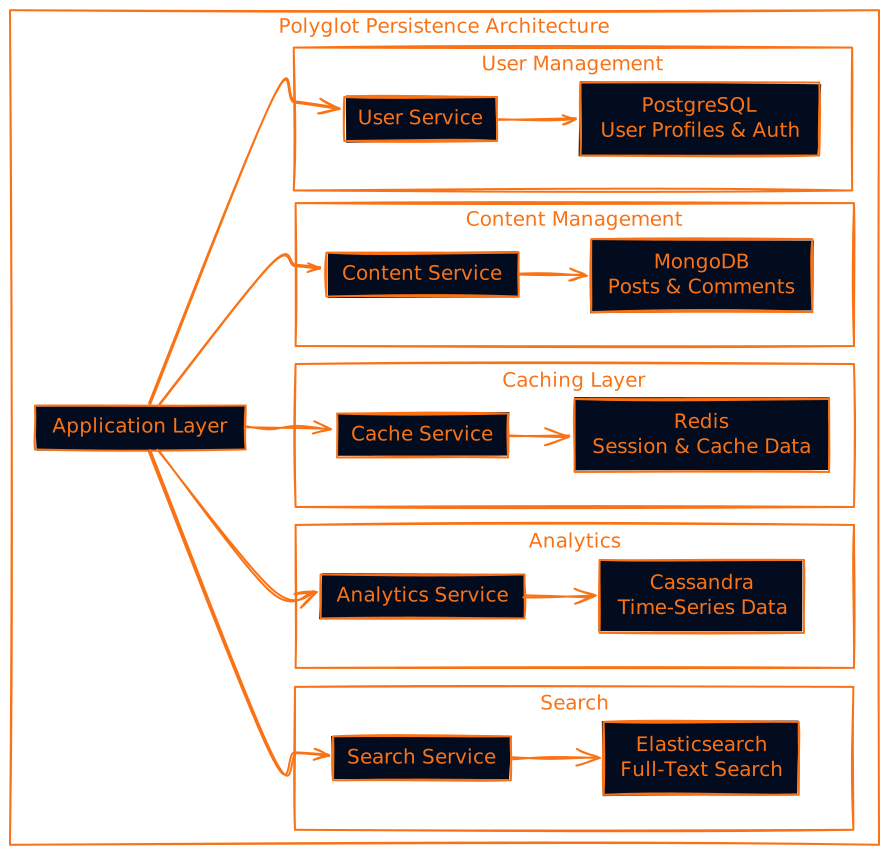
The Hybrid Revolution: Polyglot Persistence
Modern applications don't have to choose just one database type. Polyglot persistence uses different databases for different parts of your system—like using the right tool for each job.
Decision Framework: Choosing Your Database Strategy
The SQL Sweet Spot Checklist
Choose SQL when you need:
- Strong Consistency: Financial transactions, inventory management
- Complex Relationships: Multi-table joins, referential integrity
- ACID Transactions: All-or-nothing operations
- Mature Ecosystem: Extensive tooling and expertise
- Regulatory Compliance: Audit trails and data governance
The NoSQL Advantage Checklist
Choose NoSQL when you need:
- Horizontal Scalability: Millions of users, terabytes of data
- Flexible Schema: Rapidly evolving data structures
- High Write Throughput: Real-time data ingestion
- Geographic Distribution: Global user base with low latency
- Rapid Development: Quick prototyping and iteration
The Hybrid Approach Checklist
Consider polyglot persistence when you have:
- Diverse Data Types: Structured and unstructured data
- Varying Consistency Needs: Some data needs ACID, some doesn't
- Different Access Patterns: OLTP and OLAP workloads
- Microservices Architecture: Service-specific data stores
Migration Strategies: Evolving Your Database Architecture
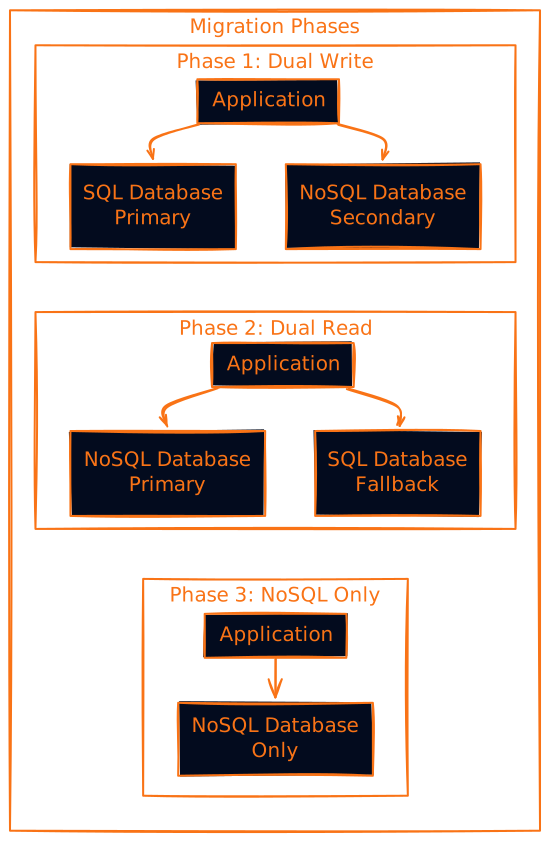
The Strangler Fig Pattern
When migrating from SQL to NoSQL (or vice versa), use the strangler fig pattern—gradually replace the old system while keeping it running.
Real-World Battle Stories: Lessons from the Trenches
Netflix: The NoSQL Success Story
Netflix migrated from Oracle to Cassandra to handle their massive scale:
- Challenge: 100+ million users, global distribution
- Solution: Cassandra for user data, microservices architecture
- Result: 99.99% uptime, seamless global scaling
Stack Overflow: SQL at Scale
Stack Overflow serves millions of developers with SQL Server:
- Challenge: Complex queries, high read/write ratio
- Solution: Optimized SQL Server with smart caching
- Result: Sub-second response times with minimal hardware
Common Pitfalls and How to Avoid Them
SQL Pitfalls
- Over-normalization: Creating so many tables that simple queries become complex
- Ignoring Indexes: Letting queries scan entire tables
- Poor Connection Management: Creating database connection bottlenecks
NoSQL Pitfalls
- Treating NoSQL like SQL: Trying to normalize data in a document database
- Ignoring Consistency Models: Not understanding eventual consistency implications
- Poor Data Modeling: Not designing for your access patterns
The Future: What's Next in Database Technology?
NewSQL: The Best of Both Worlds
NewSQL databases aim to provide ACID guarantees with NoSQL scalability:
- CockroachDB: Distributed SQL with strong consistency
- TiDB: MySQL-compatible distributed database
- Spanner: Google's globally distributed SQL database
Serverless Databases
The future is moving toward serverless, where you don't manage infrastructure:
- Aurora Serverless: Auto-scaling SQL in the cloud
- DynamoDB On-Demand: Pay-per-request NoSQL
- FaunaDB: Serverless, globally consistent database
Conclusion: Your Database Journey Starts Here
The SQL vs NoSQL debate isn't about finding a winner—it's about finding the right tool for your specific job. Like a master craftsperson, the best developers know when to use a hammer and when to use a screwdriver.
Key Takeaways:
- Start with your requirements: Consistency needs, scale requirements, and team expertise should drive your decision
- Don't fear evolution: You can start with one approach and evolve as your needs change
- Consider hybrid approaches: Modern applications often benefit from using multiple database types
- Plan for scale: Think about where you'll be in 2-3 years, not just where you are today
The database landscape continues to evolve, with new technologies blurring the lines between SQL and NoSQL. The key is to stay informed, experiment with new technologies, and always choose based on your specific use case rather than following trends.
Remember: The best database is the one that solves your problem efficiently, scales with your growth, and lets your team be productive. Whether that's SQL, NoSQL, or a hybrid approach depends entirely on your unique situation.
Ready to dive deeper into database architecture? Start by analyzing your current data patterns and access requirements. The right database choice today will set the foundation for your system's success tomorrow.
Further Reading
- Books: "Designing Data-Intensive Applications" by Martin Kleppmann
- Documentation: Official docs for PostgreSQL, MongoDB, and Cassandra
- Tools: Database comparison tools and migration guides
- Communities: Join database-specific forums and communities for ongoing learning
What's your database story? Have you faced the SQL vs NoSQL decision in your projects? Share your experiences and lessons learned in the comments below.