Caching at Scale: Why Your App Needs More Than Just Redis
So you've got your Redis instance running, your cache hit rates look decent, and everything seems fine. But then your user base explodes, your database starts crying, and suddenly that simple caching setup isn't cutting it anymore. Sound familiar?
Here's the thing about caching at scale: it's not just about throwing more memory at the problem. It's about building a smart, multi-layered system that can handle millions of users without breaking a sweat. Let me walk you through what I've learned about building caching architectures that actually scale.
The Reality Check: Single Cache vs Multi-Tier Madness
Most of us start with the classic setup: app talks to cache, cache misses hit the database. Simple, clean, works great... until it doesn't.

But when you're dealing with serious scale, you need something more like this:
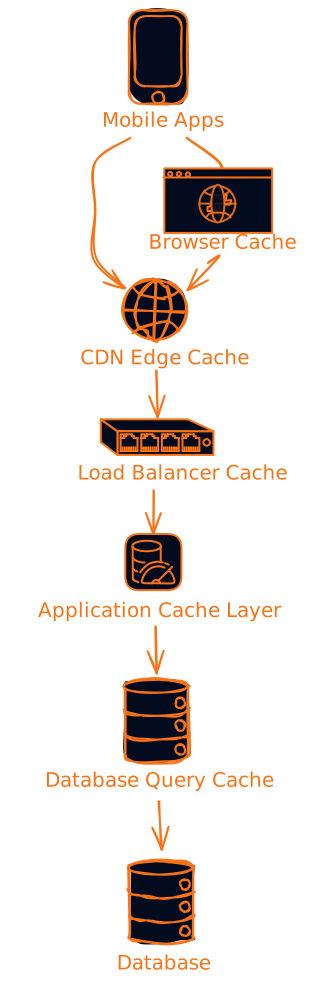
Yeah, it looks complicated. But here's why each layer matters:
- Browser/Client Cache: Keeps static stuff local, reduces network calls
- CDN: Serves content from the edge, closest to your users
- Load Balancer Cache: Handles common requests before they hit your servers
- Application Cache: Your Redis/Memcached doing the heavy lifting
- Database Cache: Query results and connection pooling
Each layer has its own job, and together they create this beautiful cascade where most requests never even touch your database.
The Cache Stampede Problem (And How to Not Get Trampled)
Picture this: your cache expires for a popular item, and suddenly 10,000 requests all try to rebuild it at the same time. Your database gets hammered, everything slows down, and users start complaining. This is called a cache stampede, and it's every developer's nightmare.
Here's how you prevent it:
1. Mutex Locking (The Bouncer Approach)
import redis
import time
import random

def get_with_lock(key, rebuild_func, ttl=300):
    cache = redis.Redis()

    # Try to get from cache first
    value = cache.get(key)
    if value:
        return value

    # Try to acquire lock
    lock_key = f"lock:{key}"
    if cache.set(lock_key, "locked", nx=True, ex=30):
        try:
            # We got the lock, rebuild the cache
            value = rebuild_func()
            cache.setex(key, ttl, value)
            return value
        finally:
            cache.delete(lock_key)
    else:
        # Someone else is rebuilding, wait a bit and try again
        time.sleep(random.uniform(0.1, 0.5))
        return get_with_lock(key, rebuild_func, ttl)
Only one request gets to rebuild the cache while others wait. It's like having a bouncer at the database door.
2. Exponential Backoff (The Polite Queue)
Instead of everyone rushing at once, add some randomized delays:
def exponential_backoff_retry(func, max_retries=5):
    for attempt in range(max_retries):
        try:
            return func()
        except CacheMissException:
            if attempt == max_retries - 1:
                raise

            # Wait with exponential backoff + jitter
            delay = (2 ** attempt) + random.uniform(0, 1)
            time.sleep(delay)
This spreads out the load and prevents everyone from hitting at the exact same moment.
Distributed Caching: When One Redis Isn't Enough
Once you outgrow a single cache instance, you need to think about distribution. This is where things get interesting (and complex).
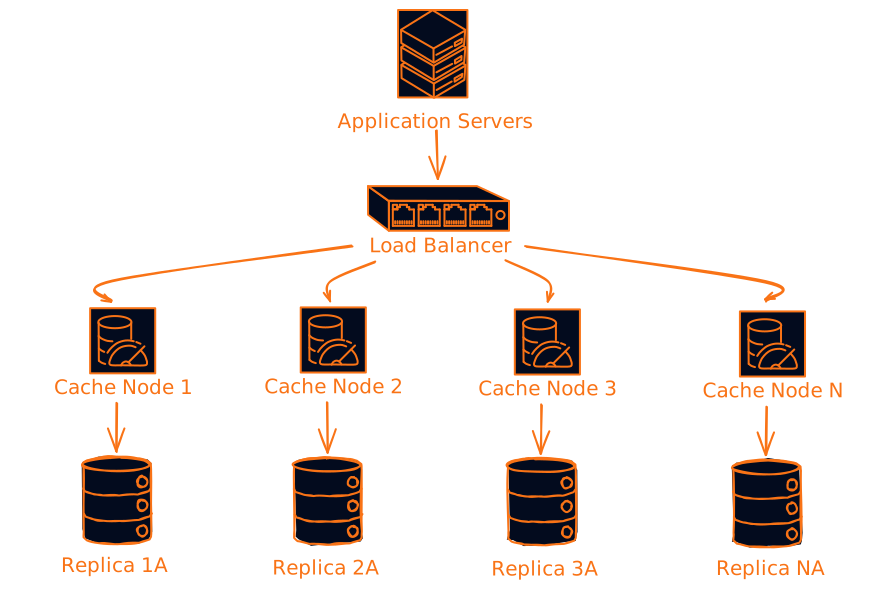
Consistent Hashing: The Smart Way to Distribute
The key to distributed caching is consistent hashing. Instead of just doing hash(key) % num_servers (which breaks when you add/remove servers), you create a hash ring:
import hashlib
import bisect

class ConsistentHashRing:
    def __init__(self, nodes=None, replicas=3):
        self.replicas = replicas
        self.ring = {}
        self.sorted_keys = []

        if nodes:
            for node in nodes:
                self.add_node(node)

    def add_node(self, node):
        for i in range(self.replicas):
            key = self.hash(f"{node}:{i}")
            self.ring[key] = node
            bisect.insort(self.sorted_keys, key)

    def remove_node(self, node):
        for i in range(self.replicas):
            key = self.hash(f"{node}:{i}")
            del self.ring[key]
            self.sorted_keys.remove(key)

    def get_node(self, key):
        if not self.ring:
            return None

        hash_key = self.hash(key)
        idx = bisect.bisect_right(self.sorted_keys, hash_key)
        if idx == len(self.sorted_keys):
            idx = 0

        return self.ring[self.sorted_keys[idx]]

    def hash(self, key):
        return int(hashlib.md5(key.encode()).hexdigest(), 16)
This way, when you add or remove cache nodes, only a small portion of keys need to be redistributed.
Cache Eviction: The Art of Forgetting
Your cache has limited memory, so you need smart eviction policies. Here's what works in different scenarios:
LRU (Least Recently Used)
Good for most workloads where recent stuff is more likely to be accessed again.
LFU (Least Frequently Used)
Better when you have clear "hot" and "cold" data patterns.
Custom Business Logic
Sometimes you need domain-specific rules:
class SmartEvictionPolicy:
    def __init__(self):
        self.priorities = {
            'user_session': 10,      # Never evict active sessions
            'product_catalog': 8,    # Important for e-commerce
            'search_results': 5,     # Can be regenerated
            'analytics': 2           # Nice to have
        }

    def should_evict(self, key, access_time, frequency):
        key_type = key.split(':')[0]
        priority = self.priorities.get(key_type, 1)

        # Higher priority items are harder to evict
        eviction_score = (time.time() - access_time) / (frequency * priority)
        return eviction_score > self.threshold
Cache Warming: Being Proactive
Don't wait for cache misses. Predict what users will need and load it ahead of time.
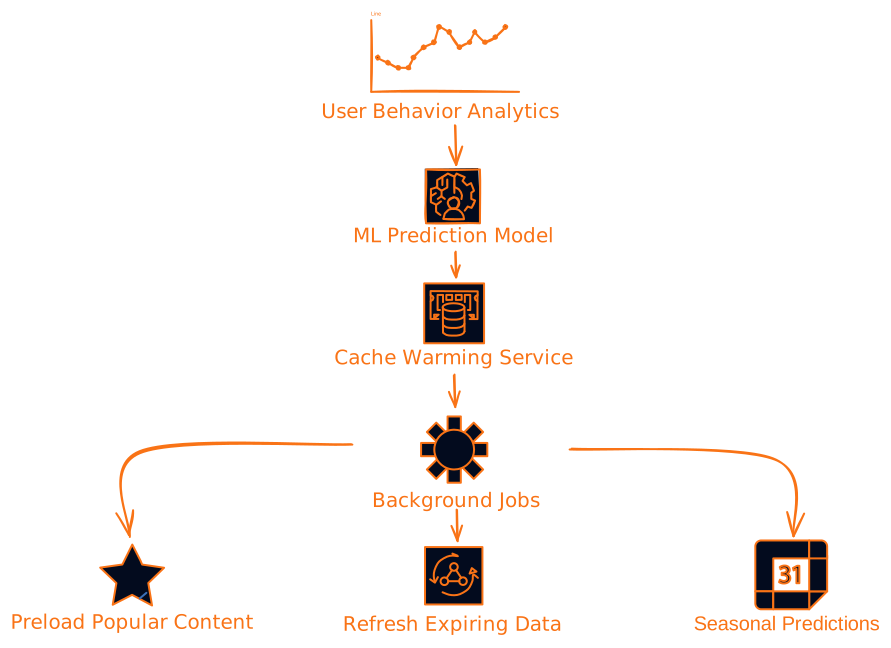
Here's a simple warming strategy:
class CacheWarmer:
    def __init__(self, cache, analytics):
        self.cache = cache
        self.analytics = analytics

    def warm_popular_content(self):
        # Get trending items from analytics
        trending = self.analytics.get_trending_items(limit=1000)

        for item in trending:
            if not self.cache.exists(f"item:{item.id}"):
                # Load in background
                self.background_load(item)

    def warm_user_specific(self, user_id):
        # Predict what this user might access
        predictions = self.ml_model.predict_user_interests(user_id)

        for prediction in predictions[:50]:  # Top 50 predictions
            self.preload_if_missing(prediction.key)
Monitoring: Know When Things Go Wrong
You can't manage what you don't measure. Here are the key metrics to track:
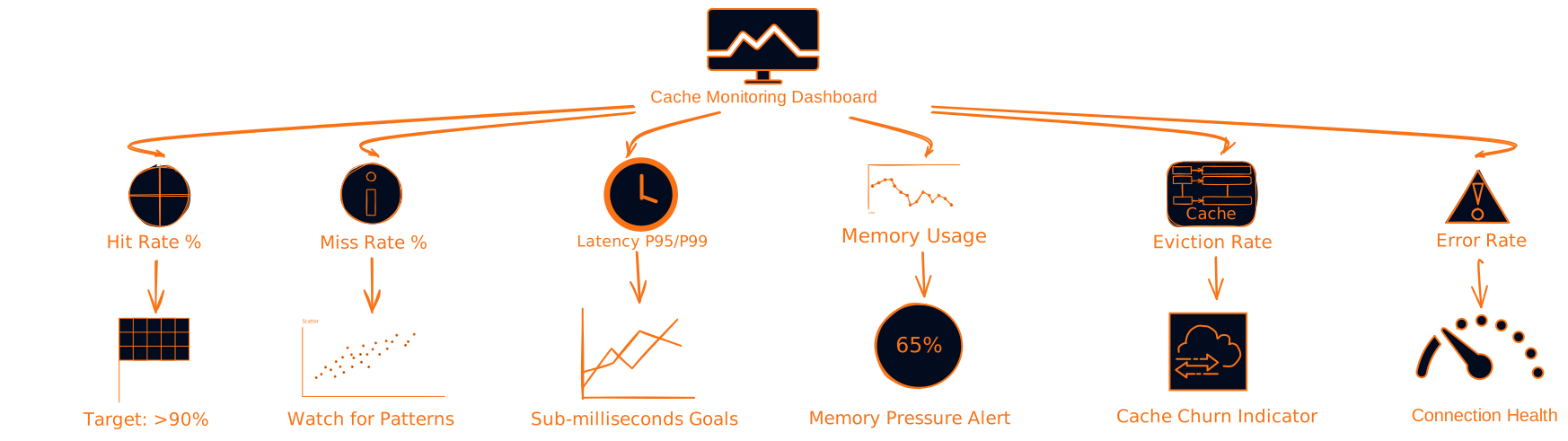
Set up alerts for:
- Hit rate drops below 85%
- P99 latency spikes above 10ms
- Memory usage above 80%
- Error rate above 0.1%
Real-World Architecture: E-commerce Example
Let me show you how this all comes together in a real e-commerce system:
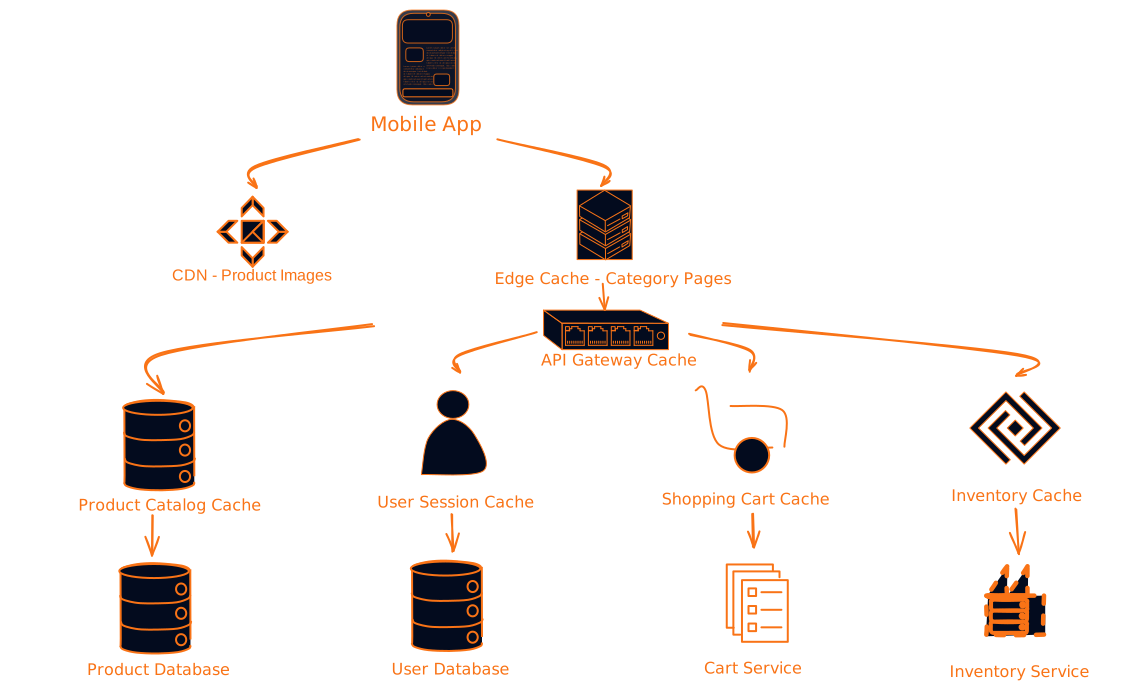
Each cache layer handles different data with different requirements:
- CDN: Static product images, CSS, JS (TTL: 24 hours)
- Edge Cache: Category pages, search results (TTL: 1 hour)
- Product Cache: Product details, reviews (TTL: 30 minutes)
- Session Cache: User preferences, auth tokens (TTL: session-based)
- Cart Cache: Shopping cart contents (TTL: 7 days)
- Inventory Cache: Stock levels (TTL: 5 minutes, with real-time invalidation)
When to Use What: The Decision Tree
Here's my mental framework for choosing caching strategies:
Small Scale (< 10K users):
- Single Redis instance
- Simple LRU eviction
- Basic monitoring
Medium Scale (10K - 1M users):
- Redis cluster with replication
- CDN for static assets
- Cache warming for popular content
Large Scale (1M+ users):
- Multi-tier caching architecture
- Distributed cache clusters
- Predictive cache warming
- Custom eviction policies
Global Scale:
- Regional cache clusters
- Edge computing
- Advanced consistency models
- Machine learning for optimization
The Gotchas Nobody Talks About
1. Cache Consistency is Hard
When you have multiple cache layers, keeping them in sync is tricky. Sometimes it's better to accept eventual consistency than to slow everything down with synchronous updates.
2. Serialization Overhead
JSON is easy to debug, but Protocol Buffers or MessagePack can be 3x faster and smaller. Choose based on your performance needs.
3. Memory Fragmentation
Redis can suffer from memory fragmentation over time. Monitor your memory efficiency ratio and restart instances when it gets bad.
4. Network Partitions
Your cache cluster will experience network issues. Design for it with circuit breakers and fallback strategies.
The Bottom Line
Caching at scale isn't just about making things faster, it's about building resilient systems that can handle growth without falling over. Start simple, measure everything, and evolve your architecture as you grow.
The key principles:
- Layer your caches based on access patterns
- Prevent stampedes with smart locking
- Distribute intelligently with consistent hashing
- Monitor religiously and alert on anomalies
- Warm proactively instead of reacting to misses
Remember, the best caching strategy is the one that fits your specific use case. Don't over-engineer early, but plan for scale from the beginning.
What caching challenges are you facing? The comments are open, and I'd love to hear about your experiences with scaling cache architectures.
Want to dive deeper? Check out the Redis documentation on clustering, or explore how companies like Netflix and Spotify handle caching at massive scale. The rabbit hole goes deep, but the performance gains are worth it.