Memcached vs Redis: Complete Guide to Choosing the Right Caching Solution
Memcached vs Redis
So you're building an app that's getting some serious traffic, and suddenly your database is crying for help. Sound familiar? Yeah, we've all been there. That's when you realize you need caching, and fast.
But here's where it gets tricky. You've got two heavyweight champions in the caching world: Memcached and Redis. Both are solid choices, but they're built for different fights. Let me break down everything you need to know to pick the right one for your project.
What's the Deal with Distributed Caching Anyway?
Before we dive into the showdown, let's get on the same page about what we're dealing with here.
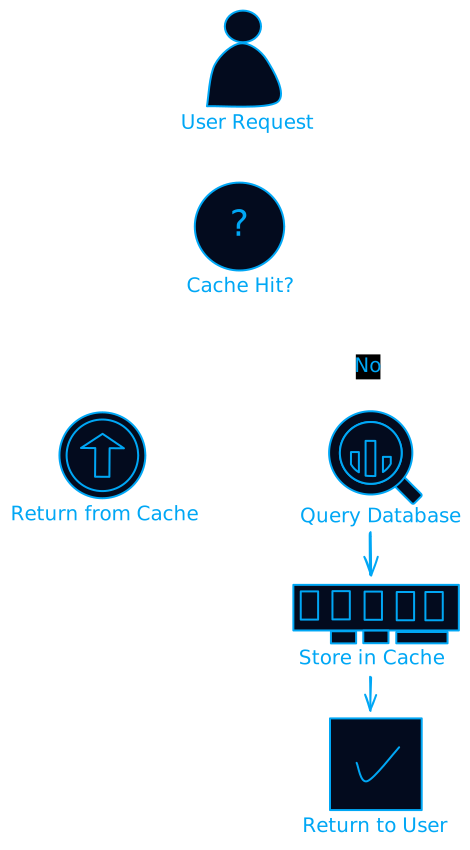
Distributed caching is basically your app's short-term memory spread across multiple servers. Instead of hitting your database every single time someone wants to see their profile picture, you store that data in super-fast memory that multiple servers can access.
Think of it like having sticky notes all over your desk versus walking to the filing cabinet every time you need something. The sticky notes (cache) are right there, instant access. The filing cabinet (database) takes time to walk to, open, search through, and walk back.
Meet the Contenders
Memcached: The Lightweight Speed Demon
Memcached showed up to the party in 2003, and it had one job: be really, really fast at storing and retrieving simple key-value pairs. No fancy features, no complex data structures, just pure speed.
It's like that friend who's amazing at one thing and doesn't pretend to be anything else. Need to cache some user session data? Memcached's got you. Want to store complex nested objects with relationships? Maybe look elsewhere.
Redis: The Swiss Army Knife
Redis rolled up in 2009 with a different attitude. Sure, it could do the basic caching stuff, but it also brought data structures, pub/sub messaging, transactions, and a whole toolkit of advanced features.
It's like comparing a race car to a high-end sports car with all the bells and whistles. Both are fast, but one's got heated seats, GPS, and can probably make you coffee.
The Architecture Showdown
How They Handle Multiple Cores
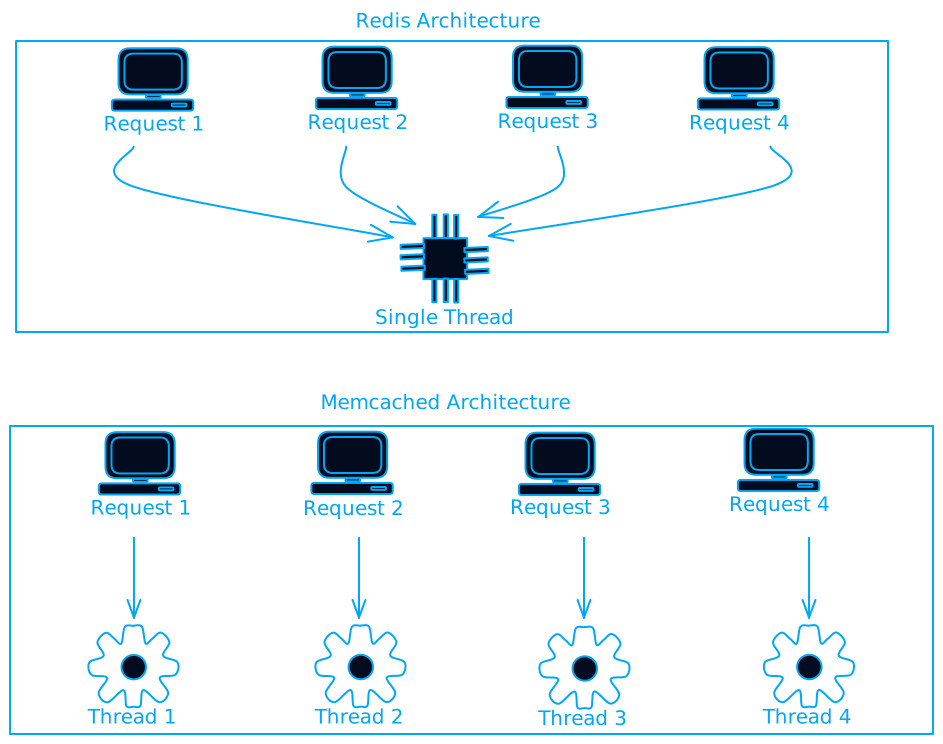
Here's where things get interesting. Memcached is multithreaded, which means it can use all your CPU cores simultaneously. It's like having multiple cashiers at a busy store, each handling their own line of customers.
Redis, on the other hand, is single-threaded for its main operations. Before you panic, this isn't necessarily bad. It's more like having one really efficient cashier who never makes mistakes and handles everything in perfect order.
Scaling Up vs Scaling Out
Vertical Scaling (Bigger Servers) Memcached loves bigger servers. Throw more RAM and CPU cores at it, and it'll happily use them all. It's like upgrading from a Honda Civic to a Ferrari, same driver, way more power.
Redis can scale up too, but since it's single-threaded, adding more CPU cores won't help as much. It's more about the RAM and storage speed.
Horizontal Scaling (More Servers) This is where Redis starts to shine. It has built-in clustering that automatically distributes your data across multiple servers. If one server goes down, the others keep running.
Memcached requires you to handle the distribution logic in your application code. It's doable, but you're doing more of the heavy lifting yourself.
Data Structures: Simple vs Sophisticated
Memcached: Keep It Simple
Memcached only does key-value pairs. Your key is a string, your value is a blob of data (also treated as a string). That's it.
# Memcached operations
cache.set("user:123", "{'name': 'John', 'email': 'john@example.com'}")
user_data = cache.get("user:123")
Redis: The Data Structure Playground
Redis supports multiple data types that can make your life way easier:
Strings - Basic key-value like Memcached
redis.set("user:123:name", "John")
Hashes - Perfect for objects
redis.hset("user:123", "name", "John")
redis.hset("user:123", "email", "john@example.com")
Lists - Ordered collections
redis.lpush("user:123:notifications", "New message")
Sets - Unique collections
redis.sadd("user:123:tags", "developer", "python", "redis")
Sorted Sets - Leaderboards and rankings
redis.zadd("leaderboard", {"player1": 1000, "player2": 1500})
But wait, there's more! Redis also has some pretty cool advanced data structures:
Bitmaps - Super efficient for tracking binary states
# Track daily active users
redis.setbit("daily_active:2024-12-08", user_id, 1)
HyperLogLogs - Estimate unique counts without storing everything
# Count unique visitors without storing all IDs
redis.pfadd("unique_visitors", "user1", "user2", "user3")
unique_count = redis.pfcount("unique_visitors")
Geospatial Indexes - Location-based queries
# Store restaurant locations
redis.geoadd("restaurants", -122.4194, 37.7749, "restaurant1")
# Find nearby restaurants
nearby = redis.georadius("restaurants", -122.4194, 37.7749, 1, "km")
Performance: The Need for Speed
Raw Performance Numbers
In pure caching scenarios with simple key-value operations, Memcached typically edges out Redis. We're talking about microseconds here, but at scale, those microseconds add up.
Memcached can handle around 1 million operations per second on decent hardware. Redis usually hits around 100,000-500,000 operations per second, depending on the operation complexity.
But here's the thing, Redis has some tricks up its sleeve:
Pipelining - Send multiple commands at once
pipe = redis.pipeline()
pipe.set("key1", "value1")
pipe.set("key2", "value2")
pipe.set("key3", "value3")
pipe.execute()  # All commands sent together
Memory Efficiency - Redis is often more memory-efficient, especially with structured data.
When Performance Isn't Just About Speed
Sometimes "performance" isn't just raw speed. Redis offers features that can make your overall system perform better:
- Persistence - Your cache survives server restarts
- Replication - Automatic backups to other servers
- Transactions - Multiple operations happen atomically
High Availability: Staying Online When Things Go Wrong
Memcached's Approach
Memcached keeps it simple here too. Each server is independent. If one goes down, you lose that data, but the others keep running. Your application needs to handle the failure gracefully.
It's like having multiple independent backup generators. If one fails, the others keep running, but you lose the power from the failed one.
Redis's Safety Net
Redis offers several high availability options:
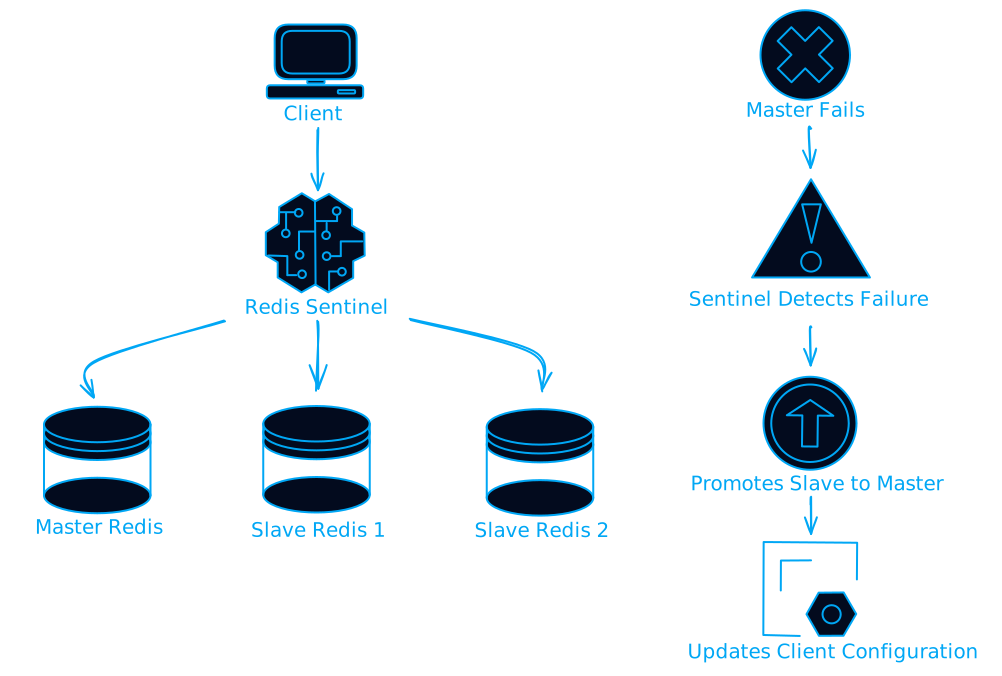
Redis Sentinel - Monitors your Redis servers and automatically promotes a backup if the main server fails.
Redis Cluster - Automatically distributes data across multiple servers and handles failover.
Security: Keeping Your Data Safe
The Reality Check
Neither Memcached nor Redis were built with security as the top priority. They were designed to run in trusted network environments where security happens at the network level.
Memcached Security
Memcached has minimal built-in security features. It assumes you're running it in a secure network environment. There's no authentication by default, no encryption, and no access controls.
This isn't necessarily bad if you're running it in a private network, but it means you need to be extra careful about network security.
Redis Security Features
Redis has stepped up its security game over the years:
- Authentication - Password protection
- Access Control Lists (ACLs) - Fine-grained permissions
- TLS Encryption - Encrypted connections
- Command Renaming - Hide dangerous commands
# Redis with authentication
redis_client = redis.Redis(
    host='localhost',
    port=6379,
    password='your_secure_password',
    ssl=True
)
Recent Security Concerns
Both systems have had security vulnerabilities. Redis had a critical vulnerability (CVE-2025-49844) that allowed remote code execution through Lua scripting. The key takeaway? Keep your cache servers updated and don't expose them to the public internet.
Real-World Use Cases: Where Each Shines
When Memcached Makes Sense
Simple Web Application Caching You've got a WordPress site or a basic web app that needs to cache database queries and page fragments. Memcached is perfect here.
# Simple page caching
def get_user_profile(user_id):
    cache_key = f"user_profile:{user_id}"
    profile = memcache.get(cache_key)

    if not profile:
        profile = database.get_user_profile(user_id)
        memcache.set(cache_key, profile, expire=3600)

    return profile
Session Storage Storing user sessions across multiple web servers? Memcached handles this beautifully.
High-Traffic, Simple Operations If you're doing millions of simple get/set operations and need maximum throughput, Memcached's multithreaded architecture gives you an edge.
When Redis Is Your Best Friend
Real-Time Applications Building a chat app, live notifications, or real-time analytics? Redis's pub/sub system is a game-changer.
# Real-time notifications
def send_notification(user_id, message):
    redis.publish(f"user:{user_id}:notifications", message)

# Subscribe to notifications
pubsub = redis.pubsub()
pubsub.subscribe("user:123:notifications")
for message in pubsub.listen():
    print(f"New notification: {message['data']}")
Leaderboards and Rankings Sorted sets make leaderboards trivial to implement and update.
# Update player score
redis.zadd("game_leaderboard", {"player123": 1500})

# Get top 10 players
top_players = redis.zrevrange("game_leaderboard", 0, 9, withscores=True)
Complex Data Relationships When your cached data has structure and relationships, Redis's data types save you from serialization headaches.
Machine Learning Model Caching Storing trained models, feature vectors, or prediction results? Redis's data structures and persistence make this much easier.
# Cache ML model predictions
def get_recommendation(user_id):
    recommendations = redis.lrange(f"recommendations:{user_id}", 0, 9)

    if not recommendations:
        # Generate recommendations
        recommendations = ml_model.predict(user_id)
        redis.lpush(f"recommendations:{user_id}", *recommendations)
        redis.expire(f"recommendations:{user_id}", 3600)

    return recommendations
The Operational Reality: What You're Signing Up For
Memcached Operations
Pros:
- Simple to deploy and manage
- Minimal configuration needed
- Predictable resource usage
- Easy to monitor
Cons:
- No built-in clustering (you handle sharding)
- No persistence (data lost on restart)
- Limited monitoring capabilities
Redis Operations
Pros:
- Rich monitoring and introspection tools
- Built-in clustering and replication
- Persistence options
- Extensive configuration options
Cons:
- More complex to configure optimally
- Memory usage can be less predictable
- More moving parts to monitor
Making the Decision: A Practical Framework
Choose Memcached If:
- Simplicity is key - You want to set it up and forget about it
- Pure caching - You're only doing simple key-value operations
- Maximum throughput - You need the absolute fastest simple operations
- Limited resources - You want minimal operational overhead
- Existing expertise - Your team already knows Memcached well
Choose Redis If:
- Rich data structures - You need more than simple key-value pairs
- Advanced features - You want pub/sub, transactions, or scripting
- High availability - You need built-in clustering and failover
- Persistence - You want your cache to survive restarts
- Future flexibility - You might need advanced features later
The Hybrid Approach
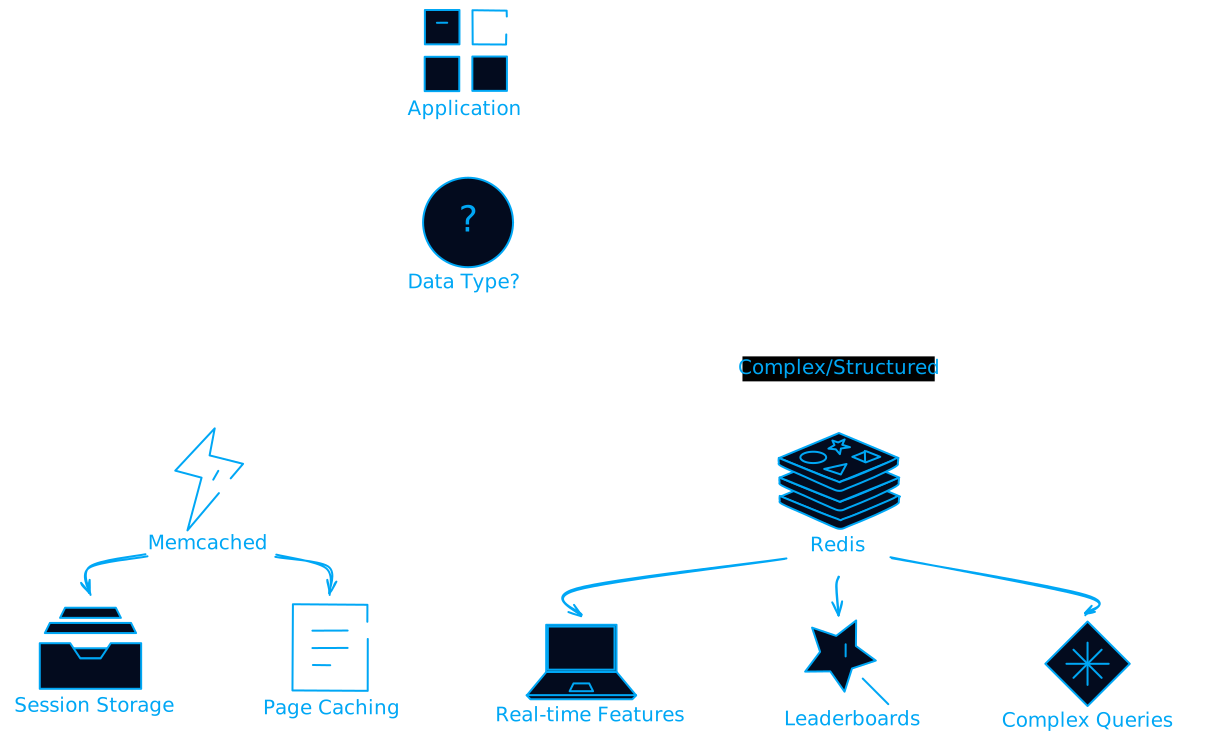
Here's something most people don't consider: you don't have to choose just one. Many large-scale applications use both:
- Memcached for simple, high-volume caching (session data, page fragments)
- Redis for complex operations (real-time features, structured data)
Performance Tuning: Getting the Most Out of Your Choice
Memcached Optimization
Memory Management
# Configure memory and connections
memcached -m 2048 -c 1024 -t 4
Connection Pooling Always use connection pooling in your application to avoid the overhead of creating new connections.
Consistent Hashing Use consistent hashing for client-side sharding to minimize data movement when adding/removing servers.
Redis Optimization
Memory Policies
# Configure eviction policy
maxmemory 2gb
maxmemory-policy allkeys-lru
Persistence Tuning
# For caching workloads, you might disable persistence
save ""
Pipeline Operations Group multiple operations together to reduce network round trips.
Monitoring and Troubleshooting
Key Metrics to Watch
For Both Systems:
- Hit ratio (cache hits / total requests)
- Memory usage
- Connection count
- Response time
Memcached Specific:
- Evictions per second
- Thread utilization
Redis Specific:
- Keyspace hits/misses
- Replication lag (if using replication)
- Slow query log
Common Issues and Solutions
Memory Pressure
- Implement proper eviction policies
- Monitor for memory leaks in your application
- Consider data compression for large values
Network Bottlenecks
- Use connection pooling
- Consider local caching layers
- Monitor network utilization
Hot Keys
- Distribute popular keys across multiple cache instances
- Use local caching for extremely hot data
The Future: What's Coming Next
Memcached Evolution
Memcached continues to focus on its core strengths: simplicity and speed. Recent versions have added:
- Built-in proxy functionality
- Better memory management
- Improved monitoring capabilities
Redis Innovation
Redis keeps adding features:
- Redis Streams for event sourcing
- RedisJSON for native JSON support
- RedisGraph for graph databases
- RedisTimeSeries for time-series data
Cost Considerations: The Bottom Line
Infrastructure Costs
Memcached typically requires less memory for the same amount of cached data due to its simpler data structures. However, you might need more instances for high availability.
Redis uses more memory per key due to its richer data structures, but its built-in replication and clustering can reduce the total number of instances needed.
Operational Costs
Memcached's simplicity means lower operational overhead. Less configuration, fewer features to break, easier troubleshooting.
Redis's complexity requires more skilled operators but offers more operational features like monitoring, clustering, and automated failover.
Wrapping Up: The Verdict
Here's the thing, there's no universal "best" choice. It depends on your specific needs, team expertise, and system requirements.
If you're building a straightforward web application that needs basic caching, Memcached's simplicity and speed make it a solid choice. You'll spend less time configuring and more time building features.
If you're building something more complex, need advanced data structures, or want built-in high availability, Redis gives you a lot more tools to work with. Yes, it's more complex, but that complexity often pays off in flexibility and features.
The most important thing? Don't overthink it. Both are excellent technologies that have powered some of the world's largest applications. Pick one, implement it well, and you'll be in good shape. You can always migrate later if your needs change.
Remember, the best caching solution is the one that's actually implemented and working in production, not the one that looks perfect on paper.
Quick Reference: Decision Matrix
| Factor | Memcached | Redis |
|---|---|---|
| Simplicity | ✅ Excellent | ⚠️ More complex |
| Raw Speed | ✅ Fastest | ✅ Very fast |
| Data Structures | ❌ Key-value only | ✅ Rich variety |
| High Availability | ❌ Manual setup | ✅ Built-in |
| Persistence | ❌ None | ✅ Multiple options |
| Memory Efficiency | ✅ Very efficient | ⚠️ Good |
| Operational Overhead | ✅ Minimal | ⚠️ Moderate |
| Advanced Features | ❌ Basic | ✅ Extensive |
The choice is yours. Both will serve you well if implemented thoughtfully. Now stop reading about caching and go build something awesome!
Want to dive deeper into caching strategies? Check out our guides on cache invalidation patterns and distributed system design principles.