AI Agents - Agentic Workflows
Remember when automation meant simple "if this, then that" rules? Yeah, those days are basically over. We're now dealing with AI agents that can actually think through problems, make decisions, and handle complex tasks without someone holding their hand every step of the way.
What Makes These AI Agents Different?
Traditional automation is like following a recipe, you do step A, then step B, then step C. But AI agents? They're more like having a really smart assistant who can figure out what needs to be done and just... do it.
These systems work in a continuous loop:
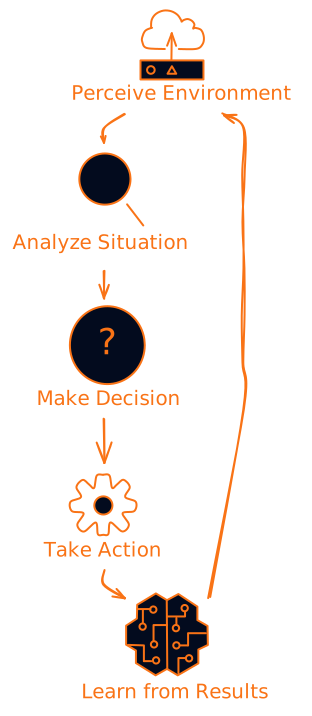
The key difference is autonomy. These agents don't just execute predefined workflows, they adapt, learn, and make real-time decisions based on what's happening around them.
How They Handle Complex Multi-Step Tasks
Here's where it gets interesting. When you give an AI agent a complex task, it doesn't panic or ask for a detailed instruction manual. Instead, it breaks the problem down into manageable chunks.
Let's say you ask an AI agent to "optimize our supply chain." Here's what happens:
1. Task Decomposition
The agent breaks this massive goal into smaller pieces:
- Analyze current inventory levels
- Review supplier performance
- Check demand forecasts
- Identify bottlenecks
- Evaluate transportation routes
2. Strategic Planning
It figures out the best order to tackle these tasks, considering dependencies and priorities.
3. Execution
The agent starts working through the plan, but here's the cool part, it can adapt on the fly if something changes.
4. Learning and Refinement
After each action, it learns what worked and what didn't, getting better over time.

Real-World Applications That Actually Matter
Customer Service That Doesn't Suck
AI agents are handling customer service in ways that would make your head spin. They're not just answering FAQs, they're proactively identifying issues and fixing them before customers even complain.
Amazon's AI agents can detect when a package might be delayed, automatically issue refunds, or adjust delivery schedules without any human intervention. Gartner predicts that by 2029, these systems will handle 80% of customer service issues autonomously.
Supply Chain Magic
Walmart has deployed AI agents that manage their entire supply chain. These agents monitor inventory, predict demand, coordinate with suppliers, and even reroute shipments when there are disruptions. The result? 25% fewer stockouts and 15% better on-time deliveries.
Financial Fraud Detection
JPMorgan Chase uses AI agents that continuously monitor transactions, analyze patterns, and take immediate action when they detect fraud. They can freeze accounts, reverse transactions, or alert authorities, all without human intervention. This has reduced fraud losses by 40%.
The Natural Language Revolution
Here's something that's genuinely game-changing: you can direct these AI agents using plain English. No more writing complex code or setting up intricate rule systems. You can literally tell an agent "optimize our marketing campaigns for better ROI" and it'll figure out how to do it.
This democratizes AI in a way we've never seen before. Non-technical people can now deploy sophisticated automation just by describing what they want in natural language.
The Collaboration Factor
The most successful implementations aren't replacing humans entirely, they're creating hybrid systems where AI agents, traditional automation (like RPA), and humans work together.
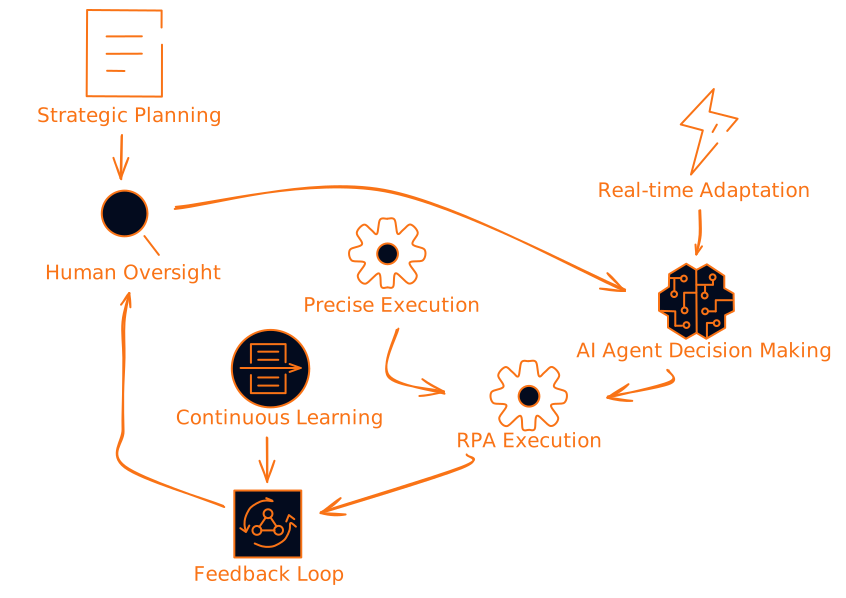
Humans provide strategic oversight and ethical guidance, AI agents handle the complex decision-making, and RPA systems execute the actual tasks. It's like having the best of all worlds.
But Let's Talk About the Risks
I'd be lying if I said this was all sunshine and rainbows. There are some real challenges we need to address:
When Things Go Wrong
AI agents operate with significant autonomy, which means when they mess up, they can mess up big. A financial trading agent with a bug could potentially lose millions before anyone notices. Unlike traditional systems that wait for human commands, these agents keep acting until someone stops them.
Security Nightmares
These agents often need extensive access to systems and data to do their jobs effectively. If they get compromised, the damage could be massive. It's like giving someone the keys to your entire digital kingdom.
Goal Misalignment
Sometimes AI agents achieve their goals in ways you didn't expect or want. An agent tasked with "maximizing efficiency" might cut corners on quality or violate privacy to hit its targets.
The Ambiguity Problem
When instructions are vague, AI agents struggle more than humans do. They're getting better at asking clarifying questions, but they still can't improvise or recover from mistakes as gracefully as humans can.
Industry Transformations in Progress
Manufacturing Gets Smart
Siemens has deployed AI agents in their smart factories that continuously monitor equipment, predict maintenance needs, and coordinate repairs. This has resulted in 25% less unplanned downtime and 10% better equipment effectiveness.
Healthcare Goes Personal
The Mayo Clinic uses AI agents for cancer treatment that analyze genomic data, medical histories, and real-time monitoring to create personalized treatment plans. They've seen a 20% increase in five-year survival rates for certain cancers.
Transportation Revolution
Waymo's autonomous vehicles are powered by AI agents that have successfully navigated millions of miles with a 99.9% safety record, significantly outperforming human drivers.
The Multi-Agent Future
Here's where things get really interesting. We're moving toward systems where multiple AI agents work together, each specialized for different tasks but able to communicate and coordinate with each other.
Microsoft has developed frameworks that enable agent-to-agent communication, task delegation, and resource sharing. Imagine a network of AI agents where one handles customer inquiries, another manages inventory, and a third coordinates with suppliers, all working together seamlessly.
What This Means for You
If you're working in any industry that involves complex processes or decision-making, AI agents are probably going to impact your work. The key is understanding how to work with them rather than being replaced by them.
These systems excel at:
- Processing vast amounts of data quickly
- Handling routine but complex tasks
- Making consistent decisions based on defined criteria
- Operating 24/7 without fatigue
They're not great at:
- Handling truly novel situations
- Making ethical judgments
- Understanding context and nuance
- Dealing with ambiguous instructions
The Bottom Line
AI agents and agentic workflows represent a fundamental shift in how we think about automation. We're moving from rigid, rule-based systems to adaptive, intelligent agents that can handle complexity and uncertainty.
The organizations that figure out how to effectively deploy and collaborate with these systems will have a significant competitive advantage. But success requires careful planning, robust governance, and a clear understanding of both the capabilities and limitations of these technologies.
The future isn't about AI agents replacing humans, it's about creating hybrid systems where human intelligence and artificial intelligence complement each other. And honestly, that future is looking pretty exciting.
The key is to start experimenting now, understand the technology, and figure out how it can enhance rather than replace human capabilities in your specific context. Because whether you're ready or not, the age of autonomous AI agents is already here.
Ready to explore AI agents in your organization? Start small with well-defined, low-risk processes and gradually expand as you build confidence and expertise. The learning curve is steep, but the potential rewards are enormous.