Unique IDs with Causality Explained: Lamport Clocks, Vector Clocks, and HLCs
Ever wondered why some distributed systems just work while others fall apart like a house of cards? The secret often lies in something most developers overlook: how you generate and manage unique identifiers. But we're not talking about your basic UUID here. We're diving into unique IDs with causality, the unsung heroes that keep distributed systems sane.
What Are Unique IDs with Causality (And Why Should You Care)?
Picture this: you're running a distributed e-commerce system. A customer places an order, updates their address, and then cancels the order, all within seconds. Without proper causal ordering, your system might process the cancellation before the order creation. Chaos ensues.
Unique IDs with causality solve this by embedding information about event relationships directly into the identifier itself. It's like having a timestamp that actually understands cause and effect.
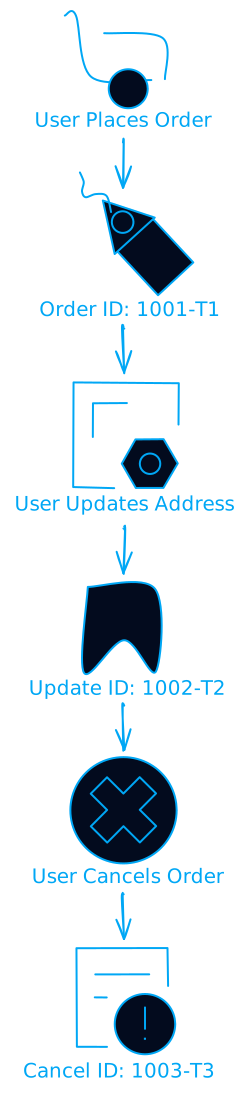
The beauty here? Each ID carries the causal relationship. T3 knows it came after T2, which came after T1. Your system can now process events in the right order, even if they arrive out of sequence.
The Real-World Problem This Solves
Let's get practical. In traditional distributed systems, you might use simple incrementing IDs or random UUIDs. But here's where things get messy:
The Bank Transfer Scenario:
- Alice transfers $100 to Bob
- Bob immediately transfers $50 to Charlie
- Network delays cause Bob's transfer to arrive before Alice's
Without causality, Bob's account might go negative, triggering fraud alerts. With causal IDs, the system knows Bob's transfer depends on Alice's and waits for the prerequisite.
How Different ID Generation Mechanisms Stack Up
Lamport Timestamps: The OG Solution
Lamport timestamps are like the grandfather of causal ordering. Each process maintains a logical clock that ticks forward with every event.
class LamportClock:
    def __init__(self):
        self.time = 0

    def tick(self):
        self.time += 1
        return self.time

    def update(self, received_time):
        self.time = max(self.time, received_time) + 1
        return self.time
Pros: Simple, lightweight, preserves causal order Cons: Doesn't provide total ordering across all events
Vector Clocks: When You Need the Full Picture
Vector clocks take it up a notch. Instead of a single timestamp, each process maintains a vector of logical clocks for every process in the system.
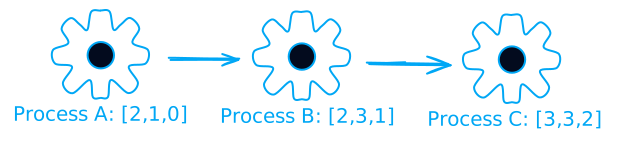
This gives you complete causal ordering but at the cost of storage (O(n) where n is the number of processes).
Hybrid Logical Clocks: Best of Both Worlds
HLCs combine physical time with logical ordering. They're like Lamport timestamps that actually know what time it is.
class HybridLogicalClock:
    def __init__(self):
        self.logical_time = 0
        self.physical_time = 0

    def now(self):
        current_physical = time.time_ns()
        if current_physical > self.physical_time:
            self.physical_time = current_physical
            self.logical_time = 0
        else:
            self.logical_time += 1

        return f"{self.physical_time}-{self.logical_time}"
Snowflake IDs: The Twitter Solution
Twitter's Snowflake IDs pack timestamp, worker ID, and sequence into a 64-bit integer. They're fast, sortable, and roughly time-ordered.
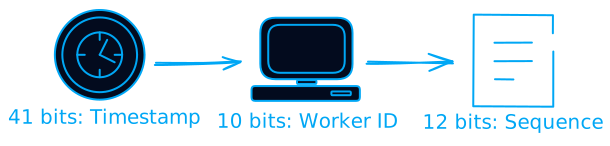
Perfect for: High-throughput systems that need roughly chronological ordering Not great for: Strict causal consistency requirements
Real-World Applications Where This Matters
Distributed Tracing: Following the Breadcrumbs
When debugging a distributed system, you need to trace requests across multiple services. Causal IDs let you reconstruct the exact flow of execution.
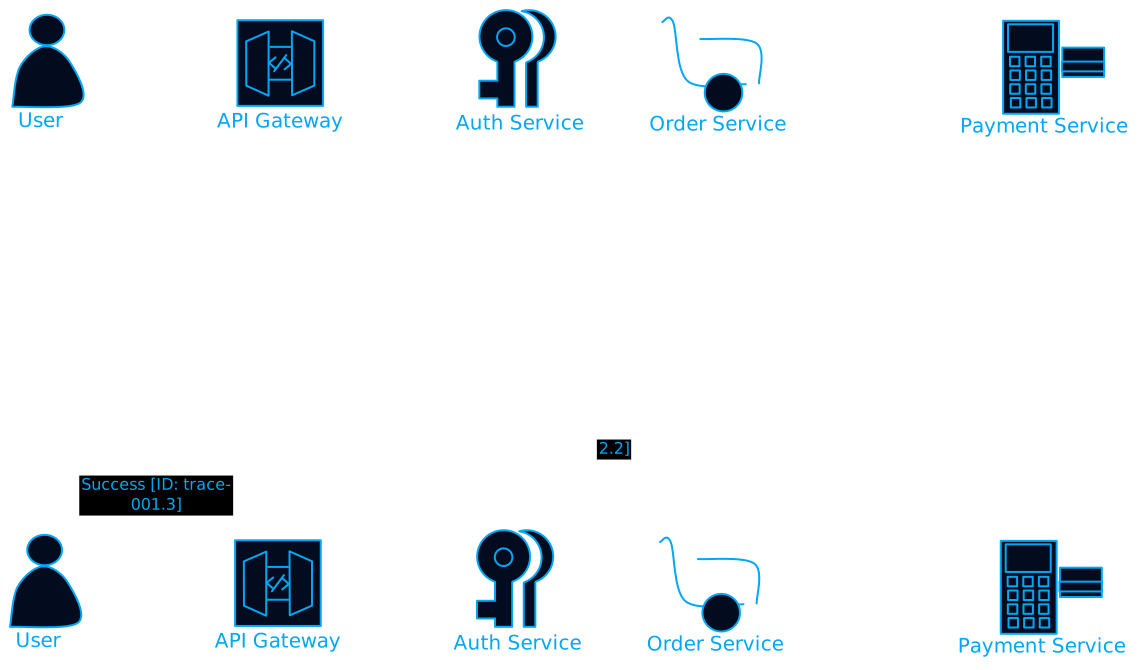
Event Sourcing: Building State from History
In event sourcing, your application state is built from a sequence of events. Causal ordering ensures events are applied in the correct order, even during replays.
Audit Trails: Compliance That Actually Works
Financial systems need bulletproof audit trails. Causal IDs help you prove not just what happened, but the exact sequence of events that led to each state change.
The Challenges You'll Face (And How to Handle Them)
Clock Drift: When Time Goes Sideways
Physical clocks drift. In a distributed system, this can mess up your causal ordering. Solutions:
- Use NTP synchronization (but don't rely on it completely)
- Implement logical clocks that don't depend on wall time
- Use hybrid approaches that combine both
Network Partitions: When Parts of Your System Go Dark
What happens when part of your system can't communicate? Your causal ID generation needs to handle this gracefully.
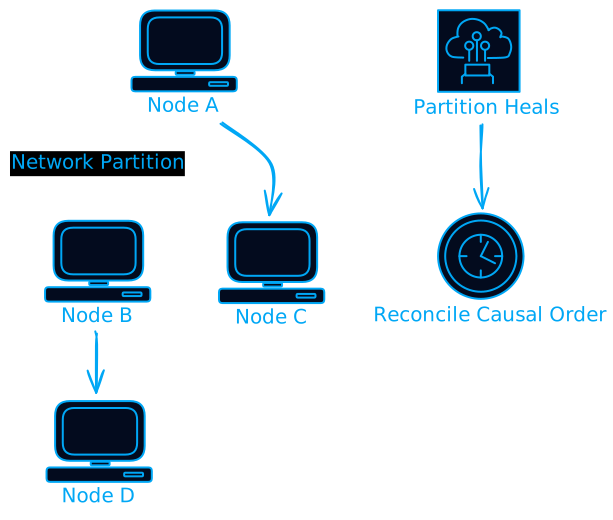
Strategy: Use vector clocks or similar mechanisms that can merge causal histories when partitions heal.
Performance vs. Consistency Trade-offs
Stronger causal guarantees often mean more overhead. You'll need to balance:
- Storage overhead (vector clocks grow with system size)
- Network overhead (more metadata to transmit)
- Computational overhead (comparing causal relationships)
Choosing the Right Approach for Your System
High-Throughput, Loose Ordering Requirements
Go with: Snowflake IDs or similar timestamp-based approaches Examples: Social media feeds, logging systems, analytics
Strong Consistency Requirements
Go with: Vector clocks or hybrid logical clocks Examples: Financial systems, collaborative editing, distributed databases
Microservices with Tracing Needs
Go with: Hierarchical trace IDs with causal relationships Examples: E-commerce platforms, API gateways, service meshes
Implementation Tips That'll Save Your Sanity
Start Simple, Scale Smart
Don't jump straight to vector clocks if Lamport timestamps will do. You can always upgrade your ID generation strategy as your system grows.
Design for Debuggability
Make your causal IDs human-readable when possible. order-2024-001.payment-003 tells a story that a7f3b2c8-9d1e-4f5g-h6i7-j8k9l0m1n2o3 doesn't.
Handle Edge Cases Gracefully
What happens when clocks jump backward? When processes restart? When you need to merge causal histories? Plan for these scenarios upfront.
Monitor Your Causal Ordering
Build observability into your causal ID system. Track metrics like:
- Clock drift between nodes
- Causal ordering violations
- ID generation latency
- Storage overhead growth
The Future of Causal IDs
We're seeing interesting developments in this space:
- CRDTs (Conflict-free Replicated Data Types) that embed causal relationships
- Blockchain-inspired causal ordering mechanisms
- ML-assisted causal relationship detection
The key trend? Moving causality from an afterthought to a first-class citizen in distributed system design.
Wrapping Up: Why This Matters More Than Ever
As systems become more distributed and real-time requirements get stricter, proper causal ordering isn't just nice to have, it's essential. Whether you're building the next unicorn startup or maintaining enterprise systems, understanding unique IDs with causality will save you from countless debugging sessions and production incidents.
The next time you're designing a distributed system, ask yourself: "How will I maintain causal relationships between events?" Your future self (and your on-call rotation) will thank you.
Remember, distributed systems are hard enough without fighting against causality. Embrace it, design for it, and watch your system become more predictable, debuggable, and reliable.
Want to dive deeper? Check out Leslie Lamport's original paper on logical clocks, or explore how systems like Apache Cassandra and Riak implement hybrid logical clocks in production. The rabbit hole goes deep, but the journey is worth it.