System Design Interviews Explained: What Really Matters and How to Prepare
System Design Interviews Explained: What Really Matters and How to Prepare
So you're prepping for system design interviews, huh? Let me guess, you've been drowning in YouTube videos about "designing Twitter" and wondering if you'll ever actually need to know how to handle a billion users. Here's the thing though, system design interviews aren't really about memorizing architectures. They're about showing you can think through complex problems without falling apart.
I've been through this rodeo a few times, both as an interviewer and interviewee, and honestly? Most people get it wrong. They focus on the flashy stuff like microservices and distributed caching, but miss the fundamentals that actually matter. Let me break down what you really need to know.
What System Design Interviews Are Actually Testing
Before we dive into the technical stuff, let's get one thing straight. System design interviews aren't testing whether you can recite the Netflix architecture from memory. They're testing:
- Can you break down a complex problem into manageable pieces?
- Do you understand trade-offs between different approaches?
- Can you communicate your thinking clearly?
- Do you know when to use what technology and why?
Think of it like this: if regular coding interviews are like solving a math problem, system design interviews are like being an architect. You need to understand not just how to build things, but why you'd build them that way.
The Foundation: Understanding Scale and Performance
Load Balancing: Your First Line of Defense
Load balancing is probably the most fundamental concept you'll encounter. It's basically traffic management for your servers. Instead of having one server handle all requests (and inevitably crash), you distribute the load across multiple servers.
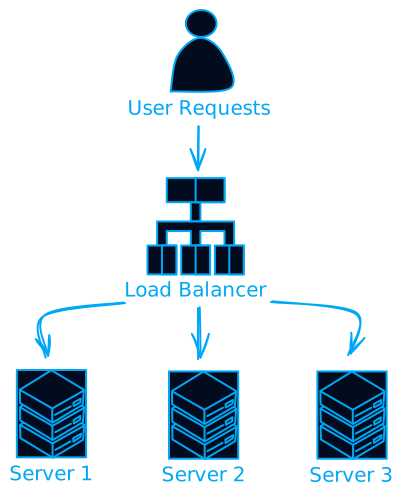
But here's where most people mess up, they think load balancing is just about distributing requests evenly. That's like saying driving is just about pressing the gas pedal. There are different types of load balancing:
- Round Robin: Simple rotation through servers
- Least Connections: Route to server with fewest active connections
- Weighted: Some servers handle more load than others
- Geographic: Route based on user location
The key insight? Different applications need different strategies. A read-heavy social media app might use geographic routing, while a real-time gaming platform might prioritize least connections.
Caching: The Performance Multiplier
Caching is like having a really good memory. Instead of going to the database every time someone asks for the same information, you keep frequently requested data in a fast-access storage layer.
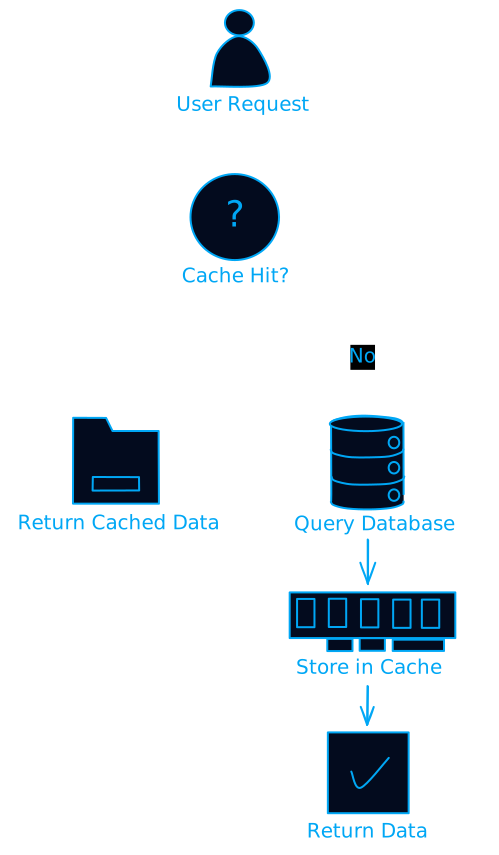
But caching isn't just "make things faster." You need to think about:
- Cache invalidation: How do you know when cached data is stale?
- Cache levels: Browser cache, CDN, application cache, database cache
- Cache patterns: Write-through, write-behind, cache-aside
The tricky part is cache invalidation. As Phil Karlton said, "There are only two hard things in Computer Science: cache invalidation and naming things." He wasn't kidding.
Data Partitioning: When One Database Isn't Enough
When your data gets too big for one database, you need to split it up. This is called sharding or partitioning. It's like organizing a massive library, you can't put all books on one shelf.
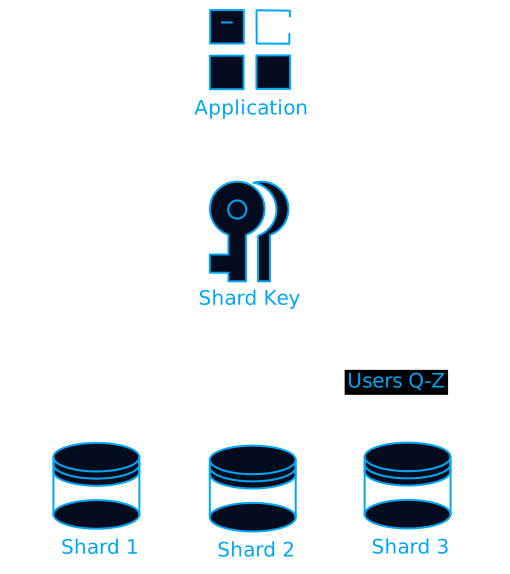
Common sharding strategies:
- Range-based: Split by ranges (A-H, I-P, Q-Z)
- Hash-based: Use a hash function to determine shard
- Directory-based: Maintain a lookup service
The gotcha? Sharding introduces complexity. Cross-shard queries become expensive, and rebalancing shards is a nightmare. Choose your sharding key wisely.
Data Storage: Picking the Right Tool for the Job
SQL vs NoSQL: The Eternal Debate
This is where interviews get interesting. Everyone wants to sound smart by suggesting NoSQL, but sometimes good old SQL is the right answer.
Use SQL when:
- You need ACID transactions
- Your data has clear relationships
- You need complex queries
- Consistency is more important than availability
Use NoSQL when:
- You need to scale horizontally
- Your data structure is flexible
- You can tolerate eventual consistency
- You need really fast reads/writes
But here's the thing, it's not always either/or. Many successful systems use both. Instagram uses PostgreSQL for user data and Cassandra for photo metadata. Netflix uses MySQL for billing and Cassandra for viewing history.
The CAP Theorem: Choose Your Poison
The CAP theorem states you can only guarantee two of three properties:
- Consistency: All nodes see the same data simultaneously
- Availability: System remains operational
- Partition Tolerance: System continues despite network failures
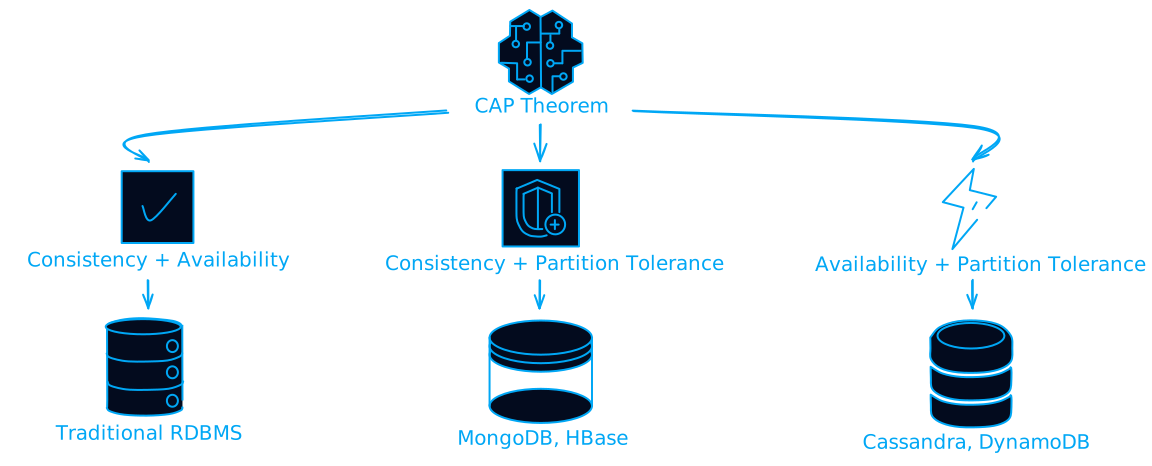
In practice, partition tolerance is usually non-negotiable (networks fail), so you're really choosing between consistency and availability.
Microservices: Not a Silver Bullet
Everyone loves talking about microservices in interviews. They sound sophisticated and modern. But let me tell you a secret: microservices are not always the answer.
When Microservices Make Sense
Microservices work well when:
- You have multiple teams working on different features
- Different parts of your system have different scaling requirements
- You want to use different technologies for different services
- You can handle the operational complexity
The Hidden Costs
But microservices come with costs:
- Network latency: Service-to-service calls are slower than in-process calls
- Complexity: Distributed systems are hard to debug
- Data consistency: Transactions across services are tricky
- Operational overhead: More services to deploy, monitor, and maintain
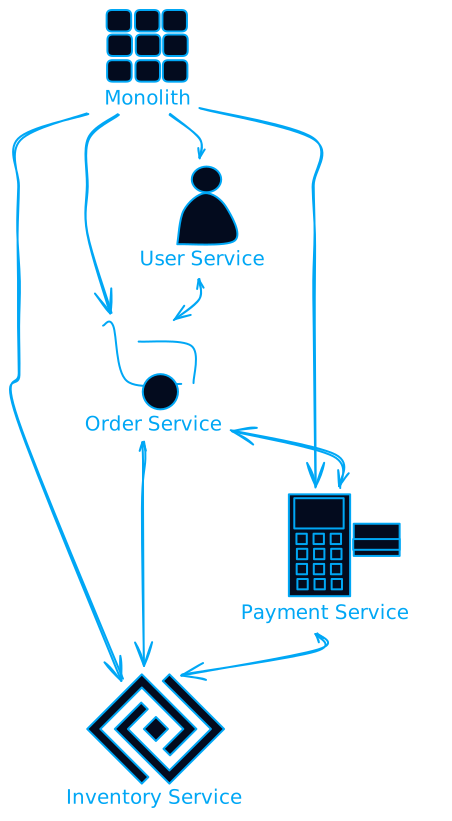
The key insight? Start with a monolith and extract services when you have a clear reason. Don't go microservices just because it's trendy.
Communication Patterns: How Services Talk
Synchronous vs Asynchronous
Synchronous communication is like a phone call. You make a request and wait for a response. It's simple but can create bottlenecks.
Asynchronous communication is like email. You send a message and continue with other work. It's more complex but more resilient.
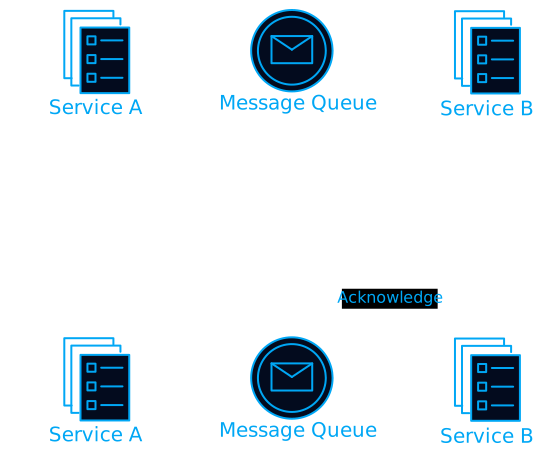
Popular message queue systems:
- RabbitMQ: Feature-rich, supports complex routing
- Apache Kafka: High-throughput, great for event streaming
- Amazon SQS: Managed service, simple to use
Security: Don't Be That Person
Security often gets overlooked in system design interviews, but it shouldn't. Here are the basics you need to know:
Authentication vs Authorization
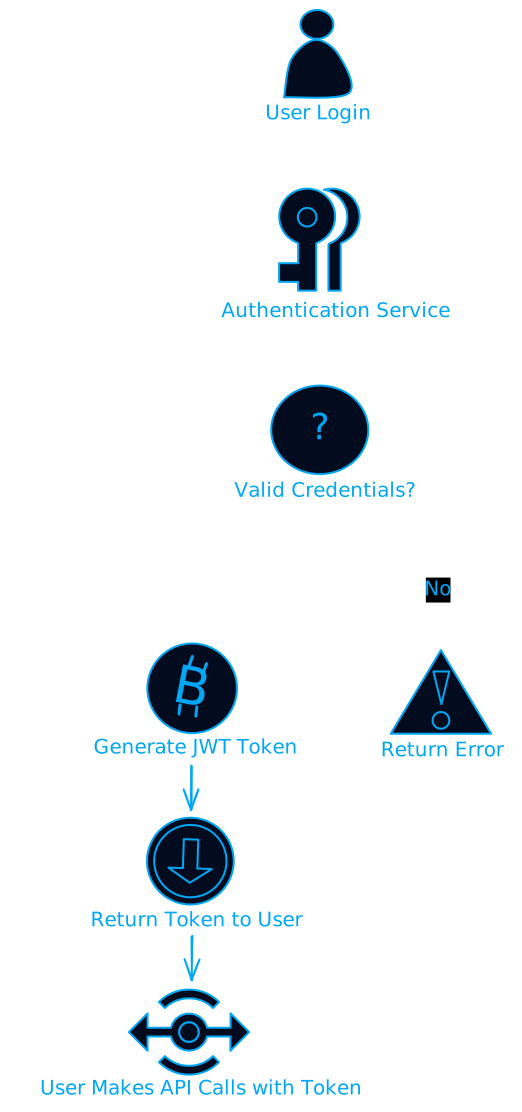
- Authentication: Who are you? (Login with username/password)
- Authorization: What can you do? (Admin can delete users, regular users cannot)
Common Security Patterns
- OAuth 2.0: For third-party authentication (Login with Google)
- JWT tokens: For stateless authentication
- API keys: For service-to-service communication
- Rate limiting: To prevent abuse
Monitoring and Observability: Know What's Happening
You can't fix what you can't see. Monitoring and observability are crucial for any system at scale.
The Three Pillars
- Metrics: Numerical data (CPU usage, request count, response time)
- Logs: Detailed records of what happened
- Traces: Track requests across multiple services
Key Metrics to Track
- Latency: How long requests take
- Throughput: How many requests per second
- Error rate: Percentage of failed requests
- Saturation: How "full" your service is
The golden rule: if you can't measure it, you can't improve it.
Real-World Example: Designing a Chat Application
Let's put it all together with a practical example. Say you're asked to design a chat application like WhatsApp.
Step 1: Clarify Requirements
Don't jump straight into architecture. Ask questions:
- How many users?
- What features? (text, images, group chats?)
- What platforms? (mobile, web?)
- Any special requirements? (end-to-end encryption?)
Step 2: High-Level Architecture
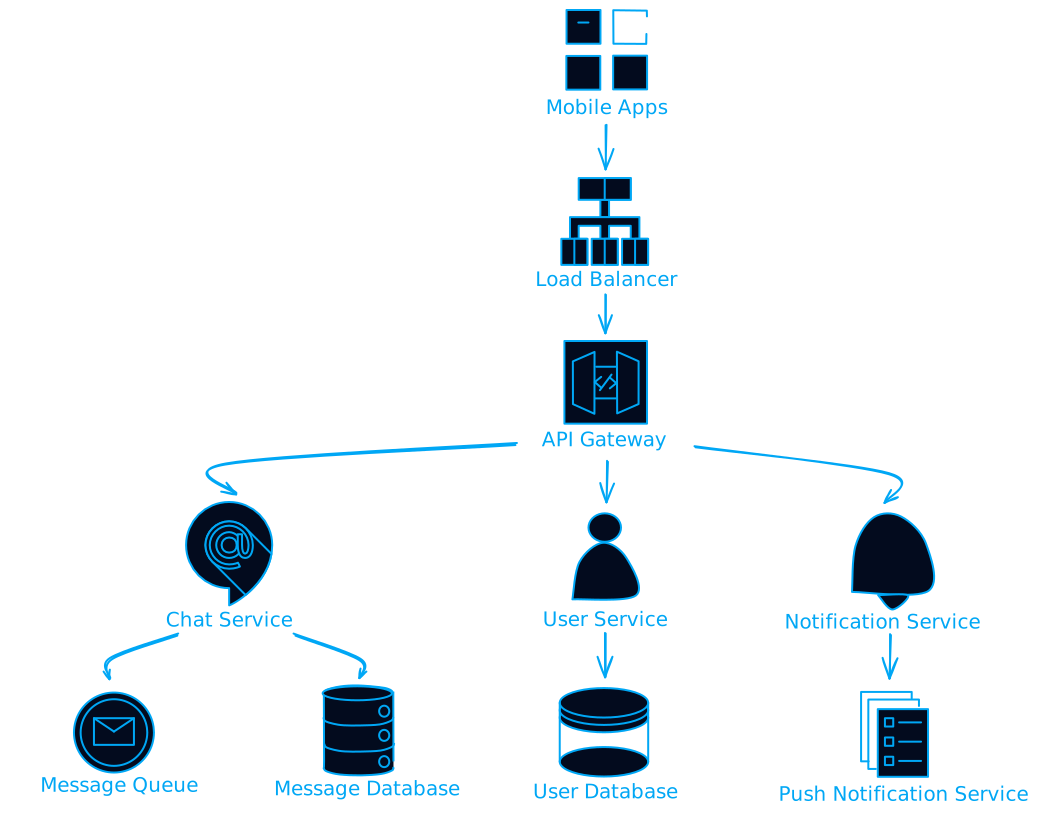
Step 3: Deep Dive into Components
Chat Service: Handles real-time messaging using WebSockets Message Queue: Ensures messages are delivered even if recipient is offline Database: Store messages (maybe partition by chat room or user) Notification Service: Send push notifications for offline users
Step 4: Address Scale and Performance
- Use CDN for media files (images, videos)
- Cache frequently accessed chats
- Shard database by user ID or chat room
- Use read replicas for message history
Common Interview Mistakes to Avoid
- Over-engineering: Don't suggest Kafka for 100 users
- Under-engineering: Don't ignore scale requirements
- Buzzword bingo: Don't use technologies you don't understand
- Ignoring trade-offs: Every decision has pros and cons
- Not asking questions: Clarify requirements before designing
Frequently Asked Questions (FAQ)
1. What is the real purpose of a system design interview?
System design interviews are meant to evaluate how you think through complex problems, not whether you can memorize big tech architectures. Interviewers want to see if you can break problems into smaller parts, understand trade-offs, communicate clearly, and choose the right tools for the right situation.
2. Do I need to know how to design billion-user systems?
No, you don’t need to perfectly design Twitter or Netflix. What matters more is structured thinking and fundamentals like load balancing, caching, databases, scalability, and communication clarity. Big-scale examples simply help you reason about performance and reliability.
3. What key topics should I focus on while preparing?
Focus on core building blocks that appear in most system designs:
- Load balancing
- Caching and cache invalidation
- Database selection (SQL vs NoSQL)
- Sharding and data partitioning
- CAP theorem concepts
- Microservices vs monolith trade-offs
- Synchronous vs asynchronous communication
- Security fundamentals
- Monitoring, logging, and observability
4. Should I always suggest microservices in an interview?
No. Microservices are useful only when you truly need independent scaling, multiple teams, technology flexibility, or large-scale complexity. They also add latency, operational overhead, debugging complexity, and consistency challenges. Many systems should start as a monolith and evolve when needed.
5. How should I structure my answer in a system design interview?
Use a clear, logical flow:
- Clarify requirements
- Identify features and constraints
- Propose a high-level architecture
- Deep dive into components (storage, communication, scalability)
- Discuss trade-offs and alternatives
- Cover security, reliability, and monitoring
The Bottom Line
System design interviews are about demonstrating your ability to think through complex problems systematically. Focus on understanding the fundamentals, asking good questions, and clearly communicating your thought process.
Remember, there's rarely one "correct" answer. What matters is showing you can reason about trade-offs, understand the implications of your choices, and adapt your design based on requirements.
The technologies will change, but the principles remain the same. Master the fundamentals, and you'll be ready for whatever system design challenge comes your way.
And hey, if you're still feeling overwhelmed, that's normal. System design is hard. Even experienced engineers debate these topics. The key is to keep learning, stay curious, and don't be afraid to say "I don't know, but here's how I'd figure it out."
Good luck with your interviews. You've got this.
Want to dive deeper into any of these topics? The rabbit hole goes deep, and there's always more to learn. That's what makes this field exciting.