Cracking the System Design Interview: Your Complete Guide to Landing That Dream Tech Job
Cracking the System Design Interview: Your Complete Guide to Landing That Dream Tech Job
So you've been grinding LeetCode for months, your algorithms are sharp, and you can reverse a binary tree in your sleep. But then comes the curveball that trips up even seasoned engineers: the system design interview. Unlike those neat coding problems with clear right answers, system design feels like being asked to architect the next Netflix while someone watches you think out loud.
Here's the thing though - system design interviews aren't meant to torture you. They're actually trying to see if you can think like a senior engineer, make smart tradeoffs, and communicate complex ideas without getting lost in the weeds. And once you understand the game, it becomes way less intimidating.
What Exactly Are System Design Interviews?
Think of system design interviews as the engineering equivalent of asking an architect to design a skyscraper. You're not expected to know every bolt and rivet, but you better understand load distribution, foundation requirements, and how people will actually use the building.
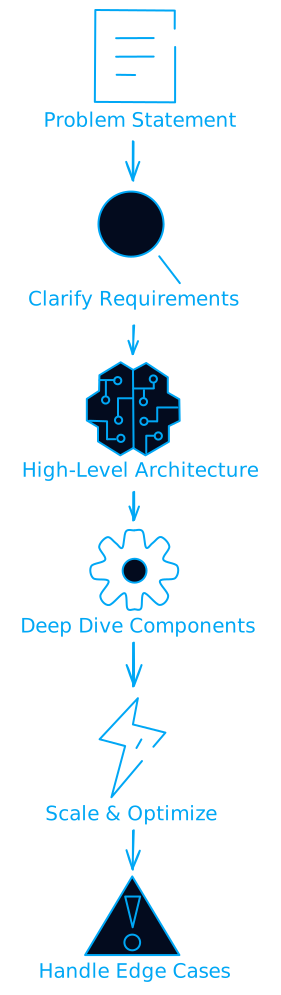
At companies like Google, Amazon, or Netflix, over 70% of senior engineering candidates face at least one system design round. These interviews have become the great equalizer - you might be a coding wizard, but can you design a system that serves millions of users without falling over?
The beautiful (and terrifying) thing about system design interviews is there's no single "correct" answer. Two engineers might propose completely different architectures for the same problem, and both could be right. What matters is your reasoning, your ability to identify tradeoffs, and how well you communicate your thought process.
Why Do These Interviews Feel So Different?
It's All About the Conversation
Unlike coding interviews where you're mostly talking to your IDE, system design is a two-way street. The interviewer isn't just watching you work - they're your collaborator, your customer, and sometimes your biggest skeptic all rolled into one.
This collaborative aspect trips up a lot of people. You might be used to heads-down coding, but suddenly you need to think out loud, ask clarifying questions, and defend your choices while sketching diagrams on a whiteboard (or virtual equivalent).
The Ambiguity Is Intentional
When an interviewer says "design Twitter," they're not giving you incomplete requirements by accident. The ambiguity is the point. They want to see if you'll ask the right questions:
- How many users are we talking about?
- What's more important - read performance or write performance?
- Do we need real-time updates or is eventual consistency okay?
- What's our budget for infrastructure?
But what if I ask the wrong questions? Here's a secret: there are no wrong questions, only missed opportunities to show your thinking. Even asking "should we optimize for mobile or desktop users?" shows you're thinking about the user experience, not just the technical implementation.
The Anatomy of a System Design Interview
Step 1: Requirements Gathering (The Make-or-Break Phase)
This is where most people either nail it or completely derail. You've got about 5-10 minutes to transform a vague problem statement into concrete requirements. Think of it like being a detective - you need to extract the real story from limited clues.
Functional Requirements (What the system should do):
- User registration and authentication
- Post creation and viewing
- Following other users
- Timeline generation
Non-Functional Requirements (How well it should do it):
- Support 100M daily active users
- Timeline should load in under 200ms
- 99.9% uptime
- Handle 10K tweets per second
Step 2: High-Level Architecture (The 30,000-Foot View)
Now you're sketching the big picture. Don't get bogged down in implementation details yet - think of this as your system's skeleton.
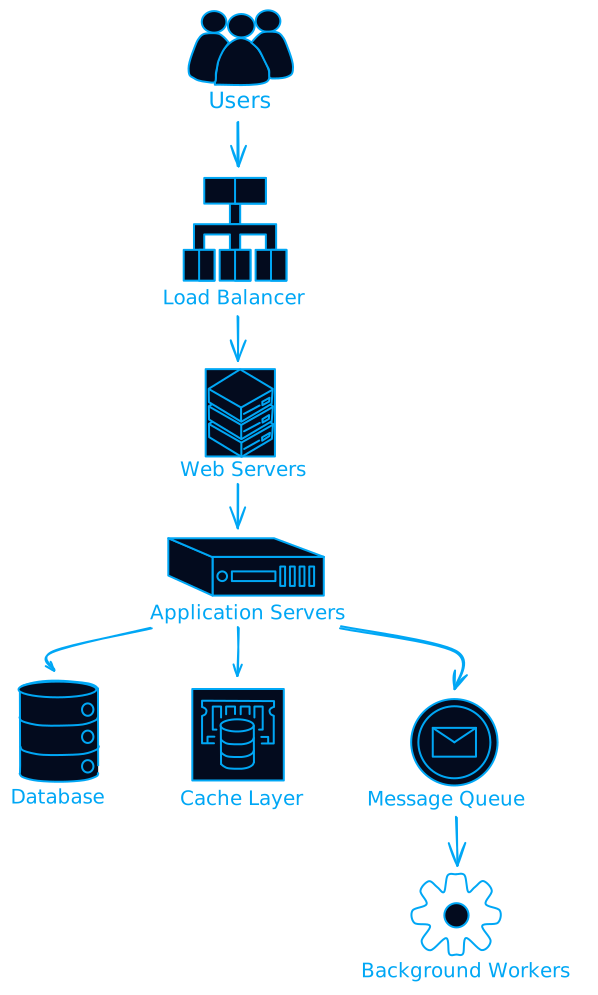
This is where you show you understand the fundamental building blocks: load balancers, web servers, databases, caches, and message queues. You're not just throwing buzzwords around - you're explaining why each component exists and how they work together.
Step 3: Deep Dive (Where the Magic Happens)
The interviewer will pick one or two components and ask you to go deeper. This is where your preparation pays off. Maybe they want to know about your database schema, or how you'll handle cache invalidation, or your strategy for handling viral content.
Database Design Example:
-- Users table
CREATE TABLE users (
    user_id BIGINT PRIMARY KEY,
    username VARCHAR(50) UNIQUE,
    email VARCHAR(100),
    created_at TIMESTAMP
);

-- Tweets table (partitioned by user_id)
CREATE TABLE tweets (
    tweet_id BIGINT PRIMARY KEY,
    user_id BIGINT,
    content TEXT,
    created_at TIMESTAMP,
    INDEX idx_user_created (user_id, created_at)
);
Step 4: Scale and Optimize (The Senior Engineer Test)
This is where they separate the junior from the senior engineers. They'll throw curveballs: "What if we have 10x more users?" or "What happens when a celebrity with 50M followers tweets?"
You need to think about:
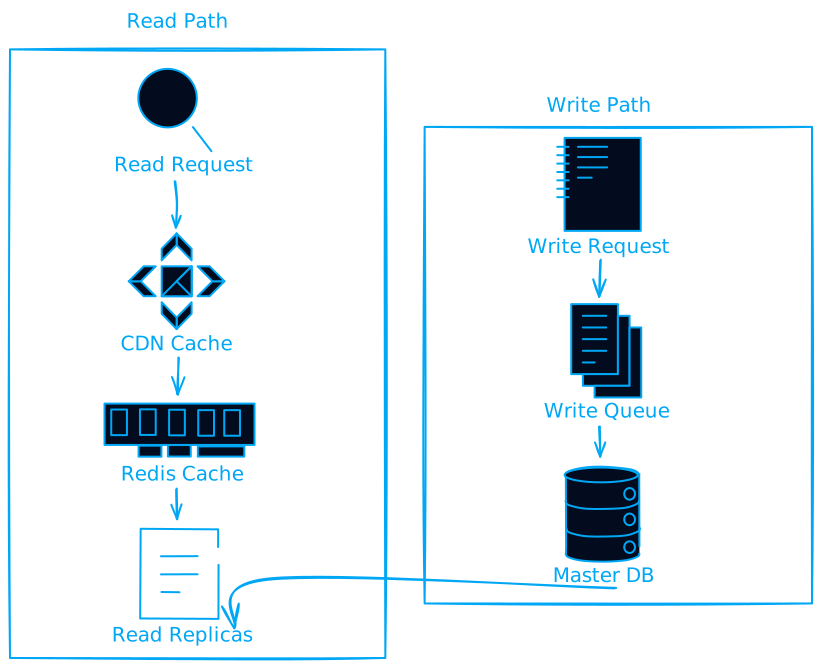
- Horizontal scaling: Adding more servers
- Caching strategies: Redis, CDNs, application-level caching
- Database sharding: Splitting data across multiple databases
- Load balancing: Distributing traffic intelligently
The Framework That Actually Works
Here's the structure that's helped countless engineers nail their system design interviews:
The RADIO Method
R - Requirements (functional and non-functional) A - Architecture (high-level design) D - Deep dive (into critical components) I - Issues and optimizations (scaling, bottlenecks) O - Operations (monitoring, deployment, maintenance)
This isn't just another acronym to memorize - it's a mental checklist that ensures you cover all the bases without getting lost.
But what if I run out of time? That's actually normal. The interviewer would rather see you tackle the most important parts thoroughly than rush through everything superficially. If you're running short on time, explicitly state what you'd focus on next: "If we had more time, I'd want to dive into the caching strategy and discuss how we'd handle cache invalidation."
Common Pitfalls (And How to Avoid Them)
Jumping Straight to Implementation
I've seen brilliant engineers start drawing database schemas before understanding the requirements. It's like designing the plumbing before knowing if you're building a house or a skyscraper.
Instead: Always start with requirements. Always.
Over-Engineering from the Start
Don't design for Google-scale unless you're actually solving a Google-scale problem. If the requirement is 1000 users, don't start with microservices and Kubernetes.
Instead: Start simple, then scale up when asked.
Ignoring the Interviewer
Some people get so focused on their design that they forget they're having a conversation. The interviewer might be trying to guide you toward an interesting discussion, but you're too busy optimizing your database indexes.
Instead: Treat it like pair programming. Check in regularly: "Does this approach make sense so far?"
Not Discussing Tradeoffs
Every technical decision has tradeoffs. SQL vs NoSQL, synchronous vs asynchronous processing, strong vs eventual consistency. If you're not discussing tradeoffs, you're missing the point.
Instead: For every major decision, explain the alternatives and why you chose your approach.
The Technologies You Should Know (But Not Memorize)
Databases
- SQL databases: PostgreSQL, MySQL (when you need ACID properties)
- NoSQL databases: MongoDB, Cassandra, DynamoDB (when you need scale and flexibility)
- In-memory stores: Redis, Memcached (for caching and sessions)
Message Queues and Streaming
- Message queues: RabbitMQ, Amazon SQS (for decoupling services)
- Streaming platforms: Apache Kafka, Amazon Kinesis (for real-time data processing)
Caching and CDNs
- Application caching: Redis, Memcached
- CDNs: CloudFlare, Amazon CloudFront (for static content delivery)
Load Balancing and Networking
- Load balancers: NGINX, HAProxy, AWS ALB
- API gateways: Kong, AWS API Gateway
You don't need to be an expert in all of these, but you should understand when and why you'd use each one.
Real-World Examples That Interviewers Love
Design a URL Shortener (Like bit.ly)
This is the "Hello World" of system design interviews. It seems simple but touches on encoding, databases, caching, and analytics.
Key considerations:
- How do you generate short URLs? (Base62 encoding vs random generation)
- How do you handle custom URLs?
- What about analytics and click tracking?
- How do you scale reads vs writes?
Design a Chat System (Like WhatsApp)
This one tests your understanding of real-time communication, message delivery, and mobile considerations.
Key considerations:
- WebSockets vs long polling for real-time updates
- Message delivery guarantees
- Online presence and last seen functionality
- Group chat scalability
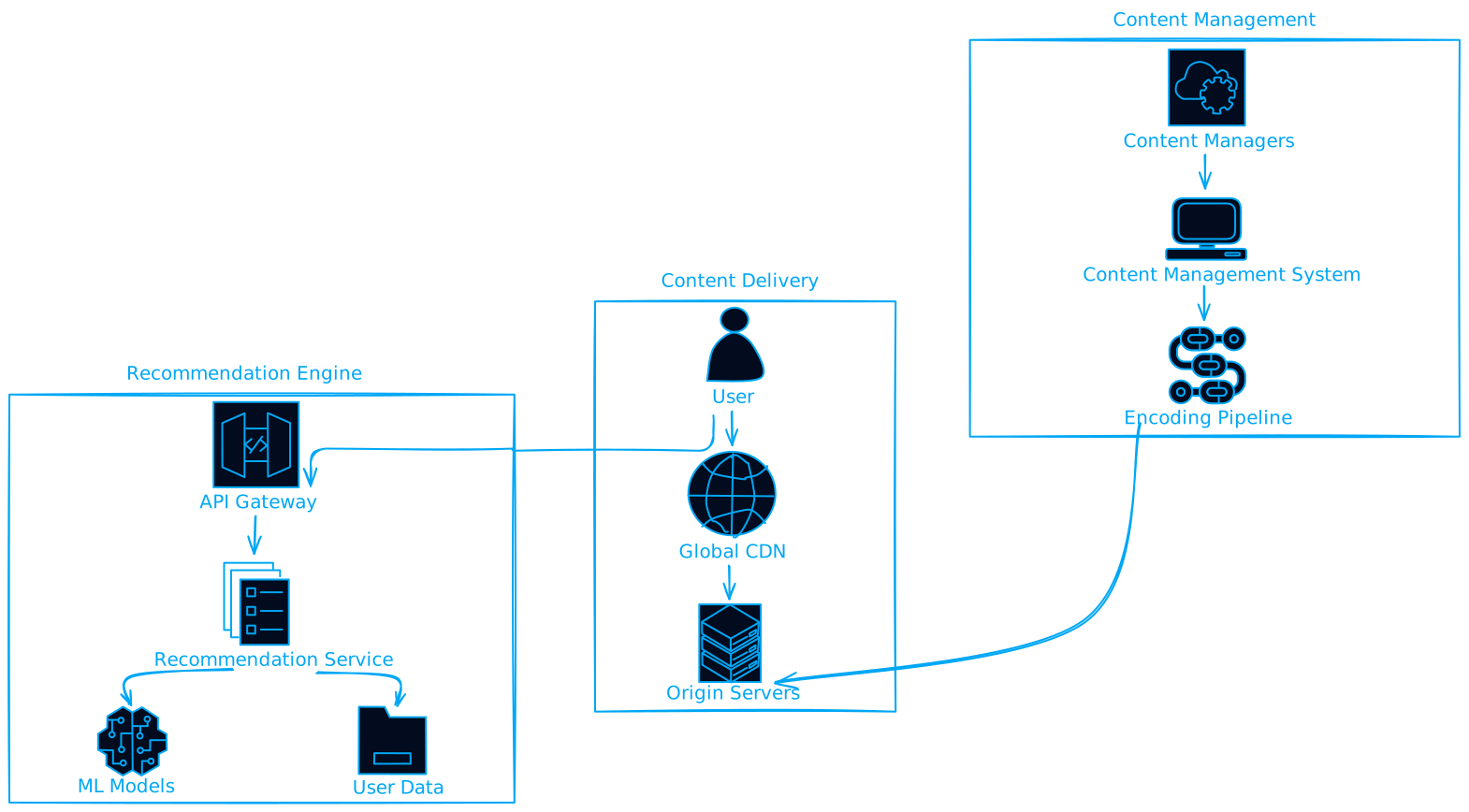
Design a Video Streaming Service (Like Netflix)
The holy grail of system design questions. It covers content delivery, recommendation systems, and massive scale.
Key considerations:
- Video encoding and multiple quality levels
- CDN strategy for global content delivery
- Recommendation algorithm architecture
- Handling peak traffic (new episode releases)
How to Actually Prepare (Beyond Reading Blog Posts)
Practice with Real Constraints
Don't just read about system design - actually try to design systems. Pick a service you use daily and try to reverse-engineer its architecture. How does Instagram handle photo uploads? How does Spotify recommend music?
Do Mock Interviews
Find a friend, colleague, or use platforms like Pramp or InterviewKickstart. There's no substitute for actually talking through your design with another person. You'll discover gaps in your knowledge and improve your communication skills.
Study Real System Architectures
Read engineering blogs from companies like Netflix, Uber, Airbnb, and Pinterest. They often publish detailed posts about their architecture decisions and the problems they solved. These aren't just interesting reads - they're your cheat sheet for common patterns and solutions.
Build Something (Even If It's Small)
The best way to understand system design is to actually build systems. Create a simple web app, deploy it, add a database, implement caching. You don't need to build the next Facebook, but hands-on experience beats theoretical knowledge every time.
The Mindset Shift That Changes Everything
Here's what finally clicked for me: system design interviews aren't about proving you know every technology or can solve every problem. They're about showing you can think systematically, communicate clearly, and make reasonable decisions with incomplete information.
You're not expected to be perfect. You're expected to be thoughtful.
When you get stuck, say so. When you're unsure about a tradeoff, discuss it openly. When you realize there's a flaw in your design, acknowledge it and iterate. This isn't a sign of weakness - it's exactly what senior engineers do in real life.
What Happens After You "Pass"?
Landing the system design interview is just the beginning. The skills you develop preparing for these interviews - thinking about scale, understanding tradeoffs, communicating technical concepts clearly - these become your superpowers as a senior engineer.
You'll find yourself naturally thinking about system architecture in your day job. You'll ask better questions in design meetings. You'll write more scalable code because you understand the bigger picture.
The Bottom Line
System design interviews feel intimidating because they're testing skills that many engineers don't use daily. But here's the secret: the fundamentals haven't changed much in decades. Load balancers, databases, caches, and message queues are still the building blocks of every large system.
What has changed is the scale and the tools, but the principles remain the same. Master the fundamentals, practice communicating your ideas clearly, and remember that every senior engineer was once exactly where you are now - staring at a whiteboard, wondering how to design Twitter.
The good news? With the right preparation and mindset, system design interviews can actually be fun. There's something deeply satisfying about architecting a system that could theoretically serve millions of users. And when you nail that interview, you'll have the confidence that comes from knowing you can think like a senior engineer.
Now stop reading blog posts and go practice. Your future self (and your bank account) will thank you.
❓ Frequently Asked Questions About System Design Interviews
What is a system design interview and why is it important?
A system design interview evaluates your ability to architect scalable and reliable systems like real-world applications. Instead of writing code, you define requirements, design high-level architecture, discuss components, make tradeoffs, and explain how the system handles scale, failures, and performance. It helps companies assess if you can think like a senior engineer.
Why do system design interviews feel harder than coding interviews?
They feel harder because they’re open-ended, collaborative, and intentionally ambiguous. There is no single “right” answer. You must clarify requirements, think aloud, justify design decisions, discuss tradeoffs, and handle real-world constraints—skills many engineers do not use daily.
How should I structure my answer in a system design interview?
Use a clear framework like RADIO:
- R — Requirements: Clarify functional & non-functional needs
- A — Architecture: Present high-level system design
- D — Deep Dive: Explain key system components
- I — Issues & Optimization: Scaling, reliability, performance
- O — Operations: Monitoring, maintenance, deployment strategy
What are the biggest mistakes candidates make in system design interviews?
Common mistakes include:
- Jumping into design without clarifying requirements
- Over-engineering from the start
- Ignoring tradeoffs and alternatives
- Designing for unrealistic scale
- Not engaging with the interviewer
Talking through decisions and collaborating openly significantly improves performance.
How can I best prepare for system design interviews?
Effective preparation strategies include:
- Practicing real system design problems
- Studying real-world architectures from companies like Netflix, Uber, and Airbnb
- Doing mock interviews
- Learning fundamentals like caching, load balancing, databases, queues, and CDNs
- Building small systems to gain practical experience
Ready to dive deeper? Check out these resources:
- Designing Data-Intensive Applications by Martin Kleppmann
- System Design Primer on GitHub
- High Scalability for real-world architecture case studies
Want to practice? Try these platforms:
- Pramp for free mock interviews
- InterviewKickstart for structured preparation
- Grokking the System Design Interview for comprehensive courses
Remember: every expert was once a beginner. The only difference is they didn't give up when things got challenging. You've got this.