Read-Through vs Write-Through Cache
Ever wondered why some apps feel lightning-fast while others make you want to throw your phone across the room? The secret often lies in how they handle caching. Today, we're diving deep into two caching strategies that can make or break your system's performance: Read-Through and Write-Through caching.
If you're building anything that needs to scale (and let's be honest, who isn't these days?), understanding these patterns isn't just nice to have, it's absolutely critical. Let's break down everything you need to know.
What Are Read-Through and Write-Through Caches?
Think of caching like having a really smart assistant who remembers stuff for you. But here's the thing: different assistants work differently.
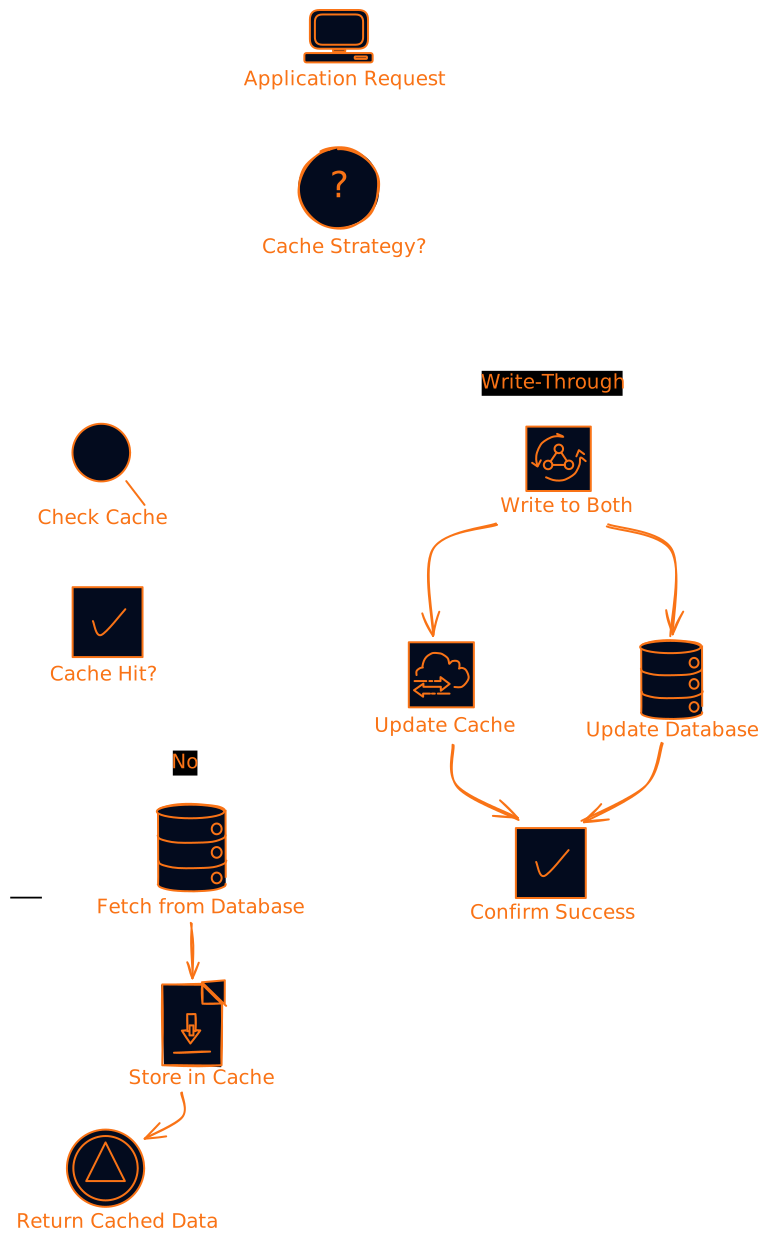
Read-Through Cache is like having an assistant who automatically goes and fetches information when you ask for something they don't already know. You ask for user profile data, they check their notes first. If it's not there, they go get it from the main database, write it down for next time, and hand it to you.
Write-Through Cache is like having an assistant who writes everything down in two places at once. When you tell them to update something, they write it in their quick-access notebook AND in the main filing cabinet simultaneously. No shortcuts, no delays.
Read-Through Cache: The Lazy Genius
How It Actually Works
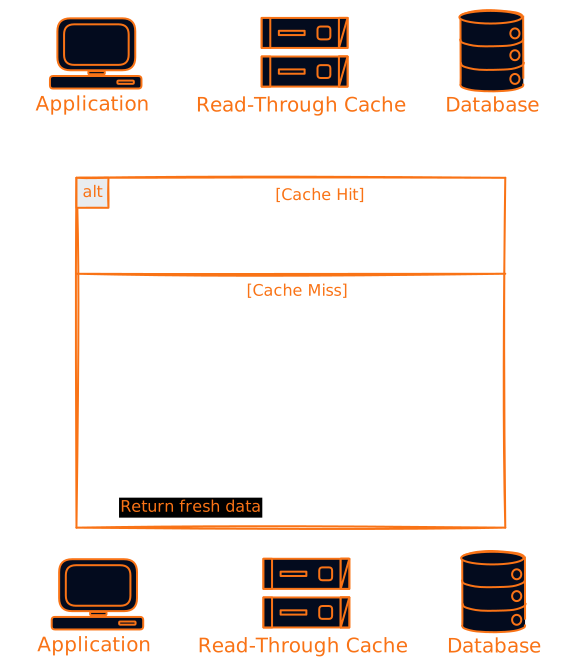
Read-Through caching is beautifully simple in concept but powerful in execution. When your application asks for data:
- Cache checks if it has the data
- If yes (cache hit), returns it immediately
- If no (cache miss), automatically fetches from the database
- Stores the fresh data in cache
- Returns the data to your application
The magic here is that your application code doesn't need to know about cache misses. The cache layer handles all the heavy lifting.
The Good Stuff
Simplified Application Logic: Your code becomes cleaner because you don't need to handle cache misses manually. The cache layer does all the work behind the scenes.
Performance Boost: Once data is cached, subsequent requests are served at lightning speed. We're talking sub-millisecond response times for cache hits.
Automatic Data Loading: No need to pre-populate your cache or worry about warming strategies (though you still can if you want to optimize further).
The Not-So-Good Stuff
Cache Miss Penalty: The first request for any piece of data will be slower because it needs to hit the database. This is called the "cold start" problem.
Potential Stale Data: If someone updates the database directly (bypassing your application), your cache might serve outdated information until it expires or gets invalidated.
Single Point of Failure: If your cache goes down, every request becomes a database hit. Your database better be ready for that traffic spike.
When to Use Read-Through
Read-Through shines in these scenarios:
- Content Management Systems: Article content, user profiles, configuration data
- E-commerce Product Catalogs: Product information that doesn't change frequently
- Social Media Feeds: User timelines, friend connections (with proper invalidation)
- Configuration Services: Application settings, feature flags
Write-Through Cache: The Perfectionist
How It Actually Works
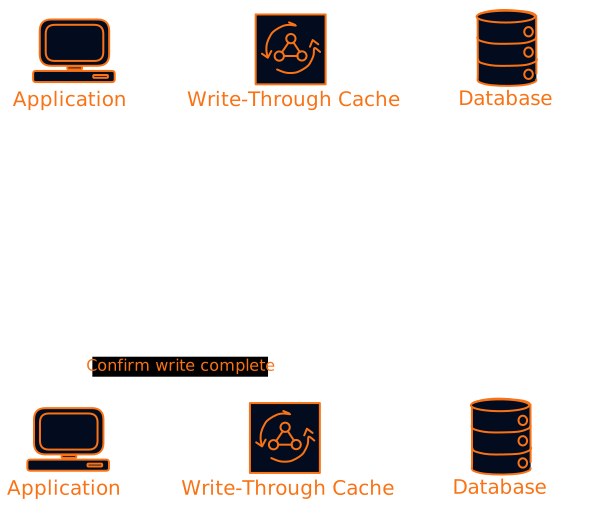
Write-Through caching takes a different approach. Every write operation goes through both the cache and the database:
- Application sends write request
- Cache writes to database first
- Database confirms the write
- Cache updates its own copy
- Cache confirms success to application
This ensures your cache and database are always in sync, but it comes with trade-offs.
The Good Stuff
Data Consistency Guarantee: Your cache and database are always in sync. No stale data, no inconsistencies, no surprises.
Durability: Even if your cache crashes, your data is safe in the database. No data loss risk.
Simplicity: No complex invalidation logic needed. Write once, it's everywhere.
The Not-So-Good Stuff
Write Latency: Every write operation is slower because it has to wait for both cache and database updates. This can be a killer for write-heavy applications.
Cache Churn: You might end up caching data that's rarely read, wasting precious cache space.
Scalability Bottlenecks: In distributed systems, synchronizing writes across multiple cache nodes can become complex and slow.
When to Use Write-Through
Write-Through is perfect for:
- Financial Systems: Account balances, transaction records where consistency is non-negotiable
- Inventory Management: Stock levels, reservation systems
- User Authentication: Login credentials, session tokens, security-critical data
- Audit Logs: Compliance data that must be immediately durable
The Real-World Performance Battle
Let's talk numbers because performance matters.
Read-Through Performance Profile
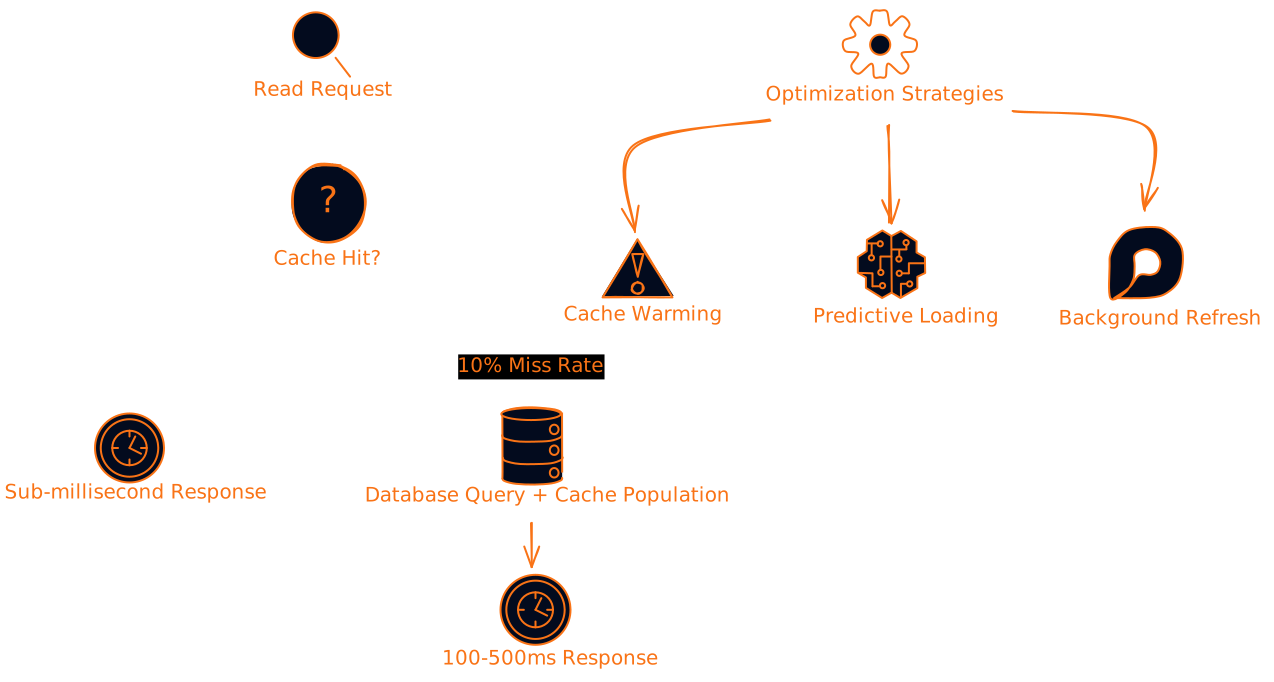
Cache Hit Performance: 0.1-1ms response time Cache Miss Performance: 50-500ms (depending on database speed) Typical Hit Rates: 85-95% for well-designed systems
Write-Through Performance Profile
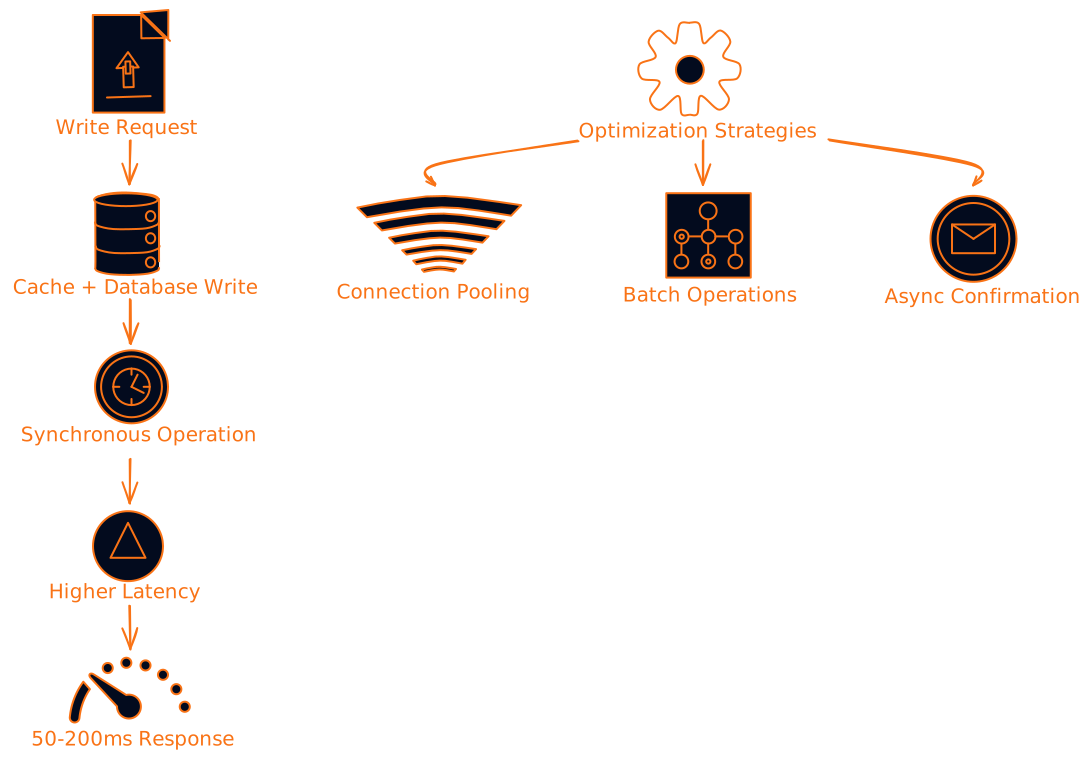
Write Performance: 50-200ms (cache + database time) Consistency: 100% (cache and database always in sync) Durability: Immediate (no data loss risk)
But What About Hybrid Approaches?
Here's where things get interesting. Most real-world systems don't use just one strategy. They mix and match based on data characteristics.
Multi-Level Caching Architecture
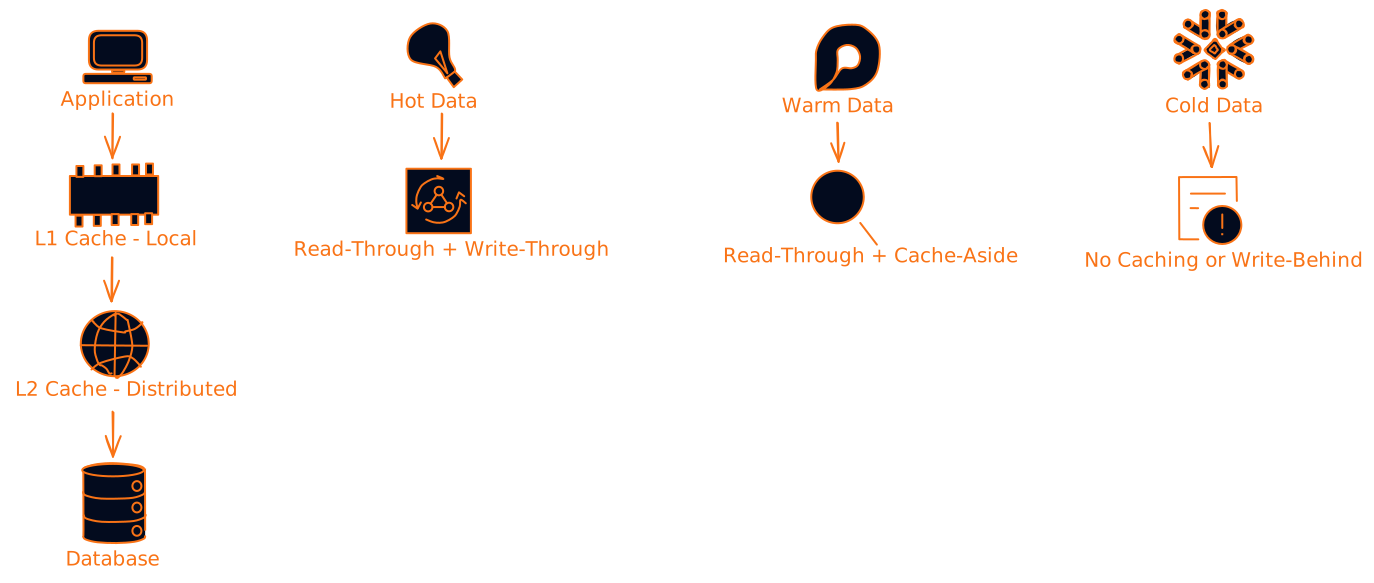
Hot Data (frequently accessed, critical): Use both Read-Through and Write-Through for maximum performance and consistency.
Warm Data (moderately accessed): Use Read-Through with Cache-Aside for writes to balance performance and complexity.
Cold Data (rarely accessed): Skip caching entirely or use Write-Behind for eventual consistency.
Decision Framework: Which Strategy Should You Choose?
Here's a practical decision tree based on real-world experience:
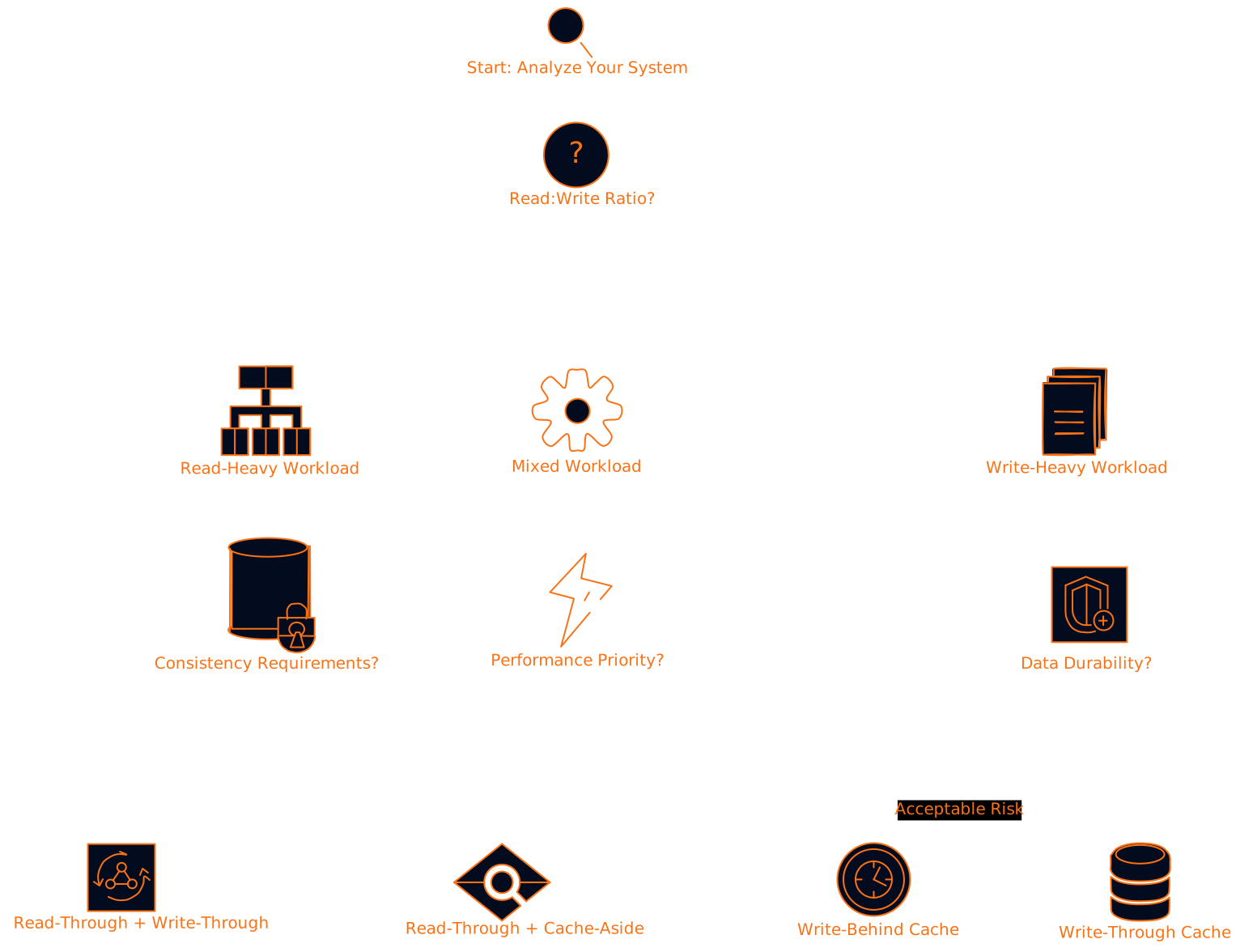
Key Questions to Ask Yourself
-
What's your read-to-write ratio? If you're reading data 10x more than writing it, Read-Through makes sense.
-
How critical is data consistency? Financial data? Go Write-Through. Social media likes? Maybe not so much.
-
What's your tolerance for latency? Write-Through adds latency to writes but guarantees consistency.
-
How complex can your system be? Simple systems might benefit from straightforward strategies, while complex systems can handle hybrid approaches.
Common Pitfalls and How to Avoid Them
Read-Through Pitfalls
Cache Stampede: When a popular cache entry expires, multiple requests hit the database simultaneously.
Solution: Use cache locking or background refresh strategies.
// Bad: Multiple requests hit database
async function getUser(id) {
    let user = await cache.get(`user:${id}`);
    if (!user) {
        user = await database.getUser(id); // Multiple requests do this
        await cache.set(`user:${id}`, user);
    }
    return user;
}

// Good: Use locking to prevent stampede
async function getUserWithLock(id) {
    let user = await cache.get(`user:${id}`);
    if (!user) {
        const lock = await cache.lock(`user:${id}:lock`);
        if (lock) {
            user = await database.getUser(id);
            await cache.set(`user:${id}`, user);
            await cache.unlock(`user:${id}:lock`);
        } else {
            // Wait and try cache again
            await sleep(10);
            user = await cache.get(`user:${id}`);
        }
    }
    return user;
}
Write-Through Pitfalls
Not Handling Partial Failures: What happens if the database write succeeds but the cache update fails?
Solution: Implement proper transaction management and rollback strategies.
// Bad: No transaction management
async function updateUser(id, data) {
    await database.updateUser(id, data);
    await cache.set(`user:${id}`, data); // What if this fails?
}

// Good: Proper transaction handling
async function updateUserSafely(id, data) {
    const transaction = await database.beginTransaction();
    try {
        await database.updateUser(id, data, { transaction });
        await cache.set(`user:${id}`, data);
        await transaction.commit();
    } catch (error) {
        await transaction.rollback();
        throw error;
    }
}
Monitoring and Optimization
Key Metrics to Track
For Read-Through Caches:
- Cache hit rate (aim for >90%)
- Average response time for hits vs misses
- Cache miss frequency patterns
- Memory utilization
For Write-Through Caches:
- Write latency (P95, P99 percentiles)
- Database vs cache write success rates
- Consistency check results
- Transaction rollback frequency
[Image suggestion: A monitoring dashboard showing cache hit rates, latency percentiles, and error rates over time]
Performance Optimization Tips
- Use Connection Pooling: Reuse database connections to reduce overhead
- Implement Batch Operations: Group related operations when possible
- Monitor Cache Size: Implement proper eviction policies
- Use Compression: Reduce memory usage for large objects
- Implement Circuit Breakers: Prevent cascade failures
Real-World Case Studies
Case Study 1: E-commerce Product Catalog
Challenge: 10M products, 100K concurrent users, 95% read traffic
Solution: Read-Through cache with 24-hour TTL
- Cache hit rate: 94%
- Average response time: 2ms (vs 150ms database query)
- 50x reduction in database load
Case Study 2: Financial Trading Platform
Challenge: Real-time account balances, zero tolerance for inconsistency
Solution: Write-Through cache with immediate consistency
- Write latency: 45ms (acceptable for financial operations)
- Zero data inconsistencies over 2 years
- 99.99% uptime maintained
The Future of Caching Strategies
As systems become more distributed and data grows exponentially, caching strategies are evolving:
Edge Caching: Moving caches closer to users geographically AI-Powered Cache Management: Using machine learning to predict what to cache Serverless Caching: Cache-as-a-service offerings that scale automatically
Wrapping Up: Your Next Steps
Choosing between Read-Through and Write-Through caching isn't about finding the "best" strategy, it's about finding the right fit for your specific needs.
Start with these steps:
- Analyze your data access patterns - Are you read-heavy or write-heavy?
- Define your consistency requirements - Can you tolerate eventual consistency?
- Measure your current performance - What are your baseline metrics?
- Start simple - Implement one strategy well before getting fancy
- Monitor and iterate - Use real data to guide your optimizations
Remember, the best caching strategy is the one that solves your actual problems, not the one that sounds coolest in architecture meetings.
The key is understanding your trade-offs and making informed decisions. Whether you go with Read-Through for performance, Write-Through for consistency, or a hybrid approach for the best of both worlds, make sure you're solving real problems for real users.
What caching challenges are you facing in your systems? The patterns we've covered today should give you a solid foundation to build upon, but every system is unique. Start with the basics, measure everything, and optimize based on real-world usage patterns.
Want to dive deeper into system design patterns? Check out our guides on database sharding strategies and microservices communication patterns. And if you found this helpful, share it with your team, they'll probably thank you for it.