The Great State Debate: Stateful vs Stateless Architecture in Modern System Design
The Great State Debate: Stateful vs Stateless Architecture in Modern System Design
How choosing the right state management approach can make or break your application's scalability
Introduction: The Hidden Foundation of Every Digital Experience
Picture this: You're shopping online, adding items to your cart, when suddenly the website "forgets" everything you've selected. Or imagine a multiplayer game where your character's progress vanishes every time you perform an action. These scenarios highlight one of the most critical yet often overlooked decisions in system architecture: how to manage application state.
In the rapidly evolving landscape of distributed systems, the choice between stateful and stateless architectures has become the defining factor that separates scalable, resilient applications from those that crumble under pressure. This isn't just a technical preference—it's a strategic decision that impacts everything from user experience to operational costs.
But here's the twist: there's no universal "right" answer. The best architecture depends on your specific context, and understanding when to use each approach is what separates good engineers from great ones.
What Exactly Are Stateful and Stateless Architectures?
The Fundamental Difference
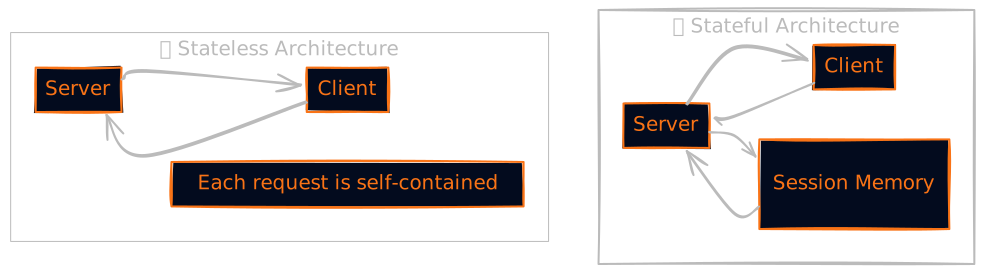
Think of state as the "memory" of your application—the information that defines what's happening right now. Stateful architecture is like having a conversation with someone who remembers everything you've discussed. Stateless architecture is like talking to someone with amnesia who needs you to provide full context every single time.
Stateful Architecture: The Persistent Memory Keeper
In stateful systems, the server maintains information about each client's session. It's like a bartender who remembers your usual drink order—convenient, personal, but tied to that specific bartender.
Key characteristics:
- Server stores client context between requests
- Sessions are maintained in memory or persistent storage
- Each client has a "relationship" with specific server instances
- Rich, contextual interactions possible
Stateless Architecture: The Clean Slate Approach
Stateless systems treat every request as a fresh start. It's like ordering from a vending machine—you provide exact change and specific instructions every time, but any vending machine can serve you.
Key characteristics:
- No client context stored on server
- Each request contains all necessary information
- Any server instance can handle any request
- Horizontal scaling becomes trivial
The Real-World Impact: Why This Choice Matters
Performance: The Speed vs Scalability Trade-off
Stateful systems often deliver superior performance for individual users. Since the server remembers context, subsequent requests can be processed faster—no need to re-authenticate, re-establish preferences, or reload user data.
Stateless systems sacrifice individual request speed for overall system throughput. While each request might take slightly longer (due to included context), the system can handle vastly more concurrent users.
User Experience: Continuity vs Consistency
Consider these scenarios:
E-commerce Shopping Cart (Stateful Advantage):
User adds Item A → Server remembers
User adds Item B → Server knows about A + B
User navigates away and returns → Cart intact
API-First Mobile App (Stateless Advantage):
Mobile app crashes → No server-side state lost
User switches devices → Seamless continuation
Network interruption → Easy recovery
The Architecture Deep Dive: How Each Approach Actually Works
Stateful Session Management in Action
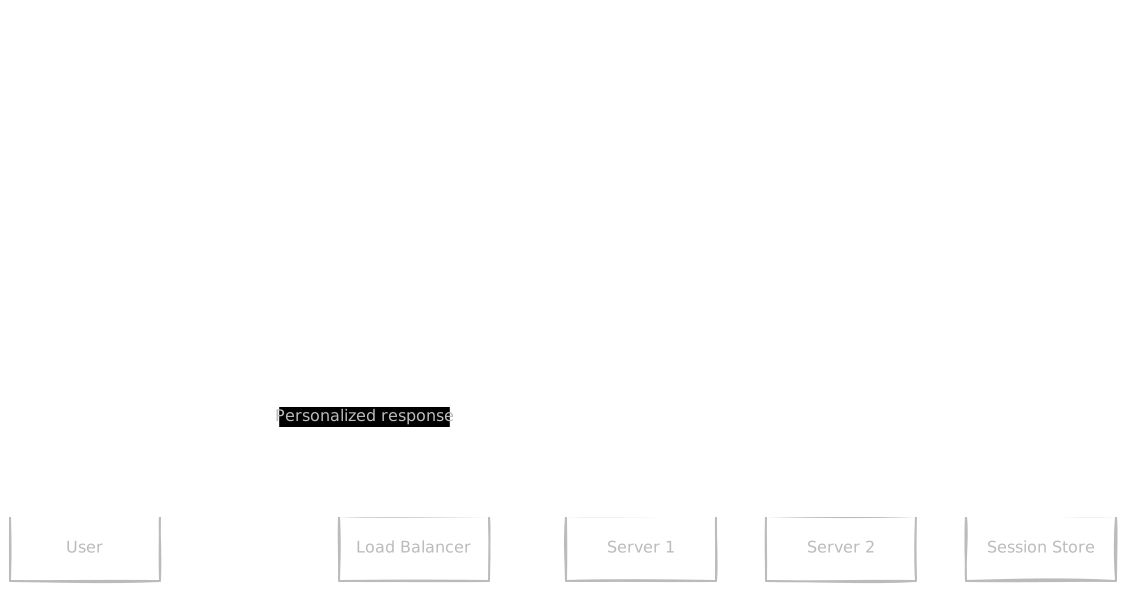
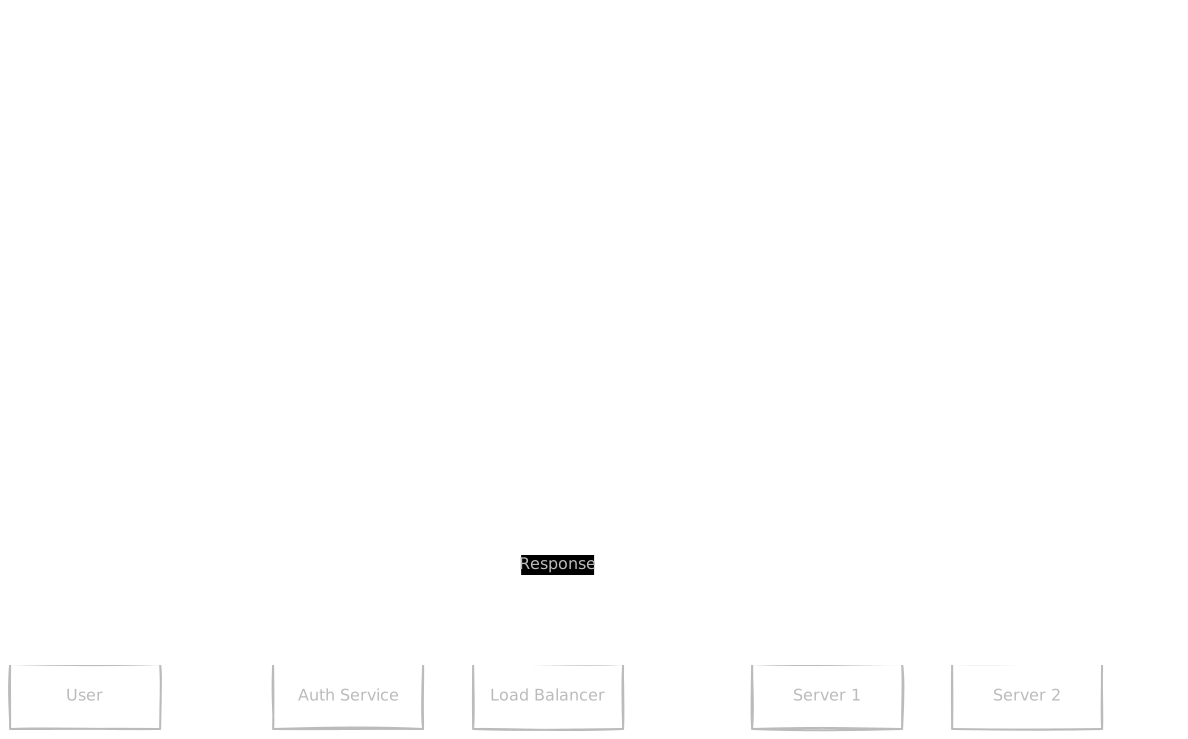
Stateless Token-Based Flow
The Scalability Equation: When Architecture Meets Reality
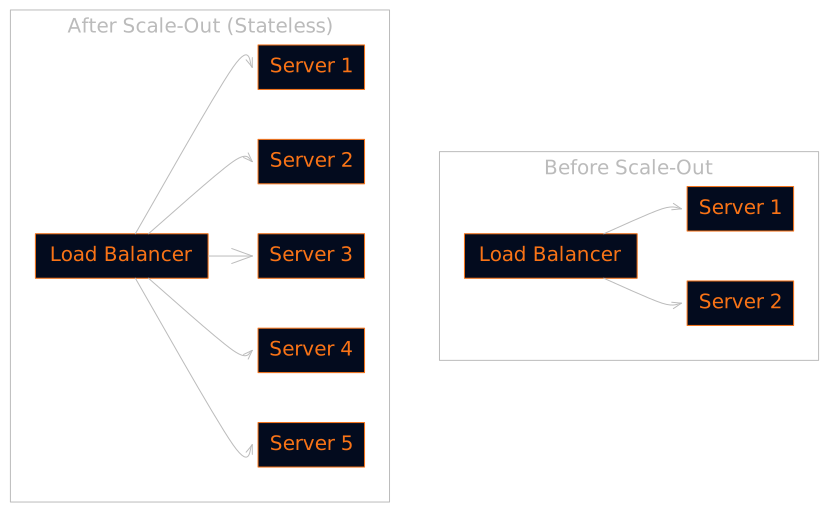
Horizontal Scaling: The Stateless Advantage
Imagine you're running a popular food delivery app during lunch rush. With stateless architecture, scaling is like opening more identical checkout counters—any counter can serve any customer with the same efficiency.
The Stateful Scaling Challenge
With stateful architecture, scaling is like a restaurant where each waiter remembers specific customers' preferences. Adding more waiters helps, but customers must stick with their assigned waiter, creating potential bottlenecks.
Common stateful scaling patterns:
- Sticky Sessions: Route users to the same server
- Session Replication: Copy session data across servers
- Shared Session Storage: External session store (Redis, database)
Performance Characteristics: The Numbers Game
Latency Comparison
| Metric | Stateful | Stateless | |--------|----------|-----------|| | First Request | ~100ms | ~120ms | | Subsequent Requests | ~50ms | ~100ms | | Authentication Overhead | Minimal | Per-request | | Context Retrieval | In-memory | Token parsing |
Throughput Analysis
Stateful systems excel in scenarios with:
- Long user sessions
- Frequent interactions
- Complex state transitions
- Rich, personalized experiences
Stateless systems dominate when you need:
- High concurrent user counts
- Elastic scaling
- Multi-device access
- API-first architectures
Real-World Applications: Choosing the Right Tool for the Job
When Stateful Architecture Shines
1. Real-Time Gaming
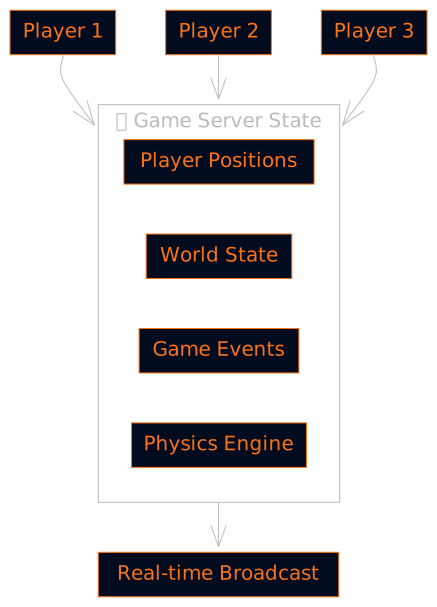
Why stateful works here:
- Millisecond-level response times required
- Complex state interactions (physics, collisions)
- Continuous state updates
- Shared world state among players
2. Financial Trading Systems
- Order book management
- Real-time risk calculations
- Transaction state tracking
- Regulatory compliance requirements
3. Collaborative Editing (Google Docs style)
- Document state synchronization
- Conflict resolution
- Real-time cursor tracking
- Operational transformation
When Stateless Architecture Dominates
1. REST APIs and Microservices
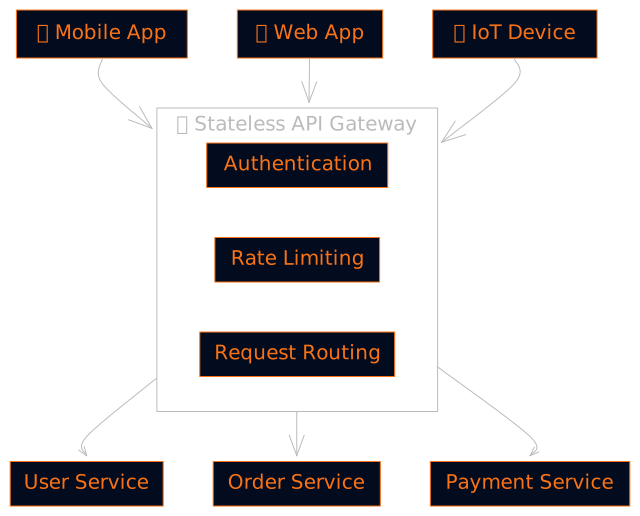
Why stateless excels:
- Multiple client types and platforms
- Independent service scaling
- Easy load balancing
- Fault tolerance
2. Content Delivery Networks (CDNs)
- Geographic distribution
- Cache-friendly requests
- High availability requirements
- Massive scale demands
3. Serverless Functions
- Event-driven processing
- Auto-scaling requirements
- Cost optimization
- Ephemeral execution environment
The Hybrid Approach: Best of Both Worlds
Modern applications rarely use pure stateful or stateless architectures. Instead, they employ hybrid patterns that leverage the strengths of each approach.
Pattern 1: Stateless Frontend, Stateful Backend
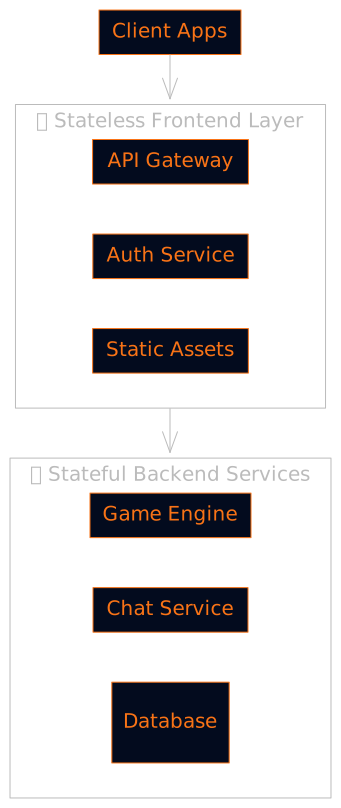
Pattern 2: Session-Backed Stateless
This approach uses stateless servers with external session storage:
// Stateless server with external session
app.get('/api/cart', async (req, res) => {
  const sessionId = req.headers.authorization;

  // Validate token (stateless)
  const user = jwt.verify(sessionId, secret);

  // Retrieve state from external store
  const cart = await redis.get(`cart:${user.id}`);

  res.json({ cart: JSON.parse(cart) });
});
Pattern 3: Microservices with Mixed Patterns
Different services within the same application can use different state management approaches:
- User Service: Stateless (authentication, profile)
- Shopping Cart: Stateful (session-based)
- Order Processing: Stateless (event-driven)
- Real-time Notifications: Stateful (WebSocket connections)
Implementation Strategies: Making It Work in Practice
Stateful Implementation Best Practices
1. External Session Storage
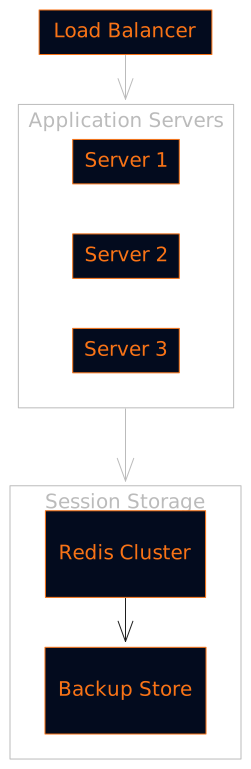
Key considerations:
- Use Redis or Memcached for fast access
- Implement session replication for high availability
- Set appropriate session timeouts
- Monitor session store performance
2. Sticky Session Configuration
# Nginx configuration for sticky sessions
upstream backend {
    ip_hash;  # Route based on client IP
    server backend1.example.com;
    server backend2.example.com;
    server backend3.example.com;
}
Stateless Implementation Best Practices
1. JWT Token Design
// Well-designed JWT payload
const tokenPayload = {
  sub: "user123",           // Subject (user ID)
  iat: 1516239022,         // Issued at
  exp: 1516242622,         // Expiration (1 hour)
  roles: ["user", "admin"], // User roles
  permissions: ["read", "write"], // Specific permissions
  // Avoid: sensitive data, large objects
};
2. Request Context Pattern
// Include necessary context in each request
const apiRequest = {
  method: 'POST',
  url: '/api/orders',
  headers: {
    'Authorization': 'Bearer jwt-token',
    'X-Request-ID': 'unique-request-id',
    'X-Client-Version': '1.2.3'
  },
  body: {
    items: [...],
    shippingAddress: {...},
    paymentMethod: {...}
  }
};
Common Pitfalls and How to Avoid Them
Stateful Architecture Pitfalls
❌ The Session Explosion Problem
// DON'T: Store everything in session
session.userPreferences = {...};
session.shoppingCart = [...];
session.browsingHistory = [...];
session.temporaryData = {...};
// Result: Memory bloat and poor performance
✅ The Selective Storage Solution
// DO: Store only essential session data
session.userId = "user123";
session.authToken = "encrypted-token";
session.lastActivity = timestamp;
// Store other data in database with user ID reference
❌ The Single Point of Failure
Relying on a single session store without backup or clustering.
✅ The Resilient Storage Pattern
- Use Redis Cluster for high availability
- Implement session replication
- Have fallback mechanisms for session loss
Stateless Architecture Pitfalls
❌ The Token Bloat Problem
// DON'T: Include everything in JWT
const bloatedToken = {
  userId: "123",
  userProfile: { /* 50 fields */ },
  permissions: [ /* 100 permissions */ ],
  preferences: { /* user settings */ }
  // Result: Large tokens, network overhead
};
✅ The Lean Token Approach
// DO: Keep tokens minimal
const leanToken = {
  sub: "user123",
  roles: ["user"],
  exp: 1516242622
  // Fetch additional data as needed
};
❌ The Context Recreation Overhead
Rebuilding expensive context on every request without caching.
✅ The Smart Caching Strategy
// Cache expensive operations
const getUserPermissions = memoize(async (userId) => {
  return await database.getUserPermissions(userId);
}, { ttl: 300000 }); // 5-minute cache
Performance Optimization Techniques
Stateful Optimization Strategies
1. Session Store Optimization
# Redis configuration for session storage
maxmemory 2gb
maxmemory-policy allkeys-lru
save 900 1    # Persistence settings
save 300 10
save 60 10000
2. Connection Pooling
// Efficient database connection management
const pool = new Pool({
  host: 'localhost',
  database: 'sessions',
  max: 20,        // Maximum connections
  idleTimeoutMillis: 30000,
  connectionTimeoutMillis: 2000,
});
Stateless Optimization Strategies
1. Token Validation Caching
// Cache JWT validation results
const validateToken = memoize(async (token) => {
  return jwt.verify(token, publicKey);
}, {
  ttl: 60000,  // 1-minute cache
  key: (token) => crypto.createHash('sha256').update(token).digest('hex')
});
2. Request Deduplication
// Prevent duplicate processing
const processOrder = async (orderId, idempotencyKey) => {
  const existing = await cache.get(`order:${idempotencyKey}`);
  if (existing) return existing;

  const result = await createOrder(orderId);
  await cache.set(`order:${idempotencyKey}`, result, 3600);
  return result;
};
Decision Framework: Choosing the Right Architecture
The Architecture Decision Matrix
| Factor | Weight | Stateful Score | Stateless Score | Notes |
|---|---|---|---|---|
| Scalability Requirements | High | 2/5 | 5/5 | Horizontal scaling needs |
| Performance Requirements | High | 4/5 | 3/5 | Individual request speed |
| Fault Tolerance | Medium | 2/5 | 5/5 | System resilience |
| Development Complexity | Medium | 4/5 | 2/5 | Implementation difficulty |
| Operational Complexity | Medium | 2/5 | 4/5 | Maintenance overhead |
| User Experience | High | 5/5 | 3/5 | Personalization needs |
Decision Tree

Questions to Ask Yourself
For Stateful Architecture:
- Do you need sub-100ms response times?
- Is the user experience highly personalized?
- Are you building real-time collaborative features?
- Do you have complex state transitions?
- Is your user base relatively predictable in size?
For Stateless Architecture:
- Do you need to scale to millions of users?
- Are you building APIs for multiple client types?
- Is fault tolerance critical?
- Do you need geographic distribution?
- Are you using serverless or containerized deployments?
Monitoring and Observability: Keeping Your Architecture Healthy
Stateful System Metrics
// Key metrics to monitor in stateful systems
const statefulMetrics = {
  sessionMetrics: {
    activeSessionCount: 'gauge',
    sessionCreationRate: 'counter',
    sessionDuration: 'histogram',
    sessionMemoryUsage: 'gauge'
  },

  performanceMetrics: {
    sessionLookupTime: 'histogram',
    sessionStoreLatency: 'histogram',
    stickySessionHitRate: 'gauge'
  },

  healthMetrics: {
    sessionStoreConnections: 'gauge',
    sessionReplicationLag: 'gauge',
    failedSessionWrites: 'counter'
  }
};
Stateless System Metrics
// Key metrics to monitor in stateless systems
const statelessMetrics = {
  tokenMetrics: {
    tokenValidationTime: 'histogram',
    tokenValidationErrors: 'counter',
    tokenCacheHitRate: 'gauge'
  },

  performanceMetrics: {
    requestProcessingTime: 'histogram',
    contextReconstructionTime: 'histogram',
    externalServiceCalls: 'counter'
  },

  scalingMetrics: {
    instanceCount: 'gauge',
    requestDistribution: 'histogram',
    loadBalancerHealth: 'gauge'
  }
};
Conclusion: Mastering the Art of State
The choice between stateful and stateless architecture isn't just a technical decision—it's a strategic one that shapes your application's future. Like a master chef choosing between different cooking techniques, the best engineers understand that each approach has its place, and the magic happens when you know exactly when to use each one.
Key takeaways:
- There's no universal winner: Both architectures solve different problems exceptionally well
- Context is king: Your specific requirements should drive the decision, not industry trends
- Hybrid approaches rule: Most successful systems combine both patterns strategically
- Evolution is inevitable: Be prepared to adapt your architecture as requirements change
- Monitoring is crucial: You can't optimize what you don't measure
Remember: great architecture isn't about following rules—it's about understanding trade-offs and making informed decisions that serve your users and your business goals.
What's your experience with stateful vs stateless architectures? Have you encountered scenarios where the "wrong" choice led to significant challenges? Share your stories and insights in the comments below.