Why Strong Abstractions Are Key to Reliable System Architecture
Why Strong Abstractions Are Key to Reliable System Architecture
Ever wondered why some codebases feel like navigating a well-organized library while others feel like diving into a digital dumpster fire? The answer often comes down to one thing: abstractions.
Picture this: you're trying to explain how Netflix works to your grandmother. You don't start with microservices architecture, load balancers, and CDN edge caching. You say "it's like a magical TV that knows what you want to watch." That's abstraction in action, and it's not just useful for explaining tech to grandparents.
In the world of software development, abstractions are the difference between building maintainable systems and creating technical debt monsters that haunt your dreams. Let's dive into why they matter so much and how they can transform your approach to coding.
What Exactly Are Abstractions?
Think of abstractions like the dashboard in your car. When you press the gas pedal, you don't need to understand the intricate dance of fuel injection, combustion cycles, and transmission mechanics happening under the hood. The pedal abstracts away all that complexity into a simple interface: press harder, go faster.
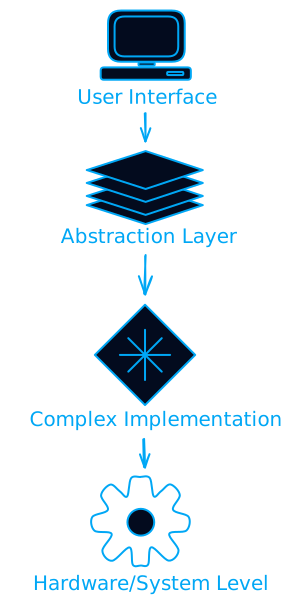
In software, abstractions work the same way. They hide the messy details behind clean, simple interfaces. When you call user.save() in your code, you don't want to think about SQL queries, database connections, or transaction management. You just want to save the damn user.
The Four Superpowers of Abstraction
1. Taming the Complexity Beast
Modern software systems are ridiculously complex. A simple web app today might involve dozens of services, multiple databases, caching layers, message queues, and more. Without abstractions, developers would need to keep all these details in their heads simultaneously, which is about as realistic as juggling flaming chainsaws while riding a unicycle.
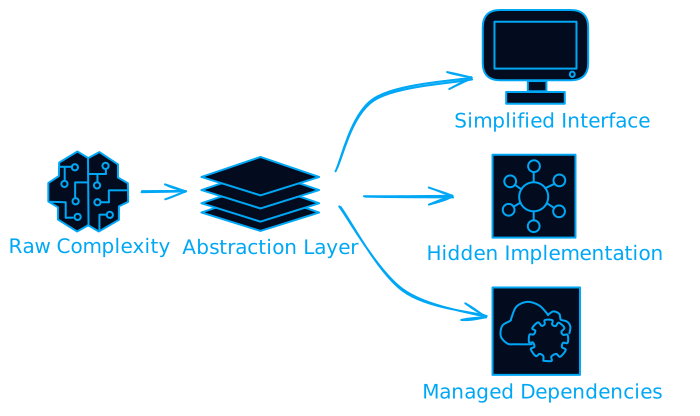
Consider how React abstracts away DOM manipulation. Instead of writing:
// The old way - manual DOM manipulation
const element = document.createElement('div');
element.className = 'user-card';
element.innerHTML = `<h3>${user.name}</h3><p>${user.email}</p>`;
document.body.appendChild(element);
You write:
// The React way - declarative abstraction
function UserCard({ user }) {
  return (
    <div className="user-card">
      <h3>{user.name}</h3>
      <p>{user.email}</p>
    </div>
  );
}
The abstraction handles all the DOM manipulation complexity behind the scenes.
2. Code Reusability That Actually Works
Good abstractions are like LEGO blocks for developers. Once you build a solid abstraction, you can use it everywhere without rebuilding from scratch. This isn't just about saving time (though that's nice), it's about creating consistent, reliable building blocks.
Take authentication as an example. Instead of implementing login logic in every controller:
// Bad: Repeated authentication logic
app.post('/users', (req, res) => {
  const token = req.headers.authorization;
  if (!token) return res.status(401).send('No token');

  jwt.verify(token, secret, (err, decoded) => {
    if (err) return res.status(401).send('Invalid token');
    // Handle user creation...
  });
});

app.put('/users/:id', (req, res) => {
  const token = req.headers.authorization;
  if (!token) return res.status(401).send('No token');

  jwt.verify(token, secret, (err, decoded) => {
    if (err) return res.status(401).send('Invalid token');
    // Handle user update...
  });
});
You create a reusable abstraction:
// Good: Abstracted authentication middleware
const authenticate = (req, res, next) => {
  const token = req.headers.authorization;
  if (!token) return res.status(401).send('No token');

  jwt.verify(token, secret, (err, decoded) => {
    if (err) return res.status(401).send('Invalid token');
    req.user = decoded;
    next();
  });
};

// Now use it everywhere
app.post('/users', authenticate, handleUserCreation);
app.put('/users/:id', authenticate, handleUserUpdate);
3. Maintainability That Doesn't Suck
Here's a harsh truth: most code is read way more often than it's written. Abstractions make code easier to understand, modify, and debug. When you need to fix a bug or add a feature, good abstractions tell you exactly where to look.
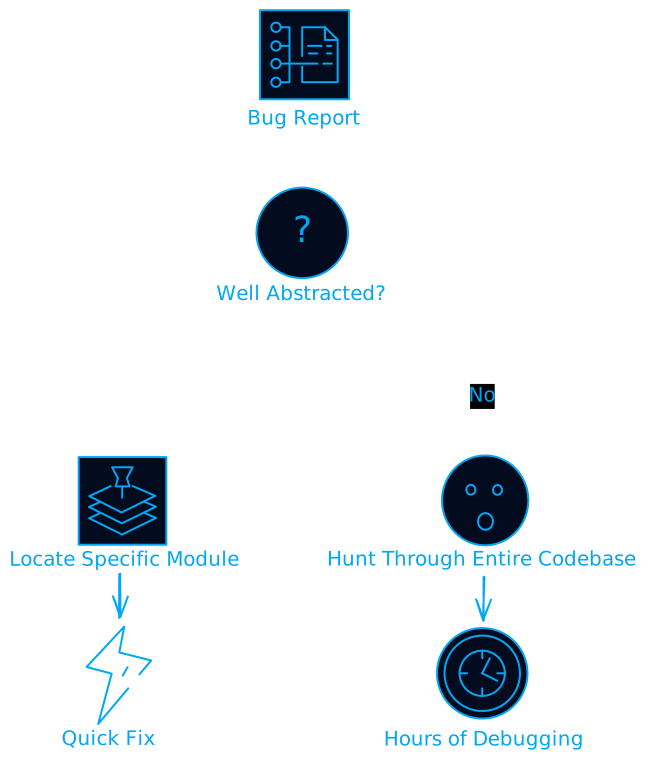
Consider a payment processing system. With good abstractions:
class PaymentProcessor {
  async processPayment(amount, paymentMethod) {
    const validator = new PaymentValidator();
    const gateway = PaymentGatewayFactory.create(paymentMethod.type);

    await validator.validate(paymentMethod);
    return await gateway.charge(amount, paymentMethod);
  }
}
When something breaks, you know exactly which component to check. Without abstractions, payment logic might be scattered across dozens of files, making debugging a nightmare.
4. Collaboration Without Chaos
In team environments, abstractions are like peace treaties between developers. They define clear boundaries and interfaces, allowing different team members to work on different parts of the system without stepping on each other's toes.
Imagine a team building an e-commerce platform:
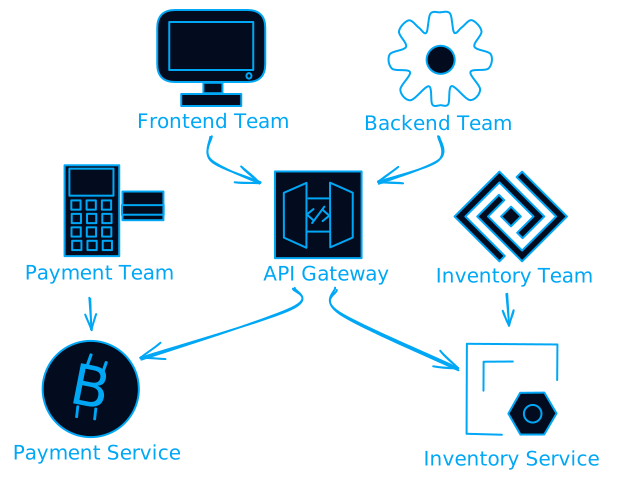
Each team can work independently as long as they respect the agreed-upon interfaces. The frontend team doesn't need to know how payments are processed internally, they just need to know the API contract.
But Wait, What About the Downsides?
Let's be real for a second. Abstractions aren't magic fairy dust you can sprinkle on bad code to make it good. They come with trade-offs:
Over-abstraction is a thing. Sometimes developers get abstraction-happy and create layers upon layers of indirection that make simple things complicated. If you need to trace through five different classes to understand what user.getName() does, you've probably gone too far.
Performance overhead exists. Every abstraction layer adds some computational cost. Usually it's negligible, but in performance-critical code, those extra function calls can add up.
Learning curves are steeper. New team members need to understand your abstraction patterns before they can be productive. Good abstractions are intuitive, but they still require some learning.
The Art of Good Abstraction Design
Creating effective abstractions is part science, part art. Here are some guidelines that actually work:
Start with the Interface, Not the Implementation
Think about how you want to use something before you build it. What would the ideal API look like? What would make the calling code clean and readable?
// Design the interface first
const user = await User.findByEmail('john@example.com');
await user.updateProfile({ name: 'John Doe' });
await user.sendWelcomeEmail();

// Then implement the abstraction to support this usage
Follow the Single Responsibility Principle
Each abstraction should do one thing well. If your UserService is handling authentication, email sending, profile updates, and payment processing, it's trying to do too much.
Make Impossible States Impossible
Good abstractions prevent misuse through their design. Instead of:
// Bad: Allows invalid states
class BankAccount {
  constructor(balance) {
    this.balance = balance; // Could be negative!
  }

  withdraw(amount) {
    this.balance -= amount; // Could go negative!
  }
}
Design it so invalid operations can't happen:
// Good: Prevents invalid states
class BankAccount {
  constructor(initialBalance) {
    if (initialBalance < 0) throw new Error('Initial balance cannot be negative');
    this.#balance = initialBalance;
  }

  withdraw(amount) {
    if (amount > this.#balance) throw new Error('Insufficient funds');
    this.#balance -= amount;
  }

  get balance() {
    return this.#balance;
  }
}
Real-World Abstraction Patterns That Work
The Repository Pattern
Instead of scattering database queries throughout your application:
class UserRepository {
  async findById(id) {
    return await db.query('SELECT * FROM users WHERE id = ?', [id]);
  }

  async findByEmail(email) {
    return await db.query('SELECT * FROM users WHERE email = ?', [email]);
  }

  async save(user) {
    // Handle insert or update logic
  }
}
This abstracts away the database implementation details and makes testing much easier.
The Strategy Pattern
For handling different payment methods:
class PaymentStrategy {
  process(amount) {
    throw new Error('Must implement process method');
  }
}

class CreditCardPayment extends PaymentStrategy {
  process(amount) {
    // Credit card specific logic
  }
}

class PayPalPayment extends PaymentStrategy {
  process(amount) {
    // PayPal specific logic
  }
}

class PaymentProcessor {
  constructor(strategy) {
    this.strategy = strategy;
  }

  processPayment(amount) {
    return this.strategy.process(amount);
  }
}
The Facade Pattern
For simplifying complex subsystems:
class EmailFacade {
  constructor() {
    this.templateEngine = new TemplateEngine();
    this.smtpClient = new SMTPClient();
    this.logger = new Logger();
  }

  async sendWelcomeEmail(user) {
    try {
      const template = await this.templateEngine.render('welcome', { user });
      await this.smtpClient.send(user.email, 'Welcome!', template);
      this.logger.info(`Welcome email sent to ${user.email}`);
    } catch (error) {
      this.logger.error(`Failed to send welcome email: ${error.message}`);
      throw error;
    }
  }
}
Common Abstraction Mistakes (And How to Avoid Them)
The God Object Anti-Pattern
Don't create abstractions that do everything:
// Bad: Does too much
class UserManager {
  createUser() { /* ... */ }
  authenticateUser() { /* ... */ }
  sendEmail() { /* ... */ }
  processPayment() { /* ... */ }
  generateReport() { /* ... */ }
  // ... 50 more methods
}
Break it down into focused abstractions:
// Good: Single responsibilities
class UserService { /* user CRUD operations */ }
class AuthenticationService { /* authentication logic */ }
class EmailService { /* email operations */ }
class PaymentService { /* payment processing */ }
class ReportService { /* report generation */ }
Premature Abstraction
Don't abstract until you have at least three similar use cases. The rule of three is your friend here. If you're only using something once, keep it simple.
Leaky Abstractions
Make sure your abstractions don't expose implementation details:
// Bad: Leaky abstraction
class DatabaseUser {
  constructor(sqlRow) {
    this.sqlRow = sqlRow; // Exposes database implementation
  }

  getName() {
    return this.sqlRow.first_name + ' ' + this.sqlRow.last_name;
  }
}

// Good: Clean abstraction
class User {
  constructor(firstName, lastName, email) {
    this.firstName = firstName;
    this.lastName = lastName;
    this.email = email;
  }

  getFullName() {
    return `${this.firstName} ${this.lastName}`;
  }
}
Testing Abstractions: Making Sure They Actually Work
Good abstractions make testing easier, not harder. Here's how to test them effectively:
Test the Interface, Not the Implementation
// Test what the abstraction promises to do
describe('UserService', () => {
  it('should create a user with valid data', async () => {
    const userData = { name: 'John', email: 'john@example.com' };
    const user = await userService.create(userData);

    expect(user.name).toBe('John');
    expect(user.email).toBe('john@example.com');
    expect(user.id).toBeDefined();
  });

  it('should throw error for invalid email', async () => {
    const userData = { name: 'John', email: 'invalid-email' };

    await expect(userService.create(userData)).rejects.toThrow('Invalid email');
  });
});
Use Dependency Injection for Testability
class OrderService {
  constructor(paymentService, inventoryService, emailService) {
    this.paymentService = paymentService;
    this.inventoryService = inventoryService;
    this.emailService = emailService;
  }

  async processOrder(order) {
    await this.inventoryService.reserve(order.items);
    await this.paymentService.charge(order.total);
    await this.emailService.sendConfirmation(order.customerEmail);
  }
}

// Easy to test with mocks
const mockPaymentService = { charge: jest.fn() };
const mockInventoryService = { reserve: jest.fn() };
const mockEmailService = { sendConfirmation: jest.fn() };

const orderService = new OrderService(
  mockPaymentService,
  mockInventoryService,
  mockEmailService
);
The Future of Abstractions
As software systems become more complex, abstractions become even more critical. We're seeing new patterns emerge:
Serverless abstractions hide infrastructure management completely. You write functions, the platform handles scaling, deployment, and monitoring.
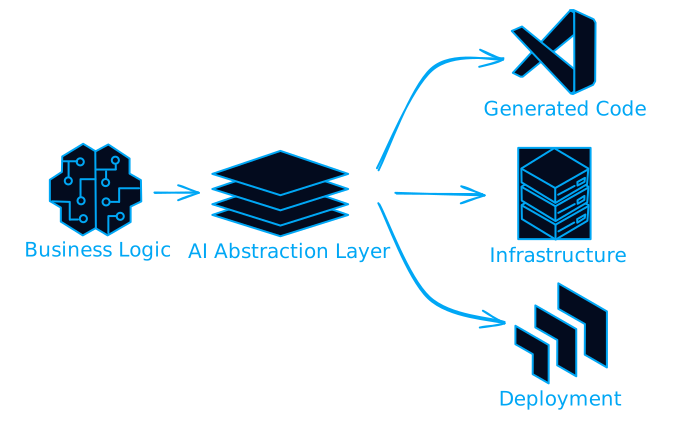
AI-powered abstractions are starting to generate code from high-level descriptions. Tools like GitHub Copilot are essentially creating abstractions on the fly.
Low-code/no-code platforms are abstractions for non-developers, allowing business users to build applications without writing code.
Wrapping Up: Your Abstraction Action Plan
Abstractions aren't just a nice-to-have in modern software development, they're essential for building systems that don't collapse under their own complexity. Here's your takeaway checklist:
- Start simple: Don't abstract until you have a clear need
- Focus on interfaces: Design how you want to use something before building it
- Keep responsibilities single: One abstraction, one job
- Make testing easy: Good abstractions are easy to mock and test
- Document your intentions: Future you (and your teammates) will thank you
- Refactor ruthlessly: Abstractions should evolve as your understanding grows
Remember, the goal isn't to create the most clever abstraction possible. It's to create abstractions that make your code easier to understand, maintain, and extend. Sometimes the simplest solution is the best solution.
The next time you're writing code and find yourself copying and pasting similar logic, or when you're struggling to understand what a piece of code does, ask yourself: "What abstraction would make this better?" Your future self will thank you for it.
What abstractions have saved your sanity in past projects? What patterns do you find yourself reaching for again and again? The best abstractions often come from real-world pain points, so share your experiences and learn from others.