System Building Blocks: How Tech Giants Build Scalable Systems
System Building Blocks
You know that feeling when you're trying to build something complex and it just... falls apart? Like trying to assemble IKEA furniture without the manual, except the furniture is a distributed system and the manual is written in ancient hieroglyphs.
Well, here's the thing - the companies crushing it in tech didn't get there by accident. Netflix streams to 230+ million users without breaking a sweat. WhatsApp handles billions of messages daily. Uber coordinates millions of rides in real-time. And they all have one thing in common: they built their systems like LEGO blocks, not like monolithic concrete slabs.
Let's dive into why building blocks approach isn't just another buzzword, but the actual foundation of modern system design thadt works.
What Are Building Blocks Anyway?
Think of building blocks like... well, actual building blocks. Remember playing with LEGOs as a kid? Each piece had a specific purpose, but you could combine them in countless ways to create something bigger. That's exactly what we're talking about in system design.
Building blocks (or modular design) is about breaking down complex systems into smaller, independent components. Each component does one thing really well, has clear interfaces, and can be developed, tested, and deployed independently.
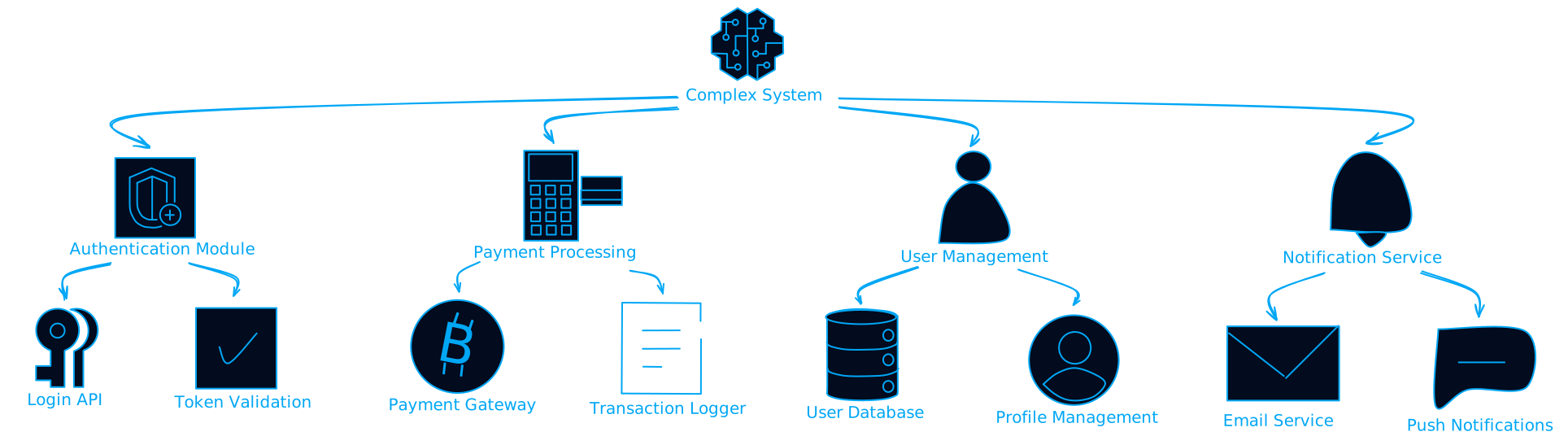
Instead of building one massive application that does everything, you create specialized modules that work together. It's like having a team where everyone has their expertise instead of one person trying to do everything (and probably burning out in the process).
Why Traditional Approaches Fall Short
Let me paint you a picture. Traditional monolithic systems are like those old-school Swiss Army knives - theoretically they do everything, but in practice, the scissors are terrible, the screwdriver is too small, and good luck trying to fix one part without affecting everything else.
Here's what typically happens with monolithic design:
- Scaling nightmare: Need to handle more users? Scale the entire application, even parts that don't need it
- Deployment anxiety: One small change requires deploying the entire system
- Team bottlenecks: Everyone's stepping on each other's toes in the same codebase
- Technology lock-in: Stuck with the same tech stack for everything, forever
The building blocks approach flips this on its head. Instead of one giant system, you have multiple smaller systems that communicate through well-defined interfaces. It's like having a specialized tool for each job instead of trying to hammer nails with a screwdriver.
The Bottom-Up Revolution
Here's where it gets interesting. The building blocks approach often follows a bottom-up methodology. Instead of starting with a grand master plan and working down, you start with the smallest, most fundamental components and build up.
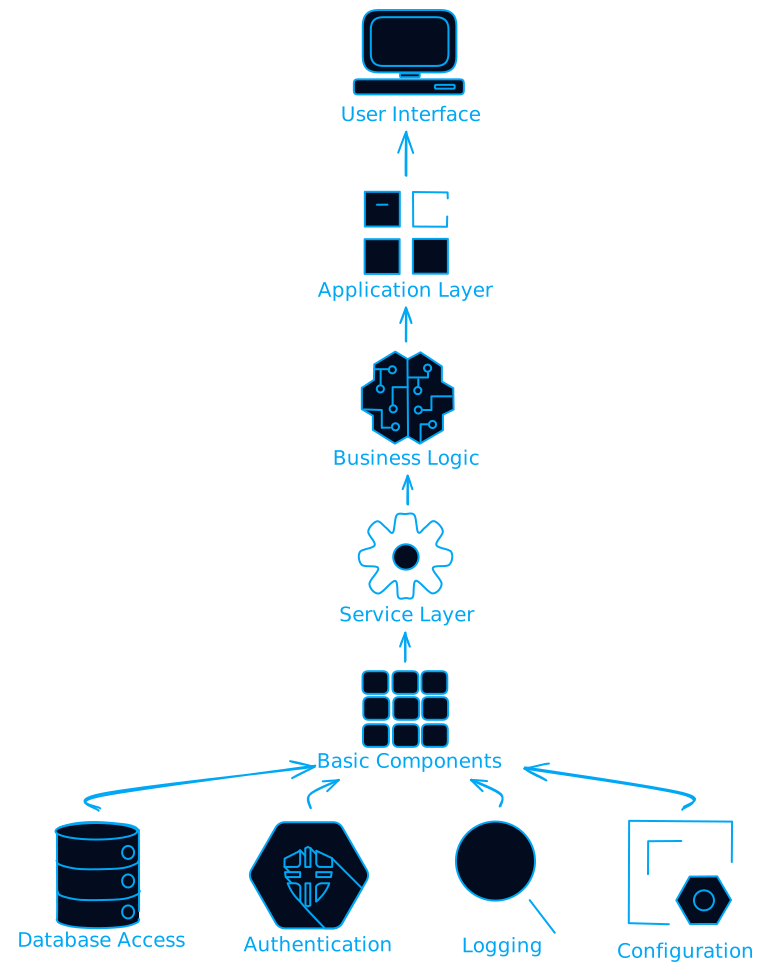
This approach has some serious advantages:
Parallel Development That Actually Works
Remember group projects in school where everyone worked on different parts and then tried to smash them together at the last minute? Yeah, that usually didn't end well. But with proper building blocks, different teams can actually work in parallel without stepping on each other.
Each team owns their module, defines clear interfaces, and can develop at their own pace. It's like having multiple construction crews working on different parts of a building simultaneously - as long as they follow the blueprint, everything fits together.
Reusability That Saves Your Sanity
Once you build a solid authentication module, you don't need to reinvent it for every new project. Same with payment processing, user management, or any other common functionality. It's like having a library of proven components you can mix and match.
This isn't just about saving time (though that's nice). It's about reliability. A component that's been battle-tested in production is way more trustworthy than something you cobbled together last Tuesday at 2 AM.
Agile Development That's Actually Agile
The building blocks approach plays beautifully with agile methodologies. You can deliver individual features incrementally, get feedback, and iterate quickly. No more waiting six months to see if your grand vision actually works.
The Real-World Proof: How the Giants Do It
Let's look at how companies that handle massive scale actually implement this stuff.
Netflix: The Streaming Powerhouse
Netflix doesn't just stream videos - they stream to hundreds of millions of users across the globe with minimal buffering. How? Building blocks.
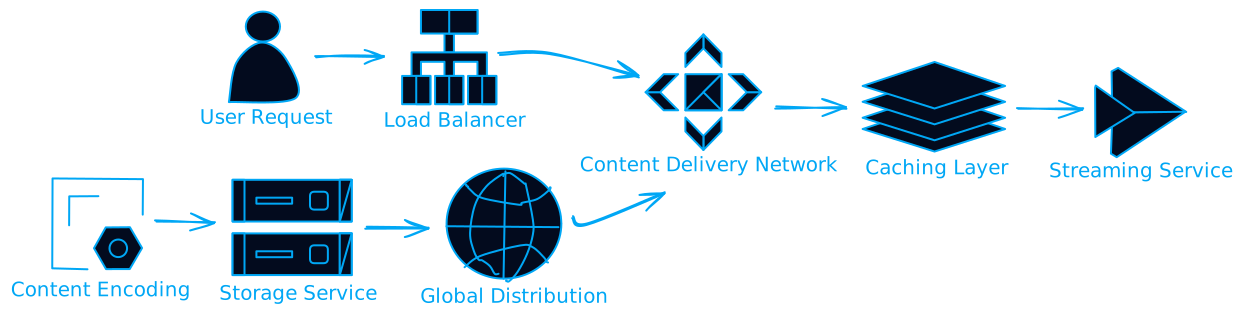
They use:
- Load balancers to distribute traffic
- CDN nodes strategically placed worldwide
- Caching servers to store popular content closer to users
- Microservices for different functionalities
Each component can be scaled independently. More users in Asia? Spin up more CDN nodes there. Popular new show? Increase caching capacity. It's surgical scaling instead of the "scale everything" approach.
WhatsApp: Handling Billions of Messages
WhatsApp processes billions of messages daily with a relatively small engineering team. Their secret? Event-driven architecture with modular components.
Instead of one massive message-processing system, they have:
- Message routing services
- Delivery confirmation systems
- Media processing pipelines
- Notification services
Each service handles its specific job and communicates through events. When you send a photo, it goes through the media processing pipeline while your text message takes a different, faster route.
Uber: Real-Time Coordination at Scale
Uber's challenge is insane - matching riders with drivers in real-time across hundreds of cities. Their solution? Microservices architecture with clear separation of concerns.
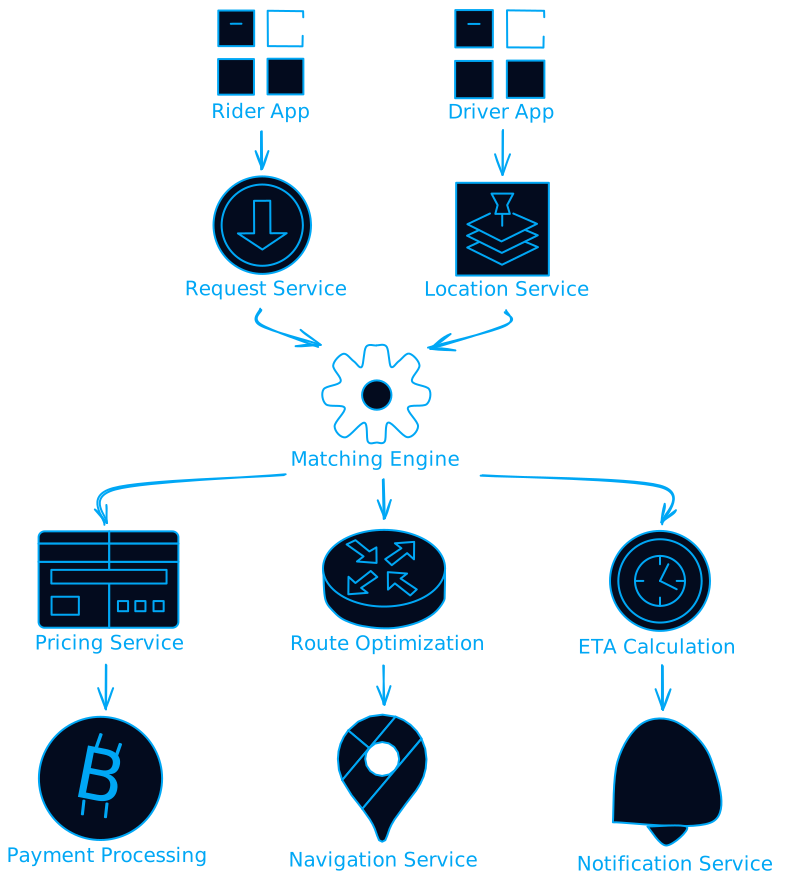
Each service can be optimized for its specific use case. The matching engine can use different algorithms than the pricing service. The location service can be optimized for real-time updates while the payment service focuses on security and reliability.
The Benefits That Actually Matter
Okay, enough theory. Let's talk about what this means for you as a developer or architect.
Flexibility That Doesn't Break Things
With building blocks, you can swap out components without rebuilding everything. Need to switch from MySQL to PostgreSQL? If your database access layer is properly abstracted, it's a contained change. Want to try a new payment processor? Swap out the payment module.
It's like being able to upgrade your car's engine without rebuilding the entire car.
Scaling That Makes Sense
Instead of scaling your entire application when one part gets busy, you scale just what needs it. Your image processing service getting hammered? Scale that. Your user authentication barely breaking a sweat? Leave it alone.
This isn't just more efficient - it's way cheaper. Cloud costs can get out of hand quickly when you're scaling everything instead of just what you need.
Debugging That Doesn't Make You Cry
When something breaks in a monolithic system, good luck figuring out where. With modular design, problems are contained. The payment service is down? You know exactly where to look. The notification service is slow? You can investigate without worrying about affecting user authentication.
Team Autonomy That Actually Works
Different teams can own different modules and move at their own pace. The mobile team can update the user interface while the backend team refactors the data layer. No more coordination nightmares or waiting for other teams to finish their work.
But Wait, There Are Challenges
Let's be real - building blocks aren't magic. They come with their own set of challenges.
Complexity Can Explode
Instead of one complex system, you might end up with many simple systems that interact in complex ways. Network calls between services can fail. Data consistency across services becomes tricky. Monitoring and debugging distributed systems is harder than monitoring a single application.
Over-Engineering Is Real
It's tempting to create a microservice for everything. "Let's make a separate service for user preferences!" But sometimes a simple module within a larger application is the right choice. Don't create distributed systems just because you can.
Integration Headaches
Making sure all your building blocks work together smoothly requires careful planning. API versioning, backward compatibility, service discovery - there's a lot to think about.
When Building Blocks Make Sense
Building blocks aren't always the answer. Here's when they really shine:
Large, complex systems with multiple teams working on different parts Systems that need to scale different components independently Applications with distinct functional areas (user management, payments, content delivery) Teams practicing agile development with frequent releases Organizations wanting to use different technologies for different problems
For smaller projects or teams, a well-structured monolith might be simpler and more appropriate.
Getting Started: Your Building Blocks Journey
If you're convinced that building blocks are the way to go, here's how to start:
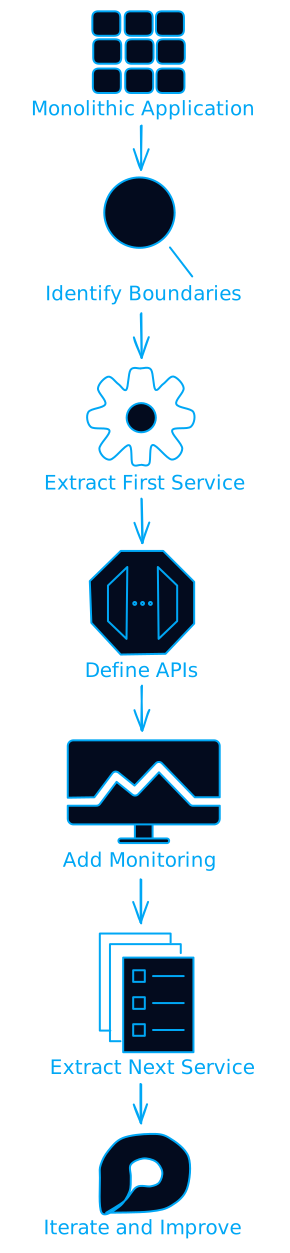
1. Identify Natural Boundaries
Look at your system and identify areas that could be independent. Authentication, payments, notifications, and user management are common candidates.
2. Start Small
Don't try to break everything apart at once. Pick one clear, well-defined area and extract it into its own service or module. Learn from that experience before moving on.
3. Define Clear Interfaces
This is crucial. Each building block should have a well-defined API that other components can use. Think carefully about what data goes in and what comes out.
4. Invest in Infrastructure
You'll need good monitoring, logging, and deployment tools. Distributed systems are harder to debug, so invest in observability from the start.
The Future Is Modular
The building blocks approach isn't just a trend - it's the foundation of how modern systems are built. As applications become more complex and teams become more distributed, the ability to work on independent components becomes essential.
Companies like AWS have taken this to the extreme, offering building blocks as a service. Need a database? Use RDS. Need file storage? Use S3. Need serverless computing? Use Lambda. Each service does one thing well and integrates with others through standard APIs.
This trend will only accelerate. The future belongs to systems that can adapt, scale, and evolve quickly. And that means building with blocks, not monoliths.
Your Next Steps
Building blocks aren't just about technology - they're about how you think about problems. Instead of trying to solve everything at once, break problems down into smaller, manageable pieces. Build solutions that can evolve and adapt.
Whether you're designing a new system or refactoring an existing one, ask yourself: "How can I break this into independent, reusable components?" The answer to that question might just be the key to building systems that actually work at scale.
The companies dominating tech today didn't get there by accident. They got there by building systems that can adapt, scale, and evolve. And they did it with building blocks.
Now it's your turn.
Want to dive deeper into system design? Check out how Netflix's CDN architecture works, or explore AWS's microservices patterns. The rabbit hole goes deep, but the journey is worth it.