Synchronous vs Asynchronous Replication
Ever wondered why your banking app takes a split second longer to confirm a transaction compared to how instantly your Instagram post appears? The answer lies in one of the most critical decisions in distributed system design: choosing between synchronous and asynchronous replication.
If you're building any system that needs to store data across multiple servers (and let's be honest, that's pretty much every modern application), this choice will make or break your user experience. Get it wrong, and you'll either frustrate users with slow responses or lose their data when things go sideways.
Let me walk you through everything you need to know about these two replication strategies, complete with real-world examples, code snippets, and decision frameworks that'll help you make the right call for your specific use case.
What Exactly Are We Talking About Here?
Before we dive deep, let's get our definitions straight. Think of replication like having backup copies of your important documents, but for databases across multiple servers.
Synchronous replication is like having a paranoid assistant who won't let you leave the office until they've personally confirmed that every copy of your document has been safely filed in every cabinet. The primary database waits for all replica databases to acknowledge they've successfully written the data before telling your application "yep, we're good."
Asynchronous replication is more like dropping your documents in the outbox and trusting that the mail room will eventually get them to the right places. The primary database immediately tells your application "done!" and handles the copying to replicas in the background.
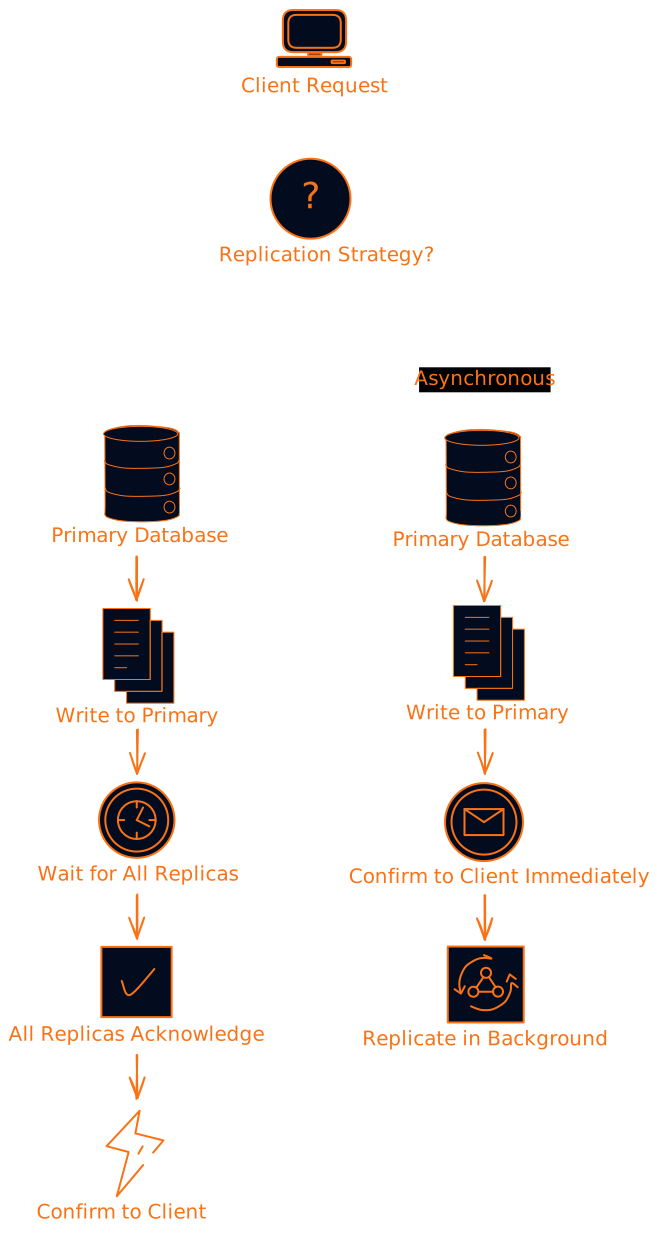
The Synchronous Approach: When Consistency is King
Why Choose Synchronous Replication?
Synchronous replication is your go-to when you absolutely, positively cannot afford to lose data or have inconsistencies. Think financial transactions, medical records, or any system where "oops, we lost that" isn't an acceptable response.
Here's what makes it powerful:
Strong Consistency Guarantees Every replica has exactly the same data at exactly the same time. No exceptions, no "eventually consistent" handwaving. When your application reads from any replica, it gets the same answer.
Zero Data Loss During Failures If your primary server decides to take an unscheduled vacation (aka crashes), any replica can immediately step up without missing a beat. No data gets lost in the transition because everything was already synchronized.
Immediate Failover Capabilities Since all replicas are always up-to-date, failover is instantaneous. Your users might not even notice that the primary server just went down.
The Trade-offs You'll Face
But here's where it gets interesting (and sometimes painful):
Performance Impact Every write operation becomes a coordination dance. The primary has to wait for potentially multiple replicas across different geographic locations to confirm they've written the data. This can add significant latency, especially if you're replicating across continents.
Availability Risk Here's the kicker: if even one replica goes down, your entire system might grind to a halt. The primary won't commit writes until all replicas acknowledge, so one slow or failed replica can bring everything down.
# Simplified synchronous replication example
class SynchronousReplicator:
    def __init__(self, replicas, timeout=5.0):
        self.replicas = replicas
        self.timeout = timeout

    async def write(self, key, value):
        # Write to primary first
        await self.primary_write(key, value)

        # Wait for ALL replicas to acknowledge
        tasks = [replica.write(key, value) for replica in self.replicas]

        try:
            await asyncio.wait_for(
                asyncio.gather(*tasks),
                timeout=self.timeout
            )
            return {"status": "success", "consistency": "strong"}
        except asyncio.TimeoutError:
            # One slow replica kills the whole operation
            await self.rollback(key)
            raise ReplicationError("Synchronous replication failed")
When to Use Synchronous Replication
Financial Systems Banks don't mess around with "eventual consistency" when it comes to your money. Every transaction needs to be immediately reflected across all systems.
E-commerce Order Processing When someone buys the last item in stock, you need to immediately update inventory across all systems to prevent overselling.
Critical Configuration Management Security policies, database schemas, or infrastructure configurations that could break things if inconsistent.
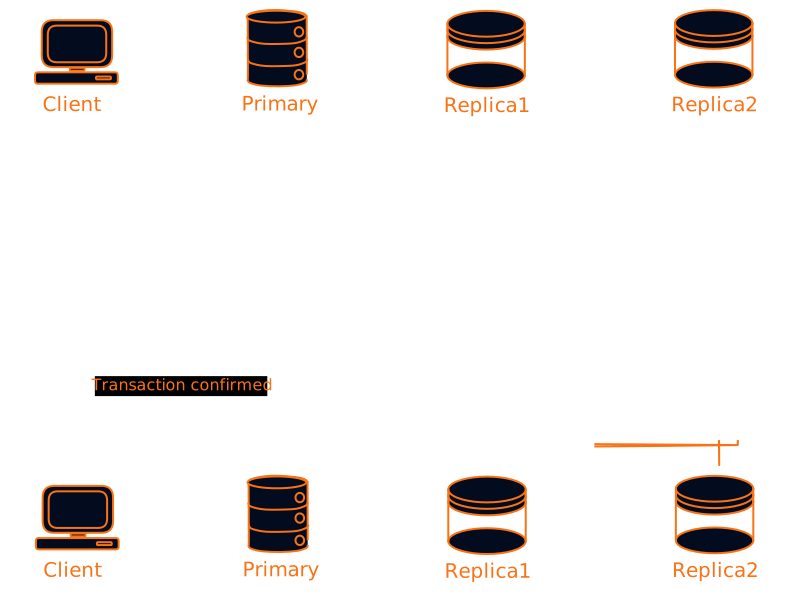
The Asynchronous Approach: Speed First, Consistency Later
Why Asynchronous Replication Rocks
Asynchronous replication is like that friend who's always ready to go out at a moment's notice. It prioritizes speed and availability over perfect consistency, making it ideal for systems where user experience matters more than perfect data synchronization.
Better Performance Your application gets immediate responses. No waiting around for distant replicas to catch up. Users see their actions reflected instantly, even if the background replication is still happening.
Higher Availability If a replica goes down, who cares? The primary keeps humming along, serving requests and queuing up changes for when the replica comes back online.
Cost-Effective You don't need expensive, high-speed connections between all your servers. Standard internet connections work fine since there's no real-time coordination required.
Geographic Flexibility Want to replicate data from New York to Tokyo? No problem. The network latency won't kill your user experience because replication happens in the background.
The Challenges You'll Navigate
Eventual Consistency Your replicas might be slightly behind the primary. Users might see different data depending on which server they hit. This can be confusing or problematic for certain use cases.
Potential Data Loss If your primary server crashes before replicating recent changes, those changes are gone forever. You need to decide how much data loss you can tolerate.
Conflict Resolution What happens when the same data gets modified in different ways on different replicas? You need strategies to handle these conflicts.
# Simplified asynchronous replication example
class AsynchronousReplicator:
    def __init__(self, replicas):
        self.replicas = replicas
        self.replication_queue = asyncio.Queue()
        self.start_background_worker()

    async def write(self, key, value):
        # Write to primary immediately
        await self.primary_write(key, value)

        # Queue for background replication
        await self.replication_queue.put({
            'key': key,
            'value': value,
            'timestamp': time.time()
        })

        # Return immediately - don't wait for replicas
        return {"status": "success", "consistency": "eventual"}

    async def background_replication_worker(self):
        while True:
            item = await self.replication_queue.get()
            # Replicate to all replicas in background
            for replica in self.replicas:
                try:
                    await replica.write(item['key'], item['value'])
                except Exception as e:
                    # Log error, maybe retry later
                    await self.handle_replication_error(replica, item, e)
When Asynchronous Replication Shines
Social Media Platforms When you post a photo on Instagram, you want immediate feedback. It's okay if users in different regions see your post a few seconds apart.
Content Management Systems Blog posts, news articles, or documentation where slight delays in propagation are acceptable.
Analytics and Logging Performance metrics, user behavior tracking, or application logs where perfect consistency isn't critical.
Caching Layers Content delivery networks (CDNs) where you're okay with some cache nodes being slightly stale.
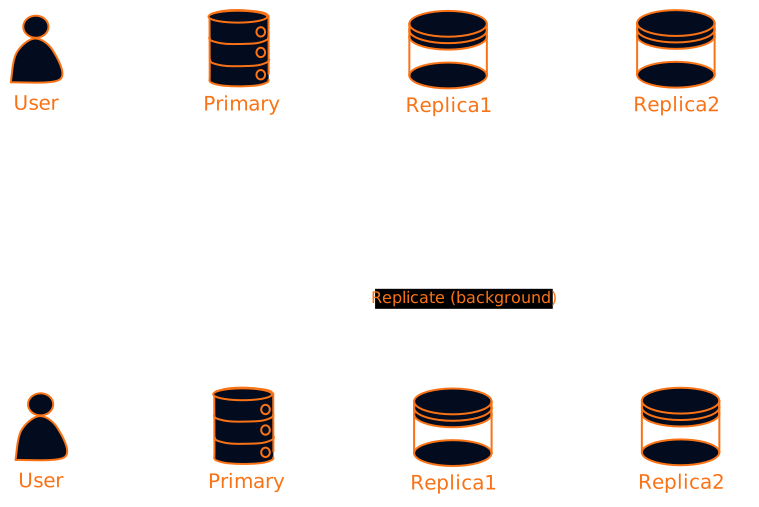
The Decision Framework: How to Choose
Choosing between synchronous and asynchronous replication isn't just a technical decision, it's a business decision. Here's a framework to help you think through it:
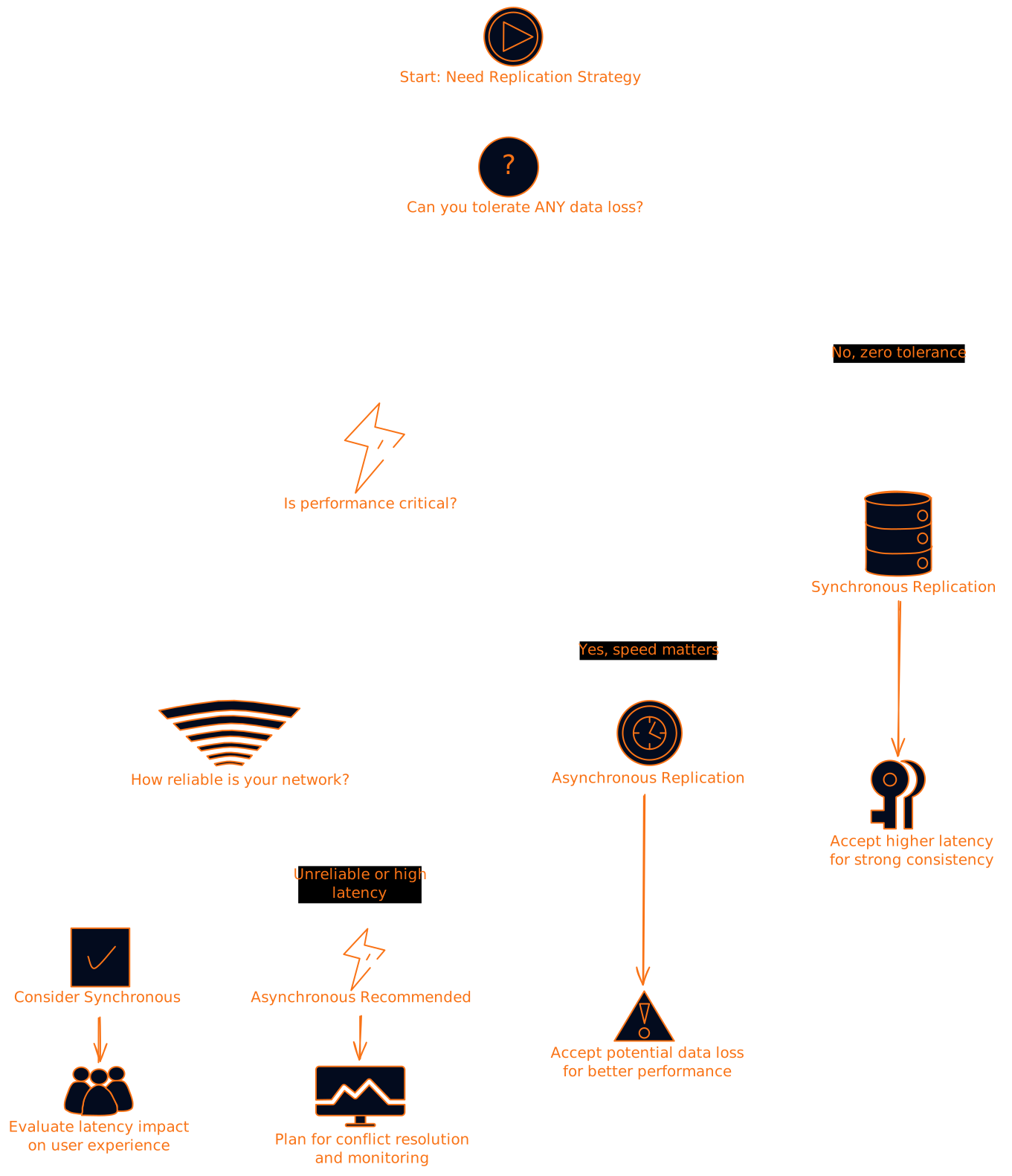
Key Questions to Ask Yourself
What's your data loss tolerance? If losing even a single transaction could cost you money, reputation, or compliance, go synchronous. If you can handle losing a few seconds or minutes of data during failures, asynchronous might work.
How important is write performance? If users expect immediate responses and you're dealing with high write volumes, asynchronous replication will serve you better.
What's your network situation? Synchronous replication over high-latency connections (like intercontinental links) can be painful. Asynchronous replication is much more forgiving of network issues.
How complex can you handle? Synchronous replication is generally simpler to reason about. Asynchronous replication requires more sophisticated monitoring, conflict resolution, and recovery procedures.
Hybrid Approaches: Having Your Cake and Eating It Too
Here's where things get really interesting. You don't have to choose just one approach for your entire system. Many successful applications use hybrid strategies:
Semi-Synchronous Replication
Wait for at least one replica to acknowledge, but don't require all of them. This gives you some data protection without the full performance hit.
class SemiSynchronousReplicator:
    def __init__(self, replicas, min_acks=1):
        self.replicas = replicas
        self.min_acks = min_acks

    async def write(self, key, value):
        await self.primary_write(key, value)

        # Wait for minimum number of acknowledgments
        tasks = [replica.write(key, value) for replica in self.replicas]

        completed = 0
        for task in asyncio.as_completed(tasks):
            try:
                await task
                completed += 1
                if completed >= self.min_acks:
                    # Got enough acks, return success
                    return {"status": "success", "acks": completed}
            except Exception:
                # Continue waiting for other replicas
                pass

        raise ReplicationError("Insufficient replicas acknowledged")
Data-Tier Based Replication
Use synchronous replication for critical data (user accounts, financial transactions) and asynchronous for everything else (logs, analytics, cached content).

Geographic Considerations
Use synchronous replication within a data center (low latency) and asynchronous between data centers (high latency).
Real-World Performance Implications
Let's talk numbers. Here's what you can expect in terms of performance:
Latency Comparison
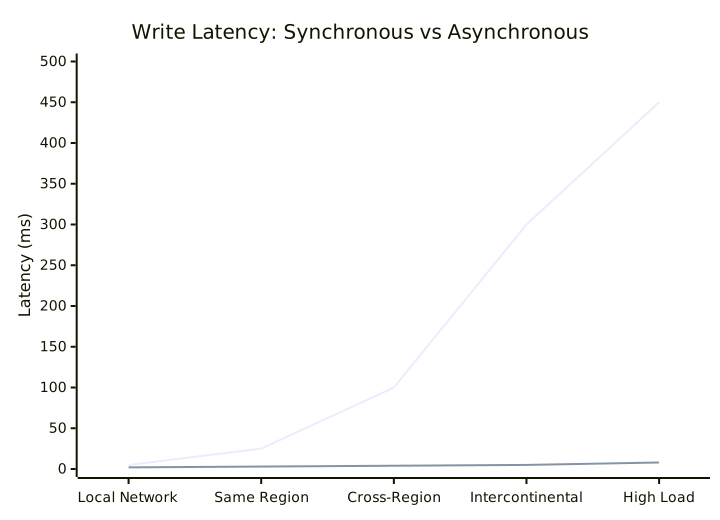
Local Network (Same Data Center)
- Synchronous: ~5ms additional latency
- Asynchronous: ~2ms additional latency
Cross-Region Replication
- Synchronous: 100-300ms additional latency
- Asynchronous: 3-5ms additional latency
Under High Load
- Synchronous: Can degrade significantly as replicas struggle to keep up
- Asynchronous: Remains relatively stable
Throughput Considerations
Synchronous replication throughput is limited by your slowest replica. If you have three replicas and one is struggling, your entire write throughput drops to match that struggling replica.
Asynchronous replication throughput is limited only by your primary database's capacity, making it much more predictable and scalable.
Monitoring and Observability: What to Watch
For Synchronous Replication
Replication Latency (P99) Track how long it takes for all replicas to acknowledge writes. Spikes here directly impact user experience.
Replica Availability Monitor which replicas are online and responding. A single offline replica can kill your write performance.
Failed Replication Count Count how many write operations fail due to replication issues. This directly translates to user-facing errors.
# Key metrics for synchronous replication
sync_metrics = {
    "replication_latency_p99": "Time for slowest replica to acknowledge",
    "replica_availability": "Percentage of replicas currently online",
    "failed_writes": "Count of writes that failed due to replication",
    "timeout_errors": "Writes that timed out waiting for replicas"
}
For Asynchronous Replication
Replication Lag How far behind are your replicas? This tells you how "eventual" your eventual consistency really is.
Queue Depth How many operations are waiting to be replicated? A growing queue indicates problems.
Data Loss Events Track instances where data was lost due to primary failures before replication completed.
# Key metrics for asynchronous replication
async_metrics = {
    "replication_lag": "Time difference between primary and replicas",
    "queue_depth": "Number of pending replication operations",
    "replication_throughput": "Operations replicated per second",
    "data_loss_incidents": "Count of unreplicated data loss events"
}
Common Pitfalls and How to Avoid Them
Synchronous Replication Gotchas
The Cascading Failure Trap One slow replica brings down your entire system. Always implement proper timeouts and consider degraded modes where you can operate with fewer replicas.
The Geographic Distance Mistake Trying to do synchronous replication across continents. Physics is unforgiving, the speed of light is finite, and your users will notice.
The Over-Engineering Problem Using synchronous replication when eventual consistency would work fine. Don't make your system slower than it needs to be.
Asynchronous Replication Gotchas
The Monitoring Blindness Not tracking replication lag and assuming everything is fine. You need visibility into how far behind your replicas are.
The Conflict Resolution Nightmare Not planning for what happens when the same data gets modified differently on different replicas. Have a strategy before you need it.
The Recovery Complexity Underestimating how hard it is to restore consistency after a failure. Plan and test your recovery procedures.
Making the Right Choice for Your Use Case
Let me give you some concrete guidance based on common scenarios:
E-commerce Platform
Order Processing: Synchronous You can't afford to oversell inventory or lose payment information.
Product Browsing: Asynchronous It's okay if product descriptions or reviews take a few seconds to propagate.
User Reviews: Asynchronous Reviews can be eventually consistent without impacting the core business.
Social Media Application
User Authentication: Synchronous Login credentials and security settings need to be immediately consistent.
Posts and Comments: Asynchronous Content can propagate gradually without major issues.
Direct Messages: Semi-synchronous Important enough to wait for at least one replica, but not all of them.
Financial Trading System
Trade Execution: Synchronous Every trade must be immediately recorded across all systems.
Market Data Display: Asynchronous Price feeds can be eventually consistent for most users.
Audit Logs: Synchronous Regulatory compliance requires immediate, consistent logging.
The Future: Where Replication is Heading
The industry is moving toward more sophisticated hybrid approaches. Modern databases like CockroachDB and TiDB offer configurable consistency levels per transaction. You can literally choose your consistency level on a per-operation basis:
-- Strong consistency for critical operations
BEGIN TRANSACTION ISOLATION LEVEL SERIALIZABLE;
UPDATE accounts SET balance = balance - 100 WHERE id = 'user123';
COMMIT;

-- Eventual consistency for less critical operations
BEGIN TRANSACTION ISOLATION LEVEL READ COMMITTED;
INSERT INTO activity_log (user_id, action) VALUES ('user123', 'login');
COMMIT;
Cloud providers are also making this easier with managed services that handle the complexity for you. AWS RDS offers read replicas with configurable lag, while Google Cloud Spanner provides global consistency with regional performance optimization.
Wrapping Up: Your Action Plan
Here's your takeaway checklist:
-
Start with your requirements: Data loss tolerance, performance needs, and consistency requirements should drive your decision, not the other way around.
-
Consider hybrid approaches: You probably don't need the same replication strategy for all your data. Critical data might need synchronous replication while logs and analytics can be asynchronous.
-
Plan for monitoring: Whatever you choose, make sure you can observe how it's working. Replication problems are often silent until they become disasters.
-
Test failure scenarios: Don't wait for production to find out how your replication strategy handles failures. Test network partitions, replica failures, and recovery procedures.
-
Start simple, evolve: Begin with asynchronous replication for most use cases. You can always add synchronous replication for critical data paths later.
The choice between synchronous and asynchronous replication isn't just about technology, it's about understanding your users, your business requirements, and the trade-offs you're willing to make. Get this right, and your system will scale gracefully and handle failures elegantly. Get it wrong, and you'll be dealing with angry users and 3 AM outage calls.
Remember: there's no universally "correct" choice here. The best replication strategy is the one that fits your specific requirements, constraints, and trade-offs. Take the time to understand these factors, and you'll make a decision you can live with (and sleep well with) for years to come.
Want to dive deeper into distributed systems design? Check out our guides on [database sharding strategies] and [building resilient microservices architectures]. And if you're dealing with replication issues in production, our [troubleshooting distributed systems guide] might save your weekend.