The Pub-Sub Pattern: Why Every Developer Should Master This Game-Changing Architecture
The Pub-Sub Pattern: Why Every Developer Should Master This Game-Changing Architecture
Ever wondered how Netflix handles millions of users streaming simultaneously without everything crashing? Or how Slack delivers messages instantly to thousands of channels? The secret sauce is something called the Publish-Subscribe (Pub-Sub) pattern, and honestly, it's one of those architectural concepts that once you get it, you'll see it everywhere.
Let me break down why this pattern is absolutely crucial for modern software development and how you can leverage it to build systems that actually scale.
What Exactly Is Pub-Sub? (And Why Should You Care?)
Think of Pub-Sub like a really smart postal system. Instead of sending letters directly to specific addresses, you drop them off at a central post office (the message broker) with a topic label like "sports news" or "user updates." Anyone interested in "sports news" gets a copy automatically, without you needing to know who they are or where they live.
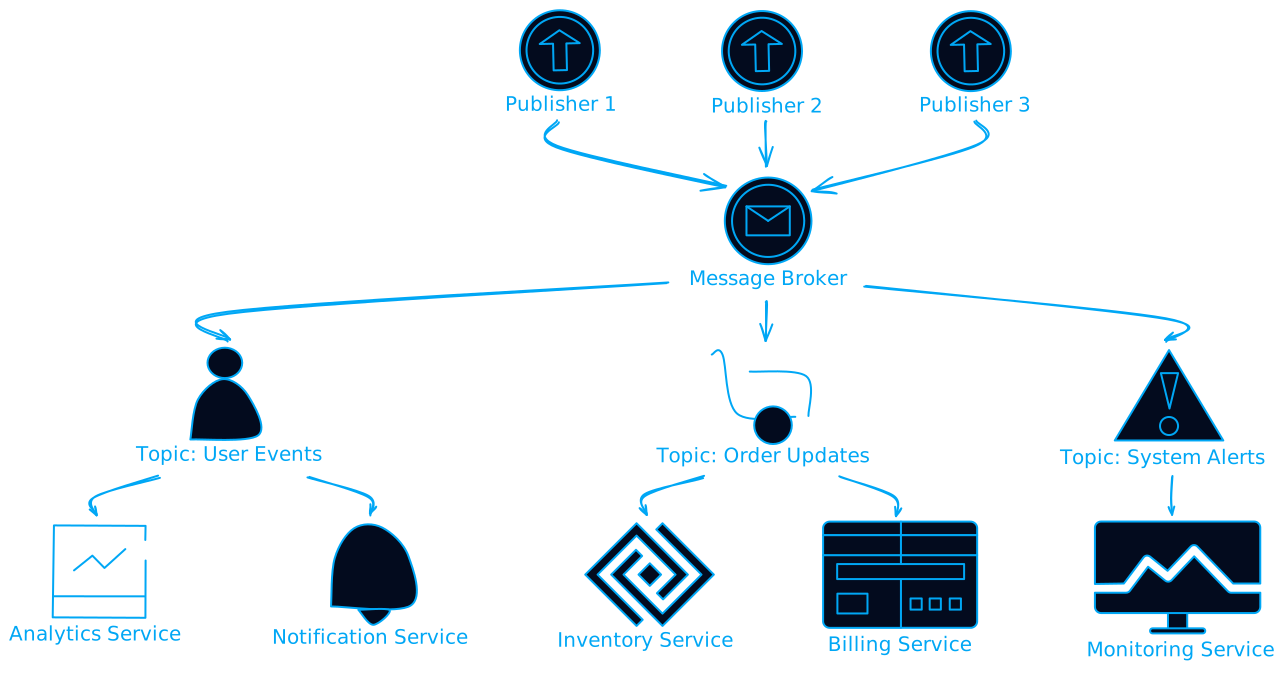
The beauty here is complete decoupling. Publishers don't know or care who's listening. Subscribers don't know or care who's talking. This might seem like a small thing, but it's actually revolutionary for system design.
The Three Core Components That Make It All Work
1. Publishers: The Message Creators
Publishers are your message producers. They could be:
- User actions in your web app
- IoT sensors sending data
- Microservices reporting status updates
- External APIs pushing notifications
The key thing? They fire and forget. No waiting around for responses, no managing subscriber lists.
2. Message Broker: The Traffic Controller
This is where the magic happens. The broker is like an incredibly efficient traffic controller that:
- Receives messages from publishers
- Organizes them by topics
- Delivers them to interested subscribers
- Handles all the complex routing logic
Popular brokers include Apache Kafka, RabbitMQ, and cloud services like AWS SNS/SQS.
3. Subscribers: The Message Consumers
These are your services that actually do something with the messages:
- Analytics engines processing user events
- Email services sending notifications
- Databases updating records
- Monitoring systems tracking metrics
But Wait, What About Message Delivery? (The Devil's in the Details)
Here's where things get interesting. Not all message delivery is created equal, and choosing the wrong approach can bite you later.
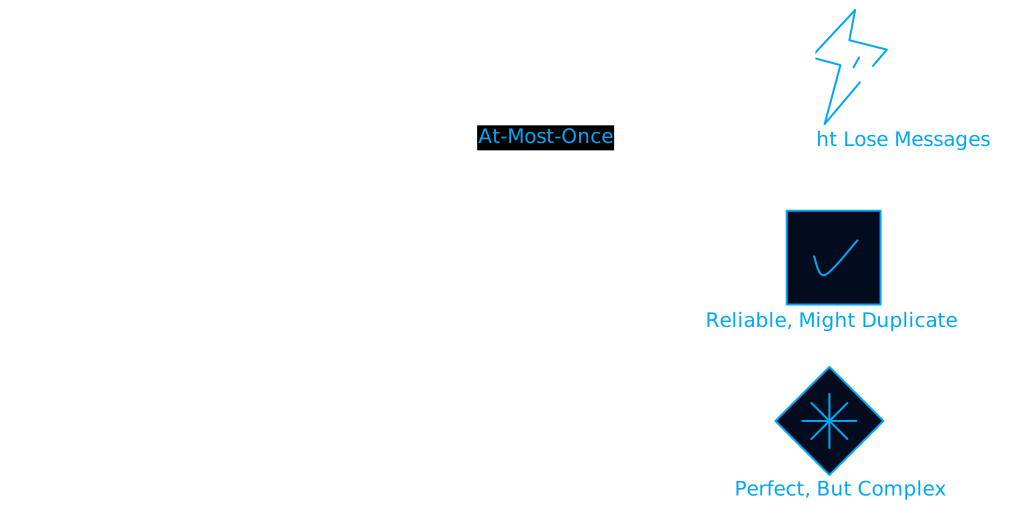
At-Most-Once Delivery
Messages might get lost, but you'll never get duplicates. Think of it like throwing a paper airplane, sometimes it doesn't make it to the destination.
When to use: Metrics, logs, or any data where occasional loss is acceptable.
At-Least-Once Delivery
Messages will definitely arrive, but you might get duplicates. Like having an overly enthusiastic friend who texts you the same meme multiple times to make sure you saw it.
When to use: Most business-critical operations where you can handle duplicates.
Exactly-Once Delivery
The holy grail. Messages arrive exactly once, no more, no less. But it comes with complexity and performance costs.
When to use: Financial transactions, inventory updates, anything where duplicates would cause serious problems.
Real-World Use Cases (Where Pub-Sub Shines)
Event-Driven Architectures
When a user places an order, you need to:
- Update inventory
- Charge the credit card
- Send confirmation email
- Update analytics
- Trigger shipping
With Pub-Sub, you publish one "OrderPlaced" event, and all these services react independently. No complex orchestration needed.
Real-Time Analytics
Stream processing systems like those used by Uber or Netflix rely heavily on Pub-Sub to handle millions of events per second. Each user action becomes an event that multiple analytics pipelines can consume.
IoT and Sensor Networks
Imagine thousands of temperature sensors in a smart building. Each sensor publishes readings to a "temperature" topic. HVAC systems, energy management, and monitoring dashboards all subscribe to get the data they need.
The Architecture Patterns You Need to Know
Message Queue Architecture
Each topic gets its own queue. Simple, but can get messy with lots of topics.
# Simplified queue-based approach
class TopicQueue:
    def __init__(self, topic_name):
        self.topic = topic_name
        self.queue = []
        self.subscribers = []

    def publish(self, message):
        self.queue.append(message)
        self.notify_subscribers()

    def subscribe(self, subscriber):
        self.subscribers.append(subscriber)
Message Broker Architecture
Centralized broker handles everything. More complex but way more powerful.
# Simplified broker approach
class MessageBroker:
    def __init__(self):
        self.topics = {}
        self.subscribers = {}

    def publish(self, topic, message):
        if topic in self.subscribers:
            for subscriber in self.subscribers[topic]:
                subscriber.handle_message(message)

    def subscribe(self, topic, subscriber):
        if topic not in self.subscribers:
            self.subscribers[topic] = []
        self.subscribers[topic].append(subscriber)
Design Challenges (And How to Solve Them)
Message Ordering: When Sequence Matters
Sometimes the order of messages is crucial. If you're processing bank transactions, "deposit 50" is very different from the reverse.
Solutions:
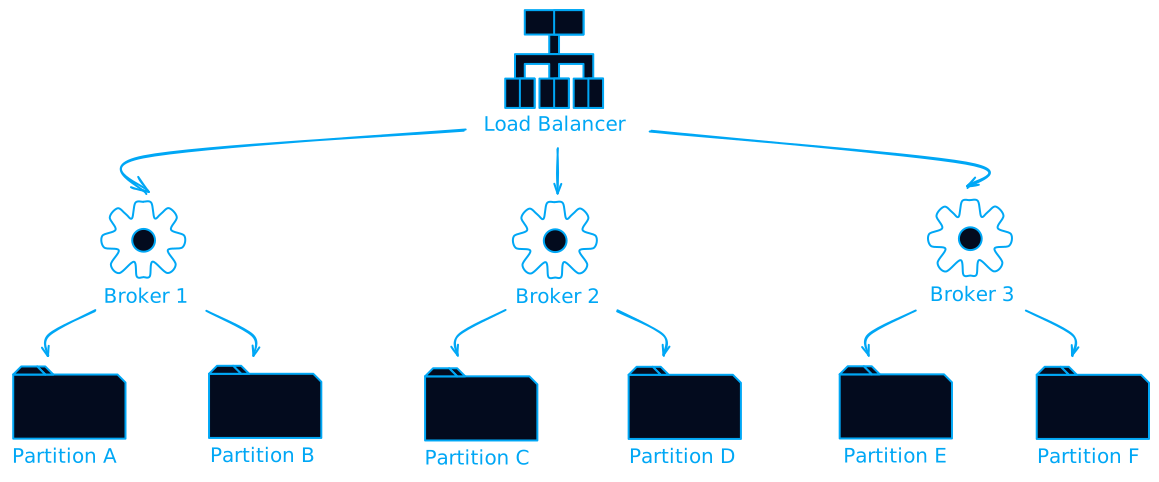
- Partition-level ordering (messages in the same partition stay ordered)
- Global ordering (everything in order, but slower)
- Sequence numbers in messages
Load Balancing: Handling the Traffic
As your system grows, you need to distribute the load. Strategies include:
Security: Protecting Your Messages
In production, you need:
- Authentication (who can publish/subscribe?)
- Authorization (what topics can they access?)
- Encryption (protect data in transit and at rest)
- Auditing (track who did what when)
Common Pitfalls (Learn from Others' Mistakes)
The "Everything is a Nail" Problem
Just because Pub-Sub is awesome doesn't mean it's right for everything. Don't use it for:
- Simple request-response scenarios
- When you need immediate feedback
- Small, tightly-coupled systems
Message Explosion
Be careful with chatty publishers. One user action shouldn't trigger 50 different messages. Design your events thoughtfully.
Subscriber Overload
Make sure your subscribers can handle the message volume. Implement backpressure and circuit breakers.
But What If Things Go Wrong? (Handling Failures Gracefully)
Dead Letter Queues
When a message can't be processed, don't just drop it. Send it to a "dead letter queue" for later investigation.
Retry Logic with Exponential Backoff
import time
import random

def retry_with_backoff(func, max_retries=3):
    for attempt in range(max_retries):
        try:
            return func()
        except Exception as e:
            if attempt == max_retries - 1:
                raise e

            # Exponential backoff with jitter
            delay = (2 ** attempt) + random.uniform(0, 1)
            time.sleep(delay)
Circuit Breakers
Stop trying to send messages to a failing service. Give it time to recover.
Choosing the Right Tool for the Job
Apache Kafka
Best for: High-throughput, real-time streaming, event sourcing Think: LinkedIn, Netflix scale
RabbitMQ
Best for: Complex routing, traditional messaging patterns Think: Enterprise integration
Cloud Services (AWS SNS/SQS, Google Pub/Sub)
Best for: Getting started quickly, managed infrastructure Think: Startups, rapid prototyping
Redis Pub/Sub
Best for: Simple, fast messaging within a single application Think: Real-time notifications, chat applications
Performance Considerations (Making It Fast)
Batching Messages
Instead of sending messages one by one, batch them:
class BatchPublisher:
    def __init__(self, batch_size=100, flush_interval=5):
        self.batch = []
        self.batch_size = batch_size
        self.flush_interval = flush_interval
        self.last_flush = time.time()

    def publish(self, message):
        self.batch.append(message)

        if (len(self.batch) >= self.batch_size or
            time.time() - self.last_flush > self.flush_interval):
            self.flush()

    def flush(self):
        if self.batch:
            self.broker.publish_batch(self.batch)
            self.batch.clear()
            self.last_flush = time.time()
Async Processing
Don't block on message publishing:
import asyncio

async def publish_async(broker, topic, message):
    await broker.publish(topic, message)

# Non-blocking publish
asyncio.create_task(publish_async(broker, "user-events", user_data))
Monitoring and Observability (Know What's Happening)
Key metrics to track:
- Message throughput (messages/second)
- Latency (time from publish to consume)
- Queue depth (how many messages are waiting)
- Error rates (failed deliveries)
- Consumer lag (how far behind are subscribers)
# Simple metrics collection
class MetricsCollector:
    def __init__(self):
        self.message_count = 0
        self.error_count = 0
        self.latencies = []

    def record_message(self, latency):
        self.message_count += 1
        self.latencies.append(latency)

    def record_error(self):
        self.error_count += 1

    def get_stats(self):
        return {
            'messages': self.message_count,
            'errors': self.error_count,
            'avg_latency': sum(self.latencies) / len(self.latencies) if self.latencies else 0
        }
Testing Pub-Sub Systems (Don't Skip This!)
Unit Testing Publishers
def test_publisher():
    mock_broker = Mock()
    publisher = UserEventPublisher(mock_broker)

    publisher.user_registered("user123")

    mock_broker.publish.assert_called_with(
        "user-events",
        {"event": "registered", "user_id": "user123"}
    )
Integration Testing with Test Containers
Use tools like Testcontainers to spin up real message brokers for testing:
import testcontainers

def test_end_to_end():
    with testcontainers.compose.DockerCompose("docker-compose.test.yml") as compose:
        kafka_port = compose.get_service_port("kafka", 9092)
        # Run your integration tests
The Future of Pub-Sub (What's Coming Next?)
Serverless Integration
Cloud functions that automatically scale based on message volume. AWS Lambda with SQS triggers is just the beginning.
AI-Powered Routing
Smart brokers that learn from message patterns and optimize routing automatically.
Edge Computing
Pub-Sub at the edge for IoT and mobile applications, reducing latency by processing messages closer to the source.
Getting Started: Your First Pub-Sub Implementation
Here's a simple example using Python and Redis:
import redis
import json
import threading

class SimplePubSub:
    def __init__(self, redis_host='localhost', redis_port=6379):
        self.redis_client = redis.Redis(host=redis_host, port=redis_port)
        self.pubsub = self.redis_client.pubsub()

    def publish(self, topic, message):
        """Publish a message to a topic"""
        self.redis_client.publish(topic, json.dumps(message))

    def subscribe(self, topic, callback):
        """Subscribe to a topic with a callback function"""
        self.pubsub.subscribe(topic)

        def listen():
            for message in self.pubsub.listen():
                if message['type'] == 'message':
                    data = json.loads(message['data'])
                    callback(data)

        thread = threading.Thread(target=listen)
        thread.daemon = True
        thread.start()

# Usage example
pubsub = SimplePubSub()

# Publisher
pubsub.publish('user-events', {'user_id': '123', 'action': 'login'})

# Subscriber
def handle_user_event(data):
    print(f"User {data['user_id']} performed {data['action']}")

pubsub.subscribe('user-events', handle_user_event)
Wrapping Up: Why Pub-Sub Is Your Secret Weapon
The Pub-Sub pattern isn't just another architectural buzzword. It's a fundamental shift in how we think about system communication. Instead of tightly coupled, brittle connections, you get flexible, scalable, and maintainable systems.
The key benefits that make it worth mastering:
- Scalability: Add new publishers and subscribers without touching existing code
- Reliability: Messages don't get lost when services are down
- Flexibility: Easy to add new features and integrations
- Performance: Asynchronous processing means faster response times
- Maintainability: Loose coupling makes debugging and updates easier
Whether you're building a simple web app or the next Netflix, understanding Pub-Sub will make you a better developer. Start small, experiment with different tools, and gradually work your way up to more complex scenarios.
The best part? Once you start thinking in terms of events and messages, you'll find opportunities to apply this pattern everywhere. Your future self (and your teammates) will thank you for building systems that actually scale and don't fall apart when requirements change.
Now go forth and publish some messages! Your distributed systems journey starts here.
Want to dive deeper? Check out the official documentation for Apache Kafka, RabbitMQ, or your favorite cloud provider's messaging services. The rabbit hole goes deep, but the journey is worth it.