The CAP Theorem: Why Your Distributed System Can't Have It All (And That's Actually Fine)
So you're building a distributed system and someone just dropped "CAP theorem" in your architecture review. Don't panic. This isn't some academic concept that only PhD holders understand. It's actually a pretty straightforward principle that'll save you from making some really expensive mistakes.
Let me break it down for you in a way that actually makes sense.
What Even Is the CAP Theorem?
Back in 2000, Eric Brewer basically told us what we already suspected but didn't want to admit: you can't have everything. In distributed systems, you get to pick two out of three guarantees:
- Consistency (C): All nodes see the same data at the same time
- Availability (A): Every request gets a response (even if it's "nope, try again")
- Partition Tolerance (P): System keeps working when network connections fail
Here's the kicker though. Network partitions aren't optional in distributed systems. They're going to happen. Your fancy fiber optic cables will get cut by construction crews. AWS regions will have "connectivity issues." That one microservice will decide to take a nap.
So really, you're choosing between consistency and availability when things go sideways.
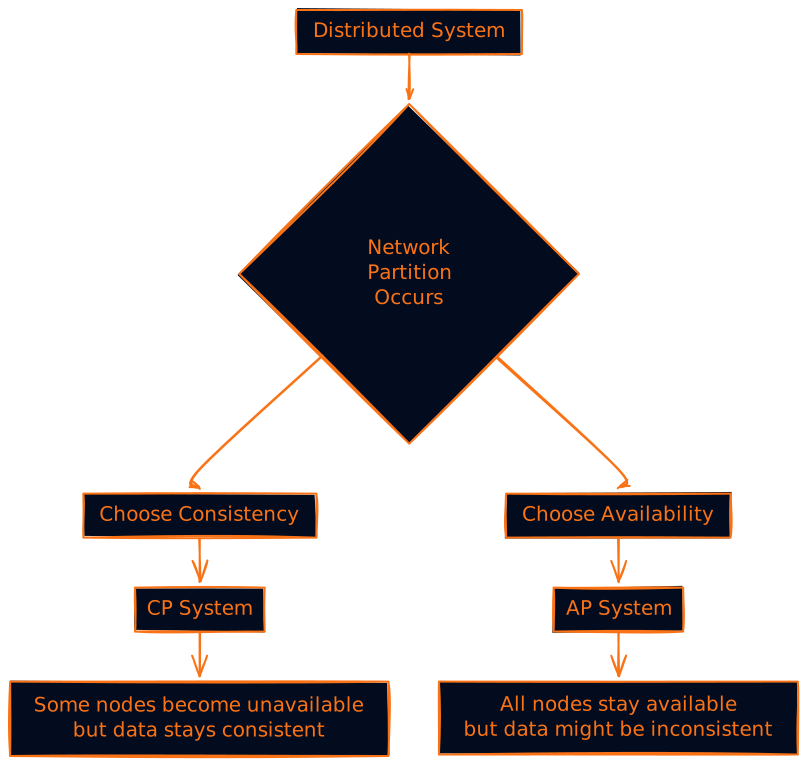
The Three Flavors of Distributed Systems
CP Systems: The Perfectionists
These systems are like that friend who won't leave the house unless their outfit is perfect. They'd rather shut down than serve you stale data.
When to use CP systems:
- Banking (nobody wants their account balance to be "eventually correct")
- Inventory management (overselling products is expensive)
- Configuration systems (inconsistent configs break everything)
Examples: MongoDB with majority reads/writes, HBase, Redis Cluster
AP Systems: The People Pleasers
These systems are like that restaurant that stays open even when half the kitchen staff called in sick. The food might not be perfect, but hey, you're getting fed.
When to use AP systems:
- Social media feeds (if you see a post 5 seconds late, nobody dies)
- Shopping carts (better to keep the cart than lose the sale)
- Analytics dashboards (approximate data is often good enough)
Examples: Cassandra, DynamoDB, CouchDB
CA Systems: The Unicorns
These systems want both consistency and availability but can't handle network partitions. They're basically single-node systems pretending to be distributed, or systems that assume perfect networks (spoiler: networks are never perfect).
Examples: Traditional RDBMS, SQLite, most monolithic applications
Real-World Trade-offs: It's Messier Than You Think
Here's where it gets interesting. Most real systems don't fit neatly into these buckets. They're more like Swiss Army knives, using different approaches for different types of data.
The E-commerce Example
Let's say you're building the next Amazon (ambitious, I like it). Here's how you might split things up:

But Wait, There's More: PACELC Theorem
Just when you thought you understood everything, someone invented PACELC (pronounced "pass-elk" if you want to sound cool at conferences).
It says: "During a Partition, choose Availability or Consistency. Else (during normal operation), choose Latency or Consistency."
This is actually super practical because most of the time your system isn't partitioned. You're making latency vs consistency trade-offs every day:
- Do you read from the nearest replica (fast but potentially stale)?
- Or do you read from the primary (slow but always fresh)?
The Consistency Spectrum: It's Not Binary
Here's something the textbooks don't tell you: consistency isn't just "on" or "off." There's a whole spectrum:
Strong Consistency
Every read gets the most recent write. Period. This is expensive but sometimes necessary.
# Pseudocode for strong consistency
def write_data(key, value):
    # Write to ALL replicas before returning success
    for replica in all_replicas:
        replica.write(key, value)
    return "success"

def read_data(key):
    # Read from primary to ensure latest data
    return primary_replica.read(key)
Eventual Consistency
Data will be consistent... eventually. Like when your friend says they'll pay you back "eventually."
# Pseudocode for eventual consistency
def write_data(key, value):
    # Write to local replica immediately
    local_replica.write(key, value)
    # Async replication to other replicas
    async_replicate_to_others(key, value)
    return "success"

def read_data(key):
    # Read from any available replica
    return any_replica.read(key)
Tunable Consistency
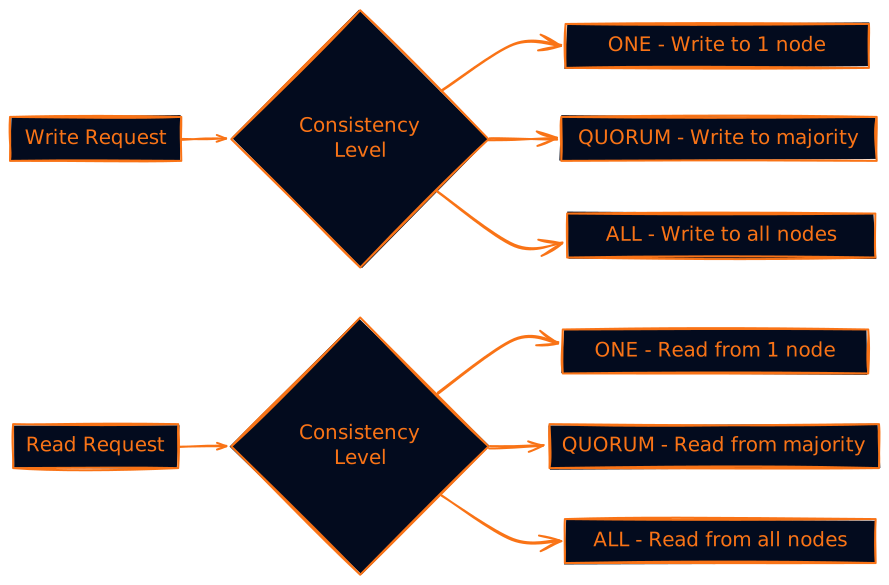
This is where it gets fun. Systems like Cassandra let you dial in exactly how consistent you want each operation to be:
Practical Strategies: How to Actually Build This Stuff
For CP Systems: Embrace the Quorum
The secret sauce is quorum-based replication. You need a majority of nodes to agree before committing any change.
class QuorumSystem:
    def __init__(self, nodes, quorum_size):
        self.nodes = nodes
        self.quorum_size = quorum_size

    def write(self, key, value):
        successful_writes = 0
        for node in self.nodes:
            if node.write(key, value):
                successful_writes += 1
                if successful_writes >= self.quorum_size:
                    return True
        return False  # Couldn't achieve quorum
For AP Systems: Conflict Resolution is Key
When you prioritize availability, you're going to get conflicts. This is because your primary write and read replica always been in out of sync. Plan for them:
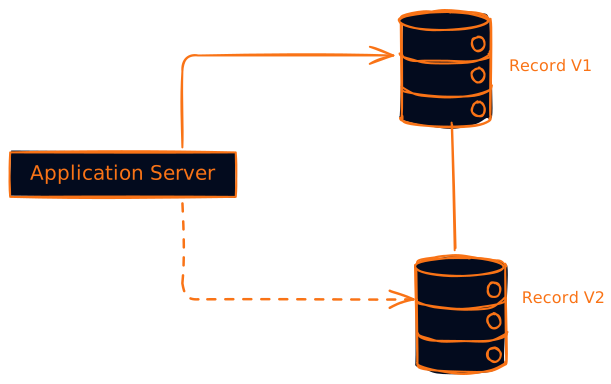
- Last Writer Wins: Simple but lossy
- Vector Clocks: Track causality between updates
- CRDTs: Conflict-free data types that merge automatically
- Application Logic: Let the business rules decide
The Hybrid Approach: Best of Both Worlds?
Most successful systems use a hybrid approach. Here's a pattern I've seen work well:
Common Pitfalls (Learn from My Mistakes)
Mistake #1: Assuming Partitions Are Rare
They're not. Plan for them from day one.
Mistake #2: Choosing the Wrong Trade-off
I once built a real-time chat system that prioritized consistency over availability. Users couldn't send messages during network hiccups. Guess how that went over.
Mistake #3: Not Testing Partition Scenarios
Use tools like Chaos Monkey or Jepsen to simulate network failures. Your system will break in ways you never imagined.
Mistake #4: Ignoring the Human Factor
Sometimes the best solution isn't technical. Maybe you show users a warning: "Your data might be slightly out of date" instead of making them wait for perfect consistency.
Monitoring and Observability: Know When Things Go Wrong
You need to track:
- Partition frequency: How often do network splits happen?
- Consistency violations: Are you serving stale data?
- Availability metrics: What's your actual uptime during partitions?
- Convergence time: How long until AP systems become consistent?
# Example monitoring for consistency lag
def monitor_consistency_lag():
    primary_value = primary_db.get("user_balance")
    replica_values = [replica.get("user_balance") for replica in replicas]

    max_lag = max(abs(primary_value - replica_value)
                  for replica_value in replica_values)

    if max_lag > ACCEPTABLE_LAG_THRESHOLD:
        alert("Consistency lag exceeded threshold")
The Future: Beyond CAP
The CAP theorem is just the beginning. Modern systems are exploring:
- Multi-region consistency: How do you stay consistent across continents?
- Blockchain consensus: What happens when you don't trust anyone?
- Edge computing: CAP theorem at the edge of the network
- Quantum networking: Will quantum entanglement break the CAP theorem? (Probably not, but it's fun to think about)
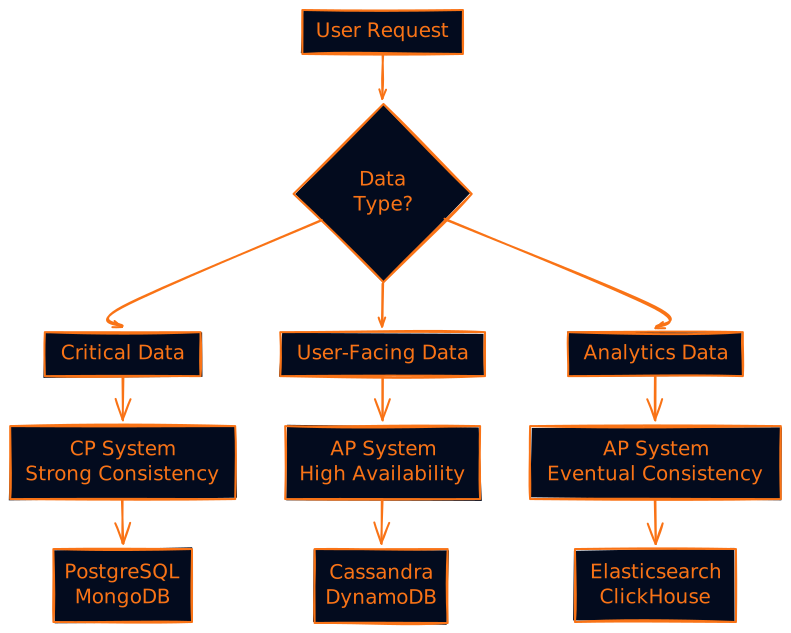
Decision Framework: Choose Your Own Adventure
Here's a practical decision tree I use:

Wrapping Up: It's All About Trade-offs
The CAP theorem isn't a limitation, it's a design tool. It forces you to think about what really matters for your system:
- For financial systems: Consistency is king. Better to be unavailable than wrong.
- For social media: Availability wins. Users will forgive stale data but not downtime.
- For most systems: A hybrid approach works best.
The key insight? There's no perfect system, only systems that make the right trade-offs for their use case.
Remember, the CAP theorem is about what happens during network partitions. Most of the time, your system isn't partitioned. Focus on building something that works well 99% of the time, and gracefully degrades during that 1% when things go sideways.
And hey, if you're still not sure which approach to take, start with something simple and evolve. Premature optimization is the root of all evil, but premature distribution is even worse.
Further Reading
Want to dive deeper? Check out:
- Jepsen - Kyle Kingsbury's distributed systems testing
- "Designing Data-Intensive Applications" by Martin Kleppmann
- The original CAP theorem paper by Eric Brewer
- PACELC theorem for the full picture
Now go forth and build systems that make sensible trade-offs. Your future self (and your on-call rotation) will thank you.
Got questions about the CAP theorem or want to share your own distributed systems war stories? Drop a comment below. I love hearing about real-world implementations and the creative ways people solve these problems.