System Scalability - Why Your System Will Break Tomorrow
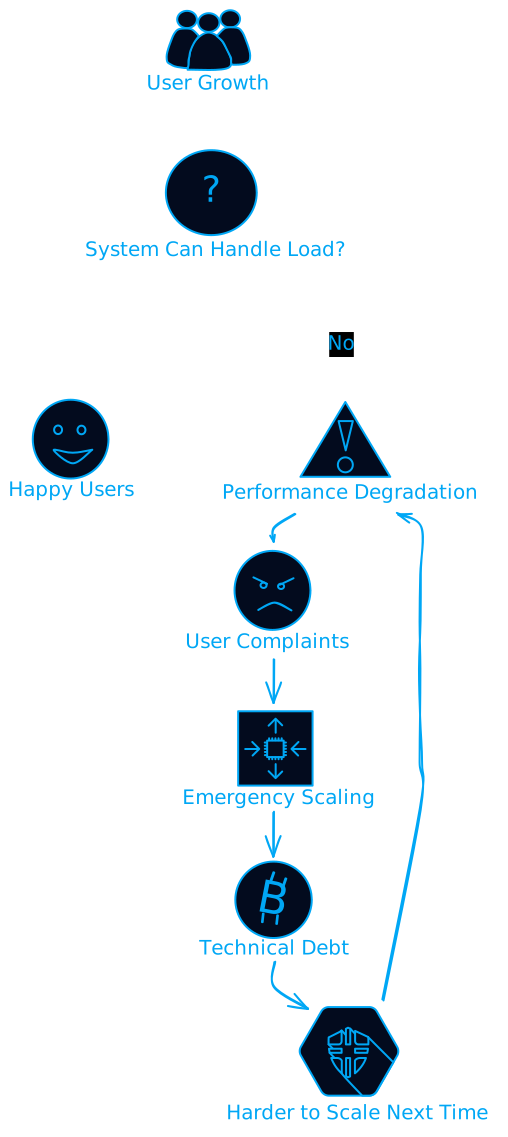
Look, I've seen it happen more times than I care to count. You build something that works perfectly for 100 users, then suddenly you hit 1,000 and everything falls apart. Your database starts crying, your servers are on fire, and your users are tweeting angry emojis at your support account.
The thing is, scalability isn't just about handling more users. It's about building systems that can grow without you having to rebuild everything from scratch every six months. And honestly? Most of us get it wrong the first time.
What Actually Is Scalability (Beyond the Buzzwords)
Scalability is your system's ability to handle increasing workloads while maintaining performance and not bankrupting your company. But here's where it gets interesting - there are actually five different dimensions you need to think about:
Operational Scalability - Can your system handle 10x more users without melting down? Geographic Scalability - Will it work when users are scattered across the globe? Administrative Scalability - Can you actually manage this thing as it grows? Functional Scalability - Can you add new features without breaking existing ones? Organizational Scalability - Can your team structure support the growing complexity?
Most people only think about the first one, which is why they end up in trouble later.
The Two Paths: Scale Up or Scale Out
When your system starts struggling, you've got two main options, and the choice you make here will define your architecture for years to come.
Vertical Scaling (The Easy Button That Isn't)
Vertical scaling is like buying a bigger truck when you need to move more stuff. You just throw more CPU, RAM, and storage at your existing server. It's tempting because it's simple - no code changes, no architectural headaches, just bigger hardware.
But here's the catch: there's a ceiling. You can only make a single machine so powerful before you hit physical limits or your AWS bill makes your CFO cry. Plus, when that one big server goes down, everything goes down with it.
// This approach has limits
const server = {
  cpu: "64 cores",
  ram: "512GB",
  storage: "10TB SSD",
  // What happens when you need more than this?
}
Horizontal Scaling (The Hard Way That Actually Works)
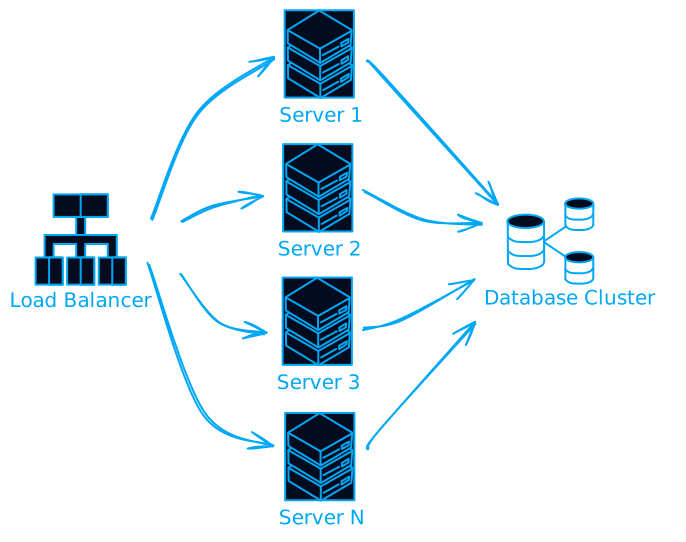
Horizontal scaling is like having a fleet of smaller trucks instead of one massive one. You add more servers and distribute the load across them. It's more complex to set up, but it can theoretically scale forever.
The real magic happens when you design your system to be "shared nothing" - each server can operate independently, and if one dies, the others keep running.
But What About When Everything Goes Serverless?
Here's where things get really interesting. Serverless architecture is like having an infinite army of tiny workers that only get paid when they're actually doing something. AWS Lambda, Google Cloud Functions, Azure Functions - they all promise the same thing: write your code, deploy it, and let the cloud provider handle all the scaling headaches.
The beauty of serverless is that it scales from zero to thousands of concurrent executions automatically. No servers to manage, no capacity planning, no 3 AM wake-up calls because your server crashed.
But (and there's always a but), serverless isn't magic. You still need to think about:
- Cold starts (that delay when a function hasn't run in a while)
- Vendor lock-in (good luck moving your Lambda functions to another provider)
- Debugging distributed systems (because now your app is spread across hundreds of tiny functions)
# Serverless function that scales automatically
def handle_user_request(event, context):
    # This function can handle 1 request or 10,000
    # The cloud provider figures out the scaling
    user_id = event['user_id']
    return process_user_data(user_id)
The Container Revolution (And Why Kubernetes Ate the World)
Containers changed everything. Before Docker, deploying applications was like trying to move your entire house every time you wanted to change apartments. With containers, you package your app with everything it needs to run, and it works the same way everywhere.
But containers alone don't solve scalability. That's where orchestration comes in. Kubernetes became the de facto standard because it solves the really hard problems:
- Auto-scaling: Spin up new containers when load increases
- Self-healing: Replace failed containers automatically
- Load distribution: Spread traffic across healthy containers
- Rolling updates: Deploy new versions without downtime
# Kubernetes deployment that scales based on CPU usage
apiVersion: apps/v1
kind: Deployment
metadata:
  name: web-app
spec:
  replicas: 3
  selector:
    matchLabels:
      app: web-app
  template:
    spec:
      containers:
      - name: web-app
        image: myapp:latest
        resources:
          requests:
            cpu: 100m
            memory: 128Mi
          limits:
            cpu: 500m
            memory: 512Mi
---
apiVersion: autoscaling/v2
kind: HorizontalPodAutoscaler
metadata:
  name: web-app-hpa
spec:
  scaleTargetRef:
    apiVersion: apps/v1
    kind: Deployment
    name: web-app
  minReplicas: 3
  maxReplicas: 100
  metrics:
  - type: Resource
    resource:
      name: cpu
      target:
        type: Utilization
        averageUtilization: 70
The Data Problem (Because Your Database Will Be the Bottleneck)
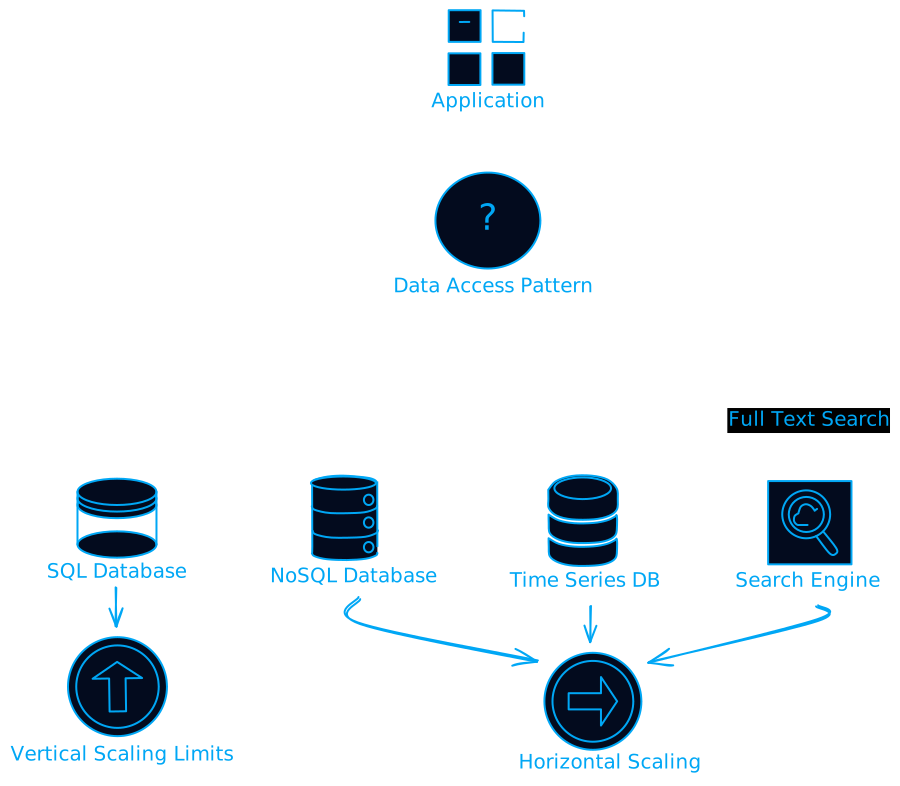
Here's something nobody talks about enough: your application servers might scale beautifully, but your database will become the bottleneck. It always does.
Traditional relational databases were designed for consistency, not massive scale. When you try to scale them horizontally, you run into the CAP theorem - you can't have consistency, availability, and partition tolerance all at the same time.
Sharding: Splitting Your Data Across Multiple Databases
Sharding is like organizing a massive library by splitting books across multiple buildings. Each shard contains a subset of your data, and you need a way to route queries to the right shard.
# Simple sharding example
def get_user_shard(user_id):
    # Route users to different database shards
    shard_count = 4
    shard_id = hash(user_id) % shard_count
    return f"user_db_shard_{shard_id}"

def get_user(user_id):
    shard = get_user_shard(user_id)
    db = connect_to_shard(shard)
    return db.query("SELECT * FROM users WHERE id = ?", user_id)
NoSQL: When You Need to Scale Beyond SQL
Sometimes you need to abandon the relational model entirely. NoSQL databases like MongoDB, Cassandra, and DynamoDB are designed for horizontal scaling from day one.
The trade-off? You lose some of the guarantees that SQL databases provide, like ACID transactions and complex joins. But you gain the ability to scale to massive datasets across multiple data centers.
Caching: The Performance Multiplier Everyone Forgets
Caching is like having a really good memory - instead of looking up the same information over and over, you remember it from the first time. Done right, caching can make your system feel 10x faster and handle 10x more load.
But caching is tricky. The two hardest problems in computer science are cache invalidation, naming things, and off-by-one errors (yes, that's three things, but who's counting?).
The Caching Hierarchy
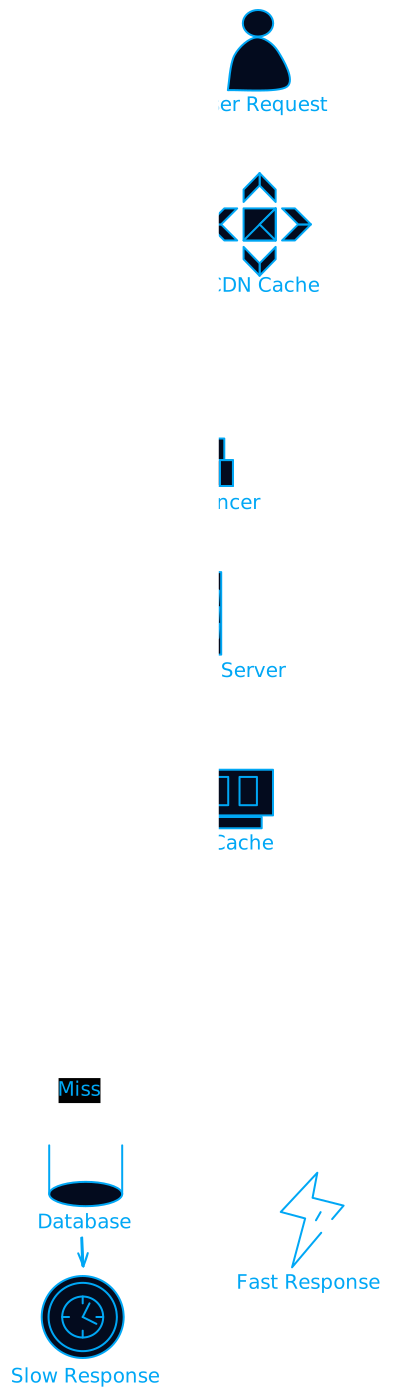
CDN (Content Delivery Network): Caches static assets close to users Application-level caching: Redis or Memcached for frequently accessed data Database query caching: Built-in caching in your database Browser caching: Let the user's browser cache resources
The Monitoring Problem (You Can't Fix What You Can't See)
Scaling without monitoring is like driving blindfolded. You need to know what's happening in your system before your users start complaining.
The three pillars of observability are:
- Metrics: Numbers that tell you what's happening (CPU usage, response times, error rates)
- Logs: Detailed records of what your system is doing
- Traces: Following a single request through your entire system
# Example monitoring setup
import time
import logging
from prometheus_client import Counter, Histogram

# Metrics
REQUEST_COUNT = Counter('requests_total', 'Total requests', ['method', 'endpoint'])
REQUEST_DURATION = Histogram('request_duration_seconds', 'Request duration')

def handle_request(request):
    start_time = time.time()

    try:
        # Process the request
        response = process_request(request)
        REQUEST_COUNT.labels(method=request.method, endpoint=request.path).inc()
        return response
    except Exception as e:
        logging.error(f"Request failed: {e}", exc_info=True)
        raise
    finally:
        REQUEST_DURATION.observe(time.time() - start_time)
What's Coming Next (The Future of Scaling)
The scalability landscape is evolving fast. Here's what's on the horizon:
AI-Driven Auto-Scaling
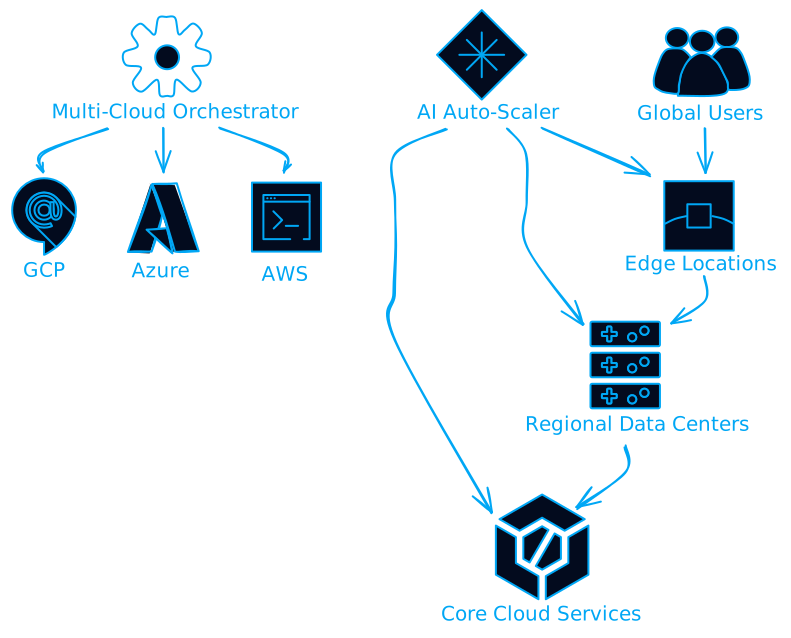
Instead of setting static rules like "scale up when CPU hits 70%", AI systems will learn your traffic patterns and scale proactively. Imagine a system that knows your app gets busy every Monday morning and scales up before the load hits.
Edge Computing Goes Mainstream
We're moving computation closer to users. Instead of everything running in a few massive data centers, we'll have thousands of smaller edge locations running your code. This means lower latency and better user experience, especially for global applications.
Multi-Cloud Becomes the Norm
Vendor lock-in is becoming less acceptable. Companies are building systems that can run across multiple cloud providers, giving them better negotiating power and reducing the risk of outages.
The Challenges Nobody Talks About
Scaling isn't just a technical problem. Here are the real challenges that will bite you:
Complexity Explosion
Every time you add a new component to handle scale, you're adding complexity. More services mean more failure modes, more monitoring, more deployment complexity. At some point, the cure becomes worse than the disease.
The Distributed Systems Tax
Once you go distributed, you're playing by different rules. Network calls can fail, services can be temporarily unavailable, and data consistency becomes a real challenge. You'll spend more time dealing with these issues than you expect.
Cost Management
Scaling can get expensive fast. Auto-scaling is great until you get a traffic spike and your AWS bill goes from 10,000 overnight. You need proper cost controls and monitoring.
Team Scaling
Your team needs to scale with your system. Conway's Law states that organizations design systems that mirror their communication structure. If your team can't scale, your system won't either.
Building Scalable Systems: The Practical Checklist
Here's what actually works in the real world:
Start Simple, Scale Smart
Don't over-engineer from day one. Build a monolith first, understand your bottlenecks, then split things up strategically. Premature optimization is still the root of all evil.
Design for Failure
Assume everything will fail. Your servers will crash, your network will have hiccups, your database will slow down. Build retry logic, circuit breakers, and graceful degradation into your system from the start.
Measure Everything
You can't improve what you don't measure. Set up monitoring early and track the metrics that matter: response times, error rates, throughput, and resource utilization.
Automate the Boring Stuff
Manual scaling doesn't scale. Automate deployments, scaling decisions, and failure recovery. Your 3 AM self will thank you.
Plan for Data Growth
Your data will grow faster than you expect. Plan your database strategy early, and don't wait until you're in pain to think about sharding or moving to NoSQL.
The Bottom Line
Scalability isn't about building the most complex system possible. It's about building a system that can grow with your needs without falling apart. Start simple, measure everything, and scale the bottlenecks as they appear.
The companies that get this right don't just survive growth - they thrive because of it. The ones that don't? Well, they become cautionary tales in blog posts like this one.
Remember: your system will break tomorrow. The question is whether you'll be ready for it.
FAQ
Frequently Asked Questions (FAQs)
1. What is system scalability?
System scalability is the ability of an application or infrastructure to handle increasing workloads—such as more users, requests, or data—without performance degradation or major architectural changes. A scalable system grows efficiently while keeping costs and reliability under control.
2. Why do applications fail when traffic increases?
Applications often fail at higher traffic because of bottlenecks like databases, shared state, limited server resources, or lack of proper load balancing. Poor monitoring and unplanned scaling strategies also cause systems to break under sudden growth.
3. What is the difference between vertical and horizontal scaling?
Vertical scaling increases the power of a single server by adding more CPU, RAM, or storage, while horizontal scaling adds more servers and distributes the load across them. Horizontal scaling is generally more reliable and cost-effective for long-term growth.
4. How do databases impact system scalability?
Databases are usually the first component to become a bottleneck because they handle shared data and complex queries. Techniques like caching, read replicas, sharding, and using NoSQL databases help improve database scalability.
5. How can you design a system to scale without breaking?
You can design scalable systems by starting simple, monitoring performance, planning for failures, automating scaling, and addressing bottlenecks incrementally. Building stateless services, using caching, and designing for horizontal scaling are key best practices.
Want to dive deeper into scalability? Check out these resources:
- The Art of Scalability by Martin Abbott
- Designing Data-Intensive Applications by Martin Kleppmann
- Building Microservices by Sam Newman
And remember, the best architecture is the one that solves your actual problems, not the one that looks good in a conference talk.