Strong vs Eventual Consistency in Scalable Systems
Picture this: you're building the next big social media platform. Users are posting, liking, and commenting at lightning speed across the globe. But here's the million-dollar question that keeps you up at night: should every user see the exact same data at the exact same moment, or is it okay if updates take a few seconds to propagate worldwide?
Welcome to one of the most fundamental trade-offs in distributed systems, the choice between strong consistency and eventual consistency. It's not just a technical decision, it's a business decision that affects everything from user experience to your AWS bill.
What's All This Consistency Talk About?
Let's start with the basics. In distributed systems, consistency is about how synchronized your data stays across multiple servers or nodes. Think of it like a group chat where everyone needs to see messages in the same order, but some people have slower internet connections.
Strong consistency is like that friend who waits for everyone to read a message before sending the next one. Every read operation returns the most recent write, no matter which server handles your request. It's reliable, predictable, but sometimes slow.
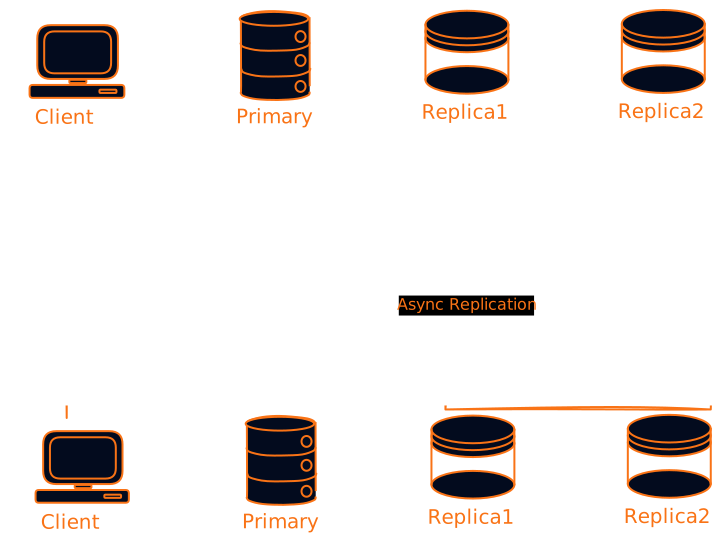
Eventual consistency is more like a relaxed group chat where messages might arrive out of order, but eventually everyone gets caught up. The system guarantees that if no new updates happen, all nodes will eventually have the same data, but there's no promise about when "eventually" is.
The CAP Theorem Reality Check
Before we dive deeper, let's talk about the elephant in the room: the CAP theorem. This isn't just academic theory, it's the harsh reality of distributed systems.
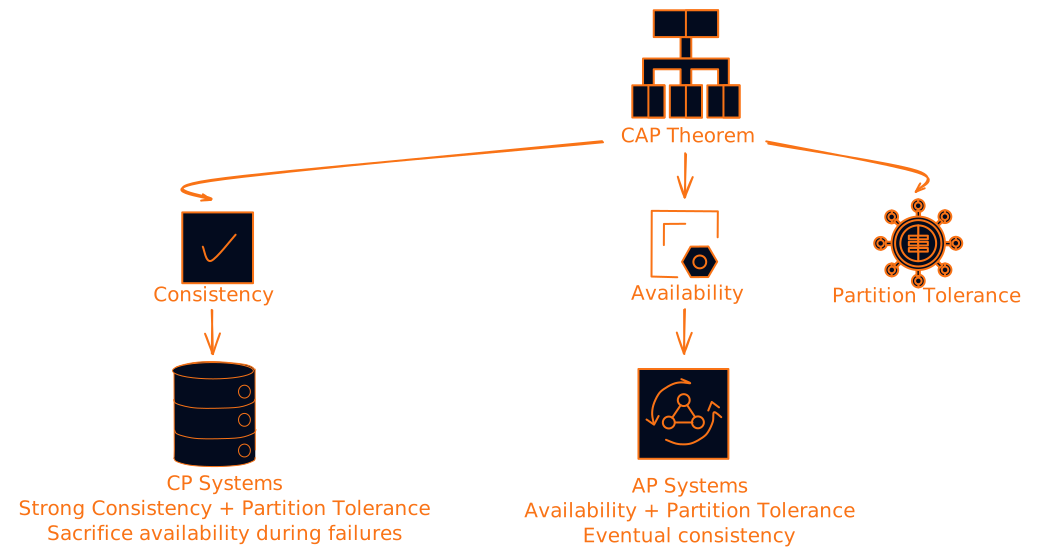
You can only pick two out of three. Since network partitions are a fact of life in distributed systems (servers fail, cables get cut, data centers go down), you're really choosing between consistency and availability.
Strong Consistency: The Perfectionist's Choice
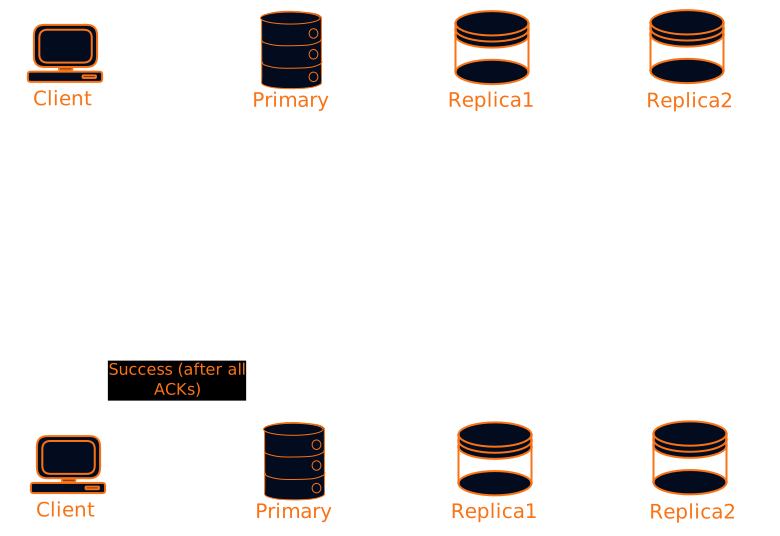
Strong consistency is like having a really strict teacher who makes sure everyone is on the same page before moving forward. Here's how it works:
When Strong Consistency Makes Sense
Banking and Financial Systems: You absolutely cannot have your account showing different balances on different ATMs. Imagine checking your balance, seeing 500, only to find out another transaction already spent $600. That's a recipe for disaster (and lawsuits).
E-commerce Inventory: Ever bought something online only to get an email saying "sorry, we're actually out of stock"? That's what happens when inventory systems aren't strongly consistent. You need to prevent overselling, period.
Configuration Management: When you're deploying new features or security patches across thousands of servers, you need everyone to get the same configuration at the same time. Inconsistent configs can bring down entire systems.
The Price of Perfection
Strong consistency comes with trade-offs:
- Higher Latency: Every write has to wait for all replicas to confirm
- Reduced Availability: If replicas are down, writes might fail
- Limited Scalability: You're only as fast as your slowest replica
Think of it like a group project where everyone has to approve every decision. It's thorough, but slow.
Eventual Consistency: The Pragmatist's Approach
Eventual consistency is more like a newsroom during breaking news. Reporters file stories as they happen, editors update them, and eventually everyone has the complete picture. But for a while, different news outlets might have slightly different versions of the story.
Where Eventual Consistency Shines
Social Media Feeds: When you post a photo on Instagram, it doesn't need to appear instantly on every follower's feed worldwide. A few seconds delay is totally acceptable, and users understand that likes and comments might take a moment to sync up.
Content Delivery Networks (CDNs): When Netflix updates a movie description, it's okay if the change takes a few minutes to propagate to edge servers worldwide. Users won't notice, and the performance benefits are huge.
Analytics and Reporting: Your daily active user count doesn't need to be updated in real-time. Batch processing overnight is fine, and the insights are just as valuable.
The Challenges of "Eventually"
But eventual consistency isn't all sunshine and rainbows:
- Read-after-write problems: Users might not see their own changes immediately
- Conflict resolution: What happens when two users edit the same data simultaneously?
- User confusion: "I just posted this, where did it go?"
Real-World Implementation Patterns
Let's get practical. How do you actually implement these consistency models?
Strong Consistency Patterns
Two-Phase Commit (2PC):
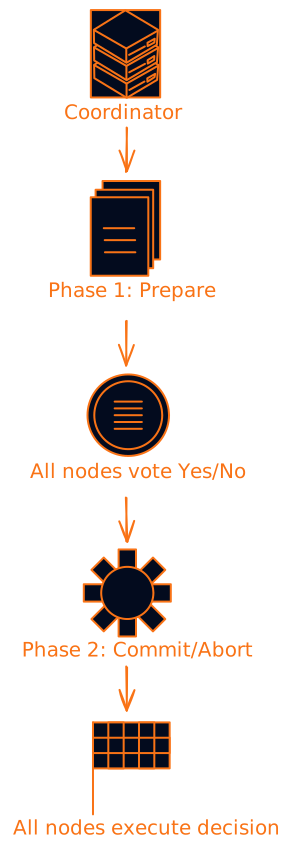
This is like asking everyone "are you ready?" before saying "okay, everyone do it now!" It works, but it's slow and has a single point of failure.
Consensus Protocols (Raft/Paxos): These are more sophisticated approaches where nodes elect a leader and follow a strict protocol for making decisions. Think of it like a democratic process with clear rules.
Eventual Consistency Patterns
Vector Clocks: These help track the order of events across different nodes, like timestamps that understand causality.
Conflict-Free Replicated Data Types (CRDTs): These are data structures designed to merge automatically without conflicts. It's like having smart documents that know how to combine changes from multiple editors.
Last-Writer-Wins: Simple but crude, whoever wrote last wins. Works for some use cases, terrible for others.
The Hybrid Approach: Best of Both Worlds?
Here's where it gets interesting. You don't have to choose just one consistency model for your entire system. Many successful companies use hybrid approaches:
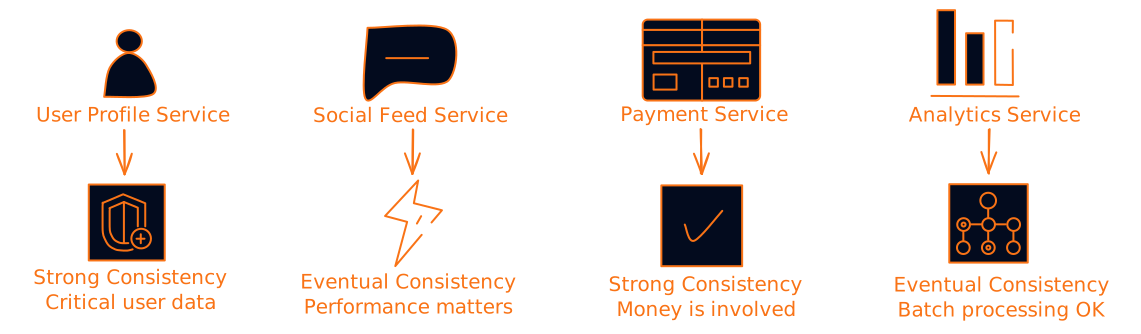
Session Consistency: Users always see their own writes immediately, but might see stale data from others. It's like having a personal notebook that's always up-to-date, while the shared whiteboard takes time to sync.
Monotonic Read Consistency: Once you read a value, you'll never see an older version. Think of it as a promise that time only moves forward in your view of the data.
Making the Right Choice: A Decision Framework
So how do you decide? Here's a practical framework:
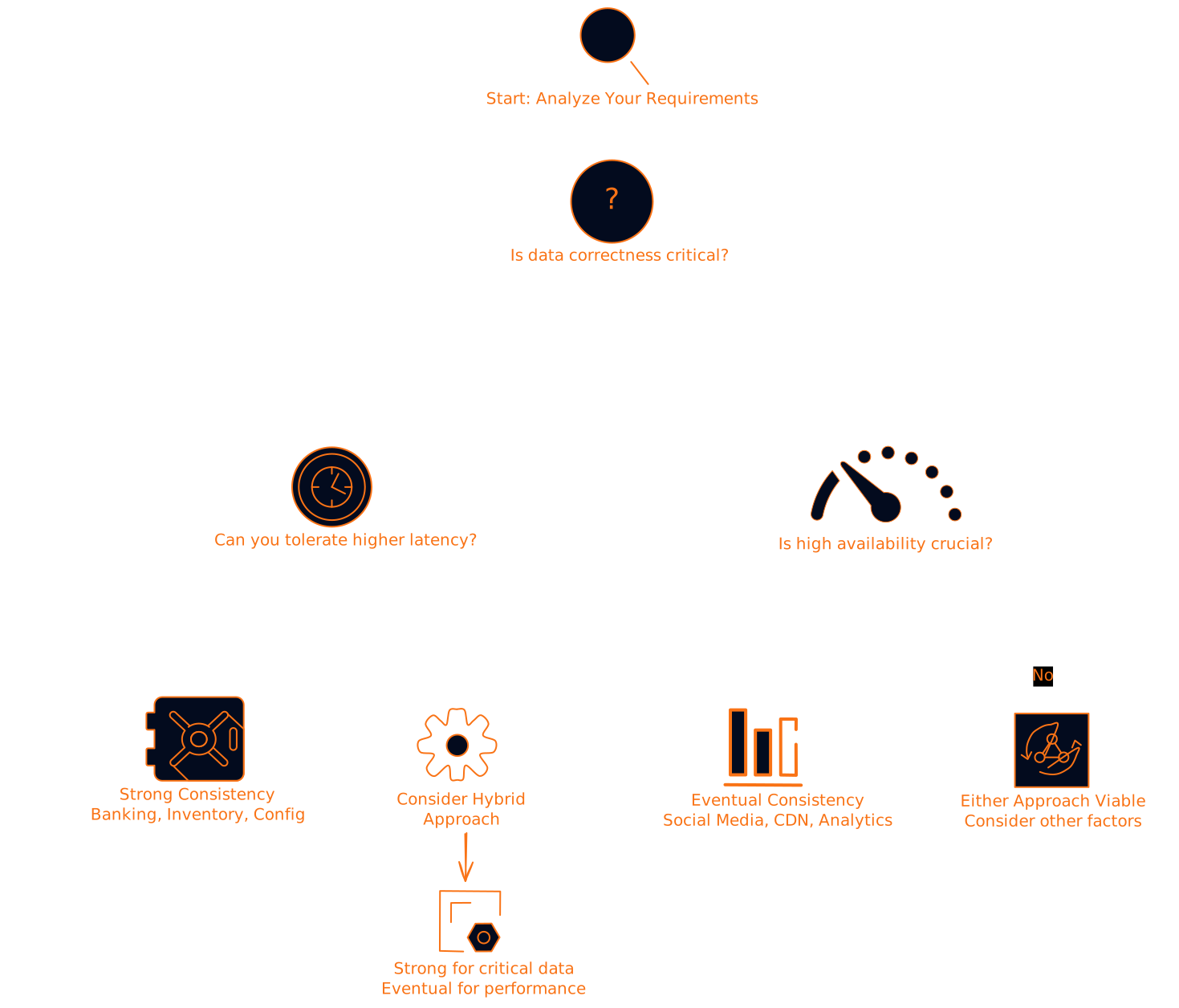
Questions to Ask Yourself
-
What happens if users see stale data? If the answer is "they get confused but nothing breaks," eventual consistency might be fine. If the answer is "we lose money or trust," go with strong consistency.
-
How global is your system? The more distributed your system, the more expensive strong consistency becomes.
-
What's your read-to-write ratio? If you read way more than you write, eventual consistency with read replicas can give you massive performance gains.
-
How tech-savvy is your team? Strong consistency is generally easier to reason about and debug. Eventual consistency requires more sophisticated conflict resolution and monitoring.
Performance and Scalability Implications
Let's talk numbers. In my experience building distributed systems, here's what you can expect:
Strong Consistency:
- Latency: 50-200ms additional per write (depending on replica distance)
- Throughput: Limited by slowest replica, often 10-50% of eventual consistency
- Availability: 99.9% typical (goes down during network partitions)
Eventual Consistency:
- Latency: Near-local speeds, 1-10ms for writes
- Throughput: Can scale linearly with nodes
- Availability: 99.99%+ possible (graceful degradation)
Common Pitfalls and How to Avoid Them
Strong Consistency Pitfalls
The Distributed Deadlock: When two transactions wait for each other across different nodes. It's like two people trying to walk through a door at the same time, but the door is on different continents.
Solution: Implement proper timeout handling and deadlock detection.
The Split-Brain Scenario: When network partitions cause multiple nodes to think they're the leader.
Solution: Use odd numbers of nodes and require majority consensus.
Eventual Consistency Pitfalls
The Confused User: "I just posted this, where is it?"
Solution: Implement read-your-writes consistency for user-generated content.
The Conflict Explosion: When concurrent updates create a mess that's hard to resolve.
Solution: Design your data model to minimize conflicts, use CRDTs where possible.
Monitoring and Observability
You can't manage what you can't measure. Here are the key metrics to track:
For Strong Consistency:
- Write latency percentiles (P50, P95, P99)
- Consensus protocol health
- Replica lag (should be zero)
- Failed write percentage
For Eventual Consistency:
- Replication lag across regions
- Conflict rate and resolution time
- Read-after-write consistency violations
- Convergence time (how long until all replicas agree)
// Example monitoring code
const metrics = {
  replicationLag: measureReplicationLag(),
  conflictRate: calculateConflictRate(),
  convergenceTime: measureConvergenceTime()
};

if (metrics.replicationLag > THRESHOLD) {
  alert('Replication lag too high!');
}
The Future of Consistency
The consistency landscape is evolving. New approaches like Calvin (deterministic transaction scheduling) and FaunaDB (serializable ACID transactions globally) are pushing the boundaries of what's possible.
Blockchain and Consensus: While often overhyped, blockchain technologies are introducing new consensus mechanisms that might influence future distributed systems.
Edge Computing: As computation moves closer to users, we're seeing new consistency models that account for geographic proximity and network topology.
Wrapping Up: It's All About Trade-offs
Here's the thing about consistency in distributed systems: there's no silver bullet. The "right" choice depends entirely on your specific requirements, constraints, and trade-offs.
Choose Strong Consistency When:
- Data correctness is non-negotiable
- You can afford higher latency
- Your system isn't massively distributed
- Regulatory compliance requires it
Choose Eventual Consistency When:
- Performance and availability are critical
- You're building a global system
- Users can tolerate temporary inconsistencies
- You have the expertise to handle conflict resolution
Consider Hybrid When:
- Different parts of your system have different requirements
- You want to optimize for specific use cases
- You're migrating between consistency models
Remember, you can always start with strong consistency (it's simpler to reason about) and move to eventual consistency as you scale. It's much harder to go the other way.
The most important thing? Understand your trade-offs, monitor your system closely, and be prepared to evolve your approach as your requirements change. After all, the best consistency model is the one that helps you build a system your users love and trust.
What consistency challenges are you facing in your systems? Have you had to make the switch from strong to eventual consistency (or vice versa)? Share your experiences in the comments below.