REST vs GraphQL for Scalable Systems
So you're building the next big thing, and you're staring at your architecture diagram wondering: "Should I go with good old REST or jump on the GraphQL bandwagon?" Trust me, I've been there. After diving deep into both approaches and seeing them battle it out in production systems, I'm here to break down this choice without the usual tech evangelism.
Let's be real, both REST and GraphQL solve problems, but they solve different problems. And picking the wrong one for your use case? That's a recipe for late nights debugging performance issues or rewriting your entire API layer six months down the road.
The Data Fetching Dilemma
Here's where things get interesting. REST has this annoying habit of either giving you way too much data (overfetching) or making you ping multiple endpoints to get what you need (underfetching). It's like ordering a combo meal when you only want fries, or having to make three separate trips to the store for ingredients.
GraphQL flips this on its head. You ask for exactly what you want, and that's what you get. According to Apollo's benchmarks, this can reduce data transfer by up to 95% in some scenarios. That's not a typo, ninety-five percent.
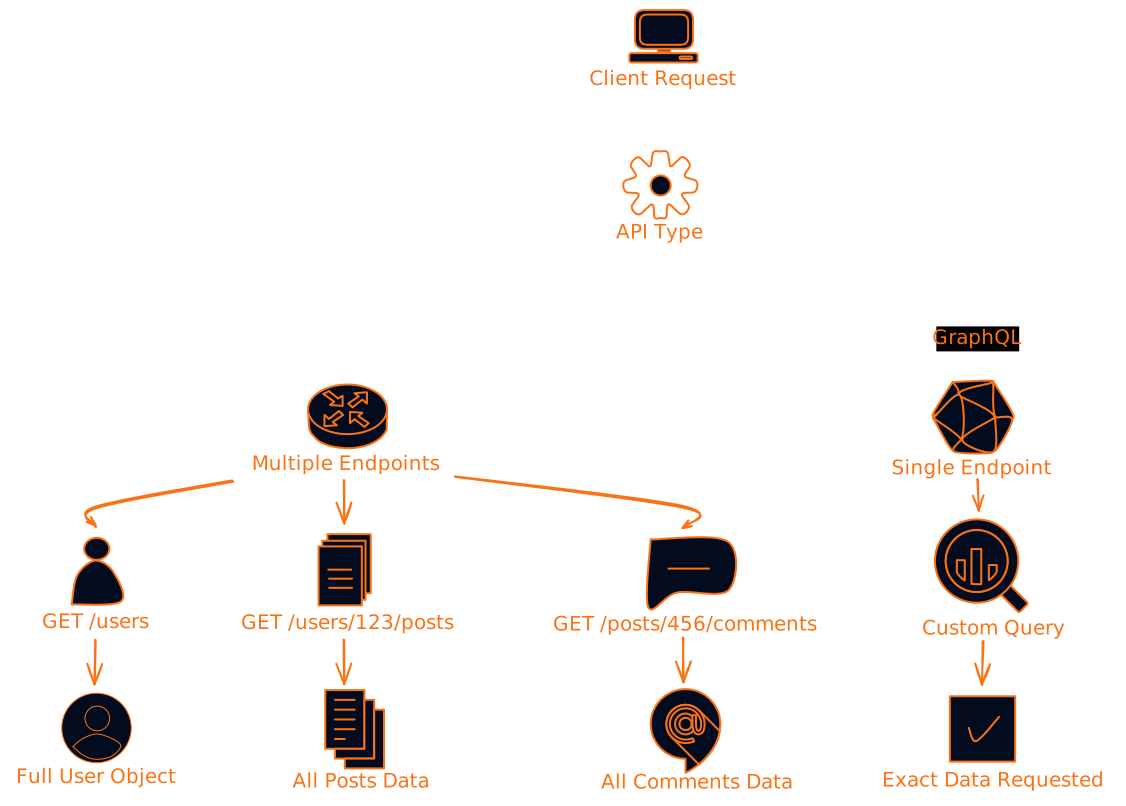
But here's the catch, GraphQL's flexibility comes with complexity. While REST lets you cache responses based on simple URLs, GraphQL queries are dynamic beasts that make caching feel like solving a Rubik's cube blindfolded.
Real-Time: Where GraphQL Shines
If your app needs real-time updates, GraphQL subscriptions are pretty sweet. Instead of polling endpoints every few seconds (which is basically digital pestering), you set up a subscription and the server pushes updates when something actually changes.
Think about it like this: REST real-time is like constantly asking "Are we there yet?" on a road trip. GraphQL subscriptions are like having GPS that tells you when you've arrived.
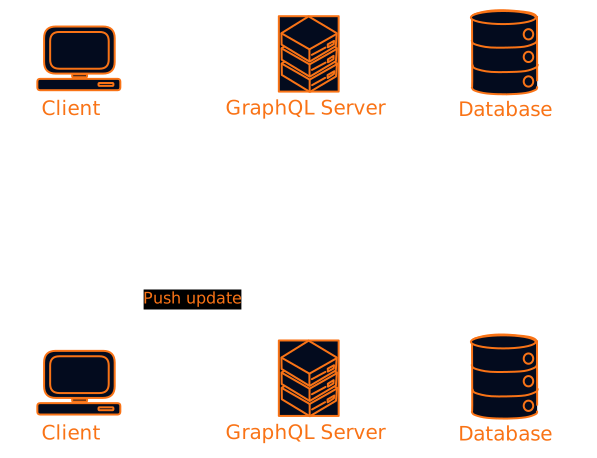
But scaling subscriptions? That's where things get spicy. You're dealing with persistent WebSocket connections, fan-out patterns, and backpressure management. It's not impossible, but it's definitely not trivial.
Performance: It's Complicated
Here's where the plot thickens. GraphQL can be incredibly efficient for data transfer, especially on mobile where every byte counts. Facebook reported 67% reduction in bandwidth usage for their mobile apps. That's huge when you're dealing with millions of users on spotty 3G connections.
But here's the flip side, GraphQL can be a CPU hog on the server. Netflix found that GraphQL APIs consumed 23% more CPU than equivalent REST APIs for simple queries. Why? Because parsing and executing complex queries takes computational power.
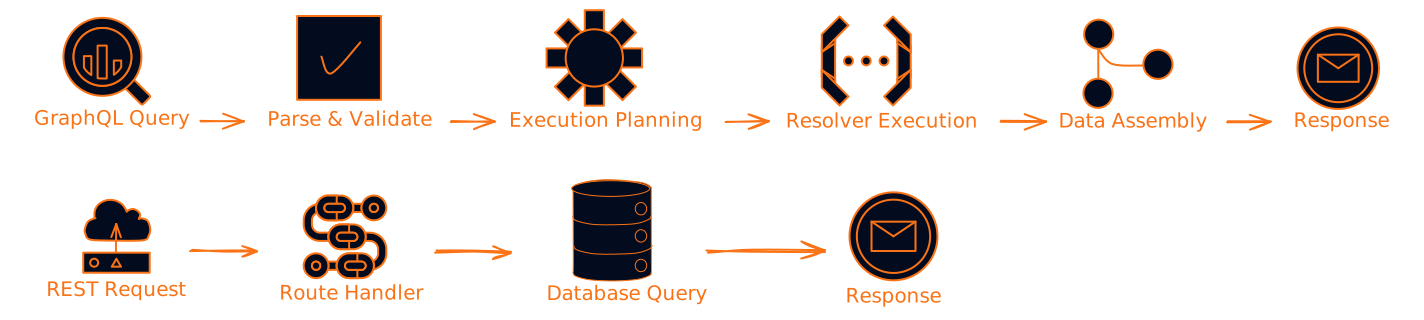
The N+1 query problem is real in both worlds, but GraphQL gives you better tools to solve it. DataLoader pattern, query batching, and persisted queries can turn a performance nightmare into a well-oiled machine.
Security: Different Beasts, Different Challenges
REST security is straightforward. You've got endpoints, you secure them with standard HTTP auth, rate limiting, and input validation. It's like having a bouncer at each door of your club.
GraphQL security is more like having one really smart bouncer who needs to understand the intent behind every request. You need query depth limiting (because someone will try to nest queries 50 levels deep), complexity analysis, and field-level authorization.
// GraphQL query that could bring down your server
query EvilQuery {
  users {
    posts {
      comments {
        author {
          posts {
            comments {
              // ... and so on
            }
          }
        }
      }
    }
  }
}
The good news? Tools like Apollo Server have built-in protections. The bad news? You need to actually configure them properly.
Caching: REST's Secret Weapon
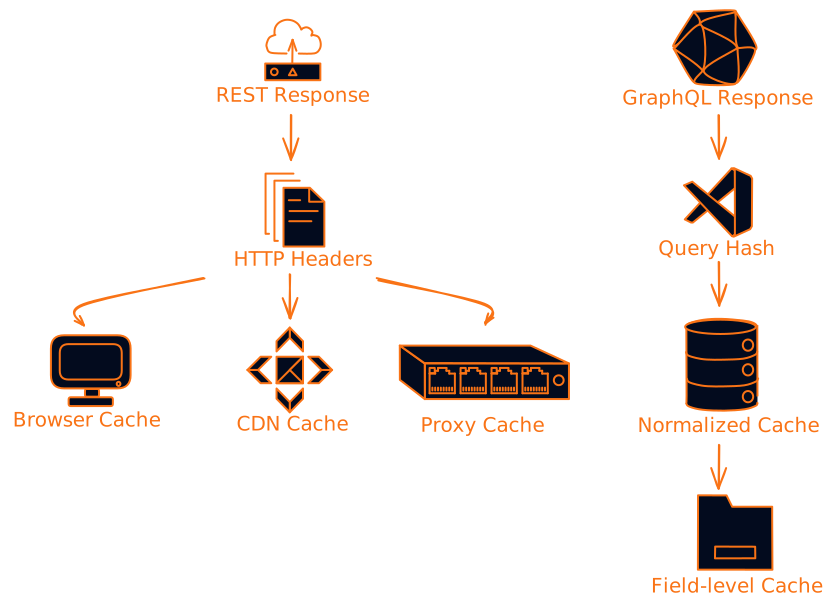
This is where REST really flexes. HTTP caching is mature, well-understood, and works everywhere. CDNs love it, browsers cache it automatically, and you can leverage decades of optimization techniques.
GraphQL caching is... let's call it "creative." You're dealing with query hashing, normalized caches, and field-level invalidation. Apollo Client does a decent job, but it's still more complex than slapping a Cache-Control header on a REST response.
The Ecosystem Reality Check
REST has been around since 2000. That's 24 years of tools, libraries, documentation, and Stack Overflow answers. Every programming language has mature REST libraries. Every developer knows how to build a REST API.
GraphQL is the new kid, born in 2012 at Facebook. The ecosystem is growing fast, but it's still catching up. Want to build a GraphQL API in some obscure language? Good luck finding mature libraries.
But here's the thing, the GraphQL ecosystem is backed by some serious players. Apollo, Hasura, AWS Amplify, and others are pouring resources into making GraphQL development smooth.
When to Choose What
Go with REST when:
- You're building a simple CRUD app
- Caching is critical to your performance
- You're working with third-party integrations
- Your team is new to API development
- You need maximum compatibility
Choose GraphQL when:
- You're building a complex frontend with varied data needs
- Mobile performance is crucial
- You need real-time features
- You're aggregating multiple data sources
- Your team can handle the learning curve
Consider a hybrid approach when:
- You're migrating from REST to GraphQL
- Different parts of your system have different needs
- You want to experiment without going all-in
The Migration Path
If you're thinking about moving from REST to GraphQL, don't do it all at once. Start with a GraphQL gateway that wraps your existing REST APIs. This gives you GraphQL benefits without rewriting everything.
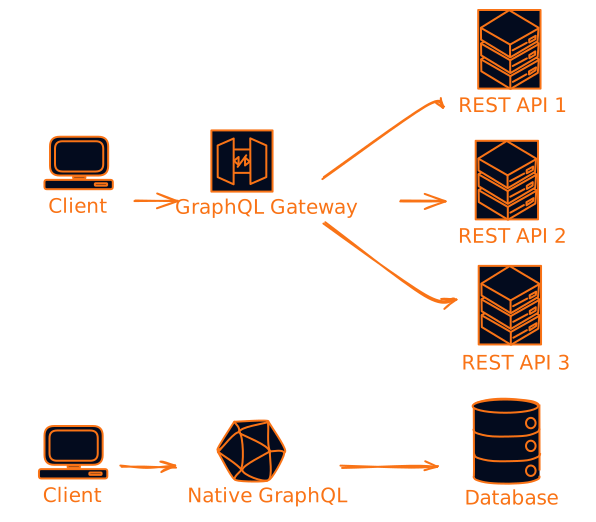
Then gradually replace REST endpoints with native GraphQL resolvers. It's like renovating a house while living in it, messy but doable.
Real Talk: Common Pitfalls
REST pitfalls I've seen:
- Creating endpoints that return everything "just in case"
- Not implementing proper caching strategies
- Ignoring HTTP status codes (everything returns 200)
- Building APIs that mirror database structure instead of client needs
GraphQL pitfalls that hurt:
- Not implementing query complexity analysis (hello, DoS attacks)
- Creating overly nested schemas that are impossible to optimize
- Forgetting about the N+1 problem until production melts down
- Over-engineering simple CRUD operations
The Bottom Line
There's no universal winner here. REST isn't dead, and GraphQL isn't a silver bullet. They're tools, and like any tool, they're good at some things and terrible at others.
If you're building a simple API that serves data to a few known clients, REST is probably fine. If you're building a complex system with multiple frontends, varying data requirements, and real-time needs, GraphQL might be worth the complexity.
The key is understanding your constraints: team expertise, performance requirements, caching needs, and long-term maintenance. Don't choose based on what's trendy, choose based on what solves your actual problems.
And remember, you can always start with one and migrate to the other later. Architecture decisions aren't tattoos, they can be changed (though it might hurt a bit).
What's Next?
Both technologies are evolving. REST is getting better tooling and standards (OpenAPI 3.0, JSON:API). GraphQL is maturing with better caching solutions, federation capabilities, and performance optimizations.
The future probably isn't REST vs GraphQL, it's REST and GraphQL working together in systems that use the right tool for each job. Because at the end of the day, users don't care about your API architecture, they care about fast, reliable experiences.
So pick the one that helps you deliver that, and don't lose sleep over the choice. There are bigger problems to solve.
What's your experience with REST vs GraphQL? Have you made the switch, or are you still on the fence? Drop your thoughts in the comments, I'd love to hear about your real-world experiences with both approaches.