Push vs Pull
So you're building a system and wondering whether to push data to your users or let them pull it when they need it? Yeah, I've been there. It's one of those decisions that seems simple on the surface but can make or break your architecture down the line.
Let me break this down for you in a way that actually makes sense, without all the corporate buzzword nonsense.
What Are We Even Talking About Here?
Before we dive deep, let's get our definitions straight because I see people mixing these up all the time.
Push Architecture: Your server is like that friend who texts you every single update about their life. The moment something happens, boom, you get notified. The server actively sends data to clients without being asked.
Pull Architecture: This is more like checking your mailbox. You decide when you want updates and go ask for them. Clients request data from servers when they need it.
The Push Pattern
How Push Actually Works
Push is all about the server taking initiative. Think of it like this:
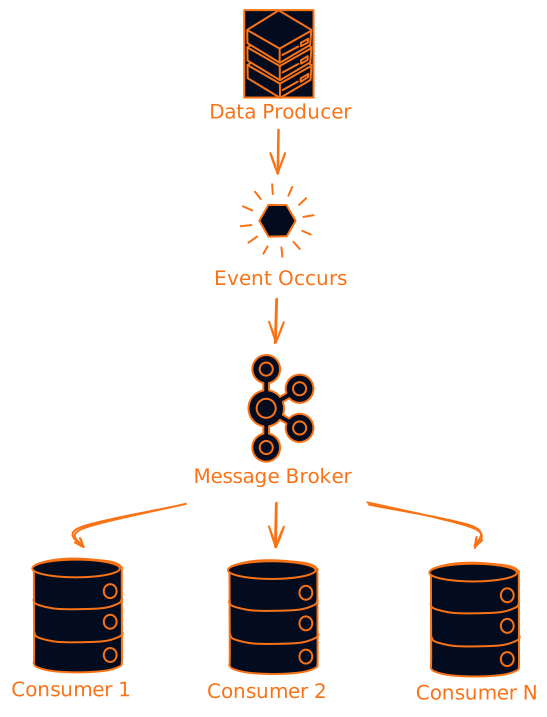
The server maintains connections with all its clients and pushes updates the moment they're available. No waiting, no polling, just instant delivery.
When Push Makes Perfect Sense
Push shines in scenarios where timing is everything:
- Real-time notifications: Your phone buzzing when someone likes your Instagram post
- Live streaming: Netflix pushing video chunks to your device
- Trading platforms: Stock prices that need to update instantly
- Gaming: Multiplayer games where every millisecond counts
- IoT systems: Sensors sending alerts when something goes wrong
The Good, The Bad, and The Ugly of Push
The Good:
- Ultra-low latency (we're talking milliseconds)
- Real-time updates without delay
- Efficient bandwidth usage (no unnecessary requests)
- Great user experience for time-sensitive data
The Bad:
- Complex to implement and maintain
- Server needs to track all client connections
- Can be resource-intensive with many clients
- Harder to scale horizontally
The Ugly:
- What happens when clients go offline?
- Network issues can break everything
- Debugging connection problems is a nightmare
- Security becomes more complex
Push Implementation Strategies
Here's how you might actually implement push in the real world:
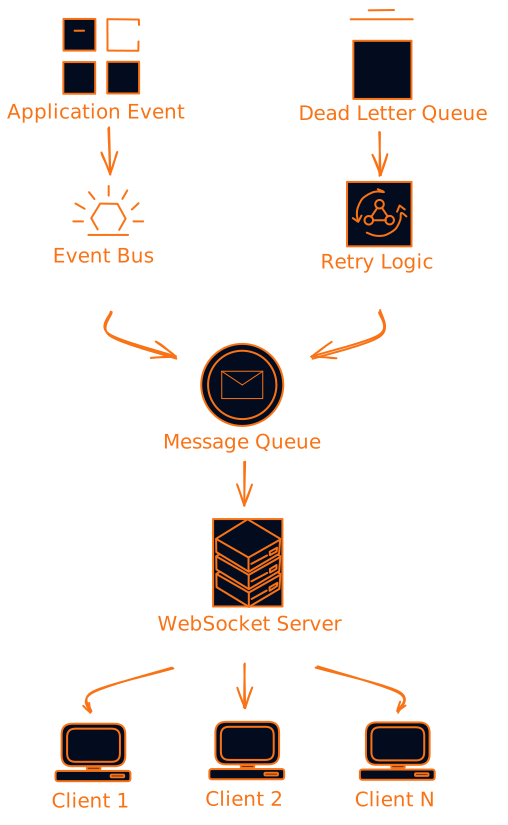
WebSockets: The go-to for real-time web apps. Maintains persistent connections.
Server-Sent Events (SSE): Simpler than WebSockets, great for one-way communication.
Message Queues: Kafka, RabbitMQ, or AWS SQS for reliable delivery.
Push Notifications: For mobile apps when they're not actively running.
The Pull Pattern: Playing Hard to Get
How Pull Actually Works
Pull is the "I'll call you" approach. Clients decide when they want data and actively request it:
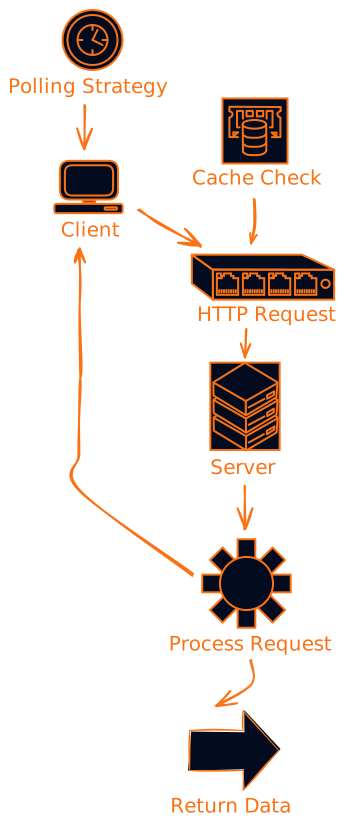
It's straightforward: client asks, server responds. No persistent connections, no complex state management.
When Pull Is Your Best Friend
Pull works great when:
- Data isn't time-critical: User profiles, product catalogs, settings
- Batch processing: ETL jobs, report generation, data synchronization
- Simple request-response patterns: REST APIs, file downloads
- Network reliability is questionable: Pull handles failures better
- You need caching: HTTP caching works beautifully with pull
The Pull Pros and Cons
The Pros:
- Simple to implement and understand
- Scales horizontally like a dream
- Works great with caching (CDNs love this)
- Easy to debug and monitor
- Stateless servers are happy servers
The Cons:
- Latency depends on polling frequency
- Can waste bandwidth with empty responses
- Not great for real-time requirements
- Polling storms can kill your server
Smart Pull Strategies
Not all pulling is created equal. Here are some strategies that actually work:
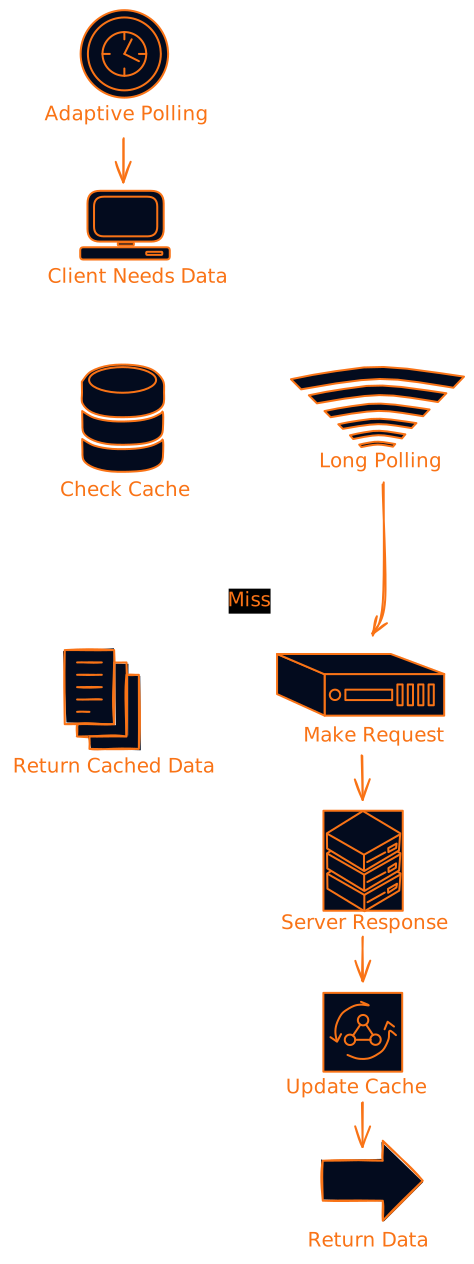
Fixed Interval Polling: Simple but can be wasteful. Poll every X seconds regardless.
Adaptive Polling: Smart polling that adjusts based on activity. More updates = more frequent polling.
Long Polling: Hold the connection open until data is available or timeout occurs.
Exponential Backoff: Increase delays when no new data is available.
The Hybrid Approach: Having Your Cake and Eating It Too
Here's where things get interesting. Most successful systems don't pick just one approach, they use both strategically.
How Hybrid Actually Works
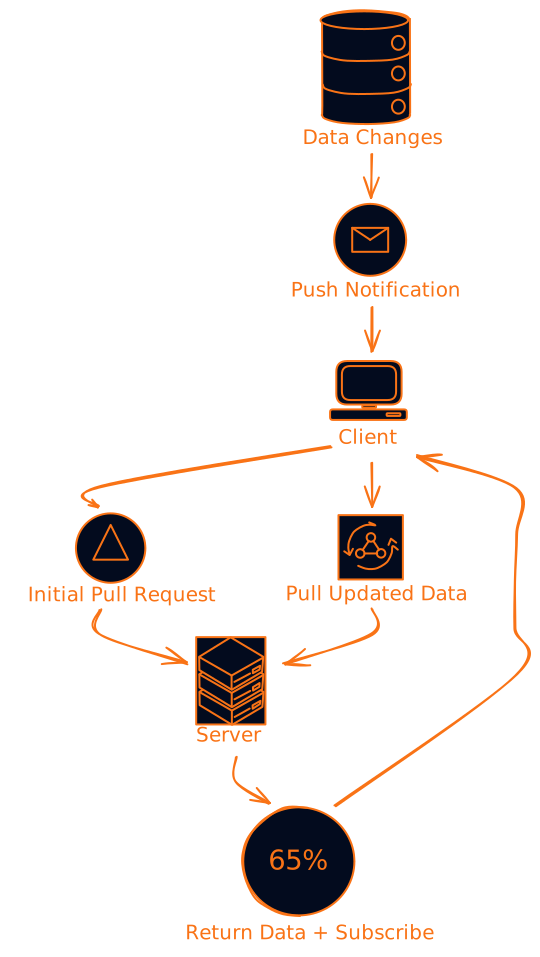
The pattern: Use pull for initial data loading and bulk operations, push for real-time notifications and updates.
Real-World Hybrid Examples
Facebook/Twitter News Feed:
- Pull: Initial feed loading, pagination
- Push: New post notifications, real-time comments
Slack/Discord:
- Pull: Message history, user profiles, settings
- Push: New messages, typing indicators, presence updates
E-commerce Platforms:
- Pull: Product catalogs, user accounts, order history
- Push: Order status updates, inventory alerts, promotional notifications
Making the Right Choice: A Decision Framework
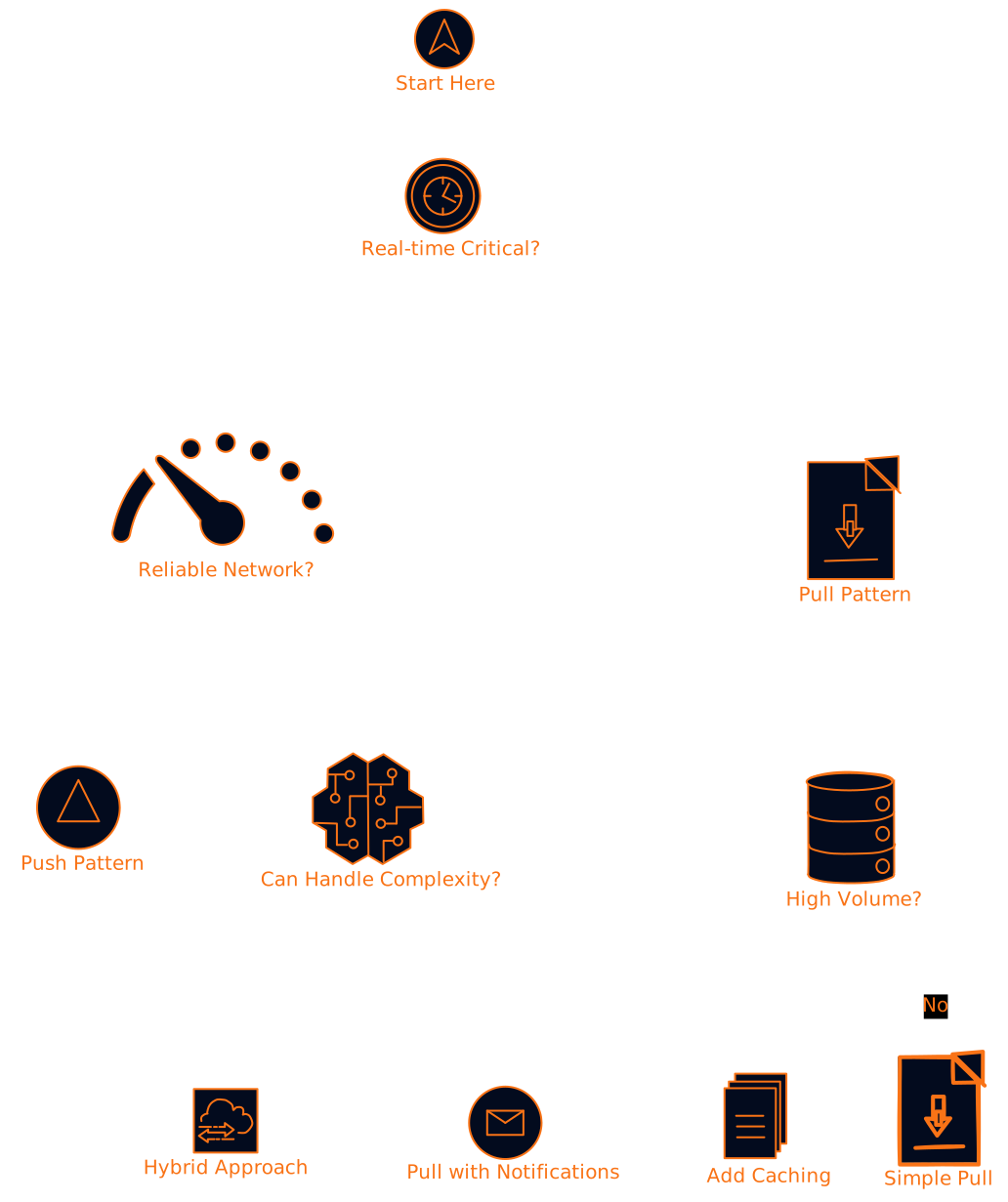
Alright, so how do you actually decide? Here's my framework:
Start With These Questions
1. How time-sensitive is your data?
- Critical (< 1 second): Push
- Important (< 30 seconds): Push or hybrid
- Normal (< 5 minutes): Pull is fine
- Batch (hours/days): Definitely pull
2. How many clients do you have?
- Few (< 1000): Either works
- Many (1000-100k): Lean towards pull
- Massive (> 100k): Pull with selective push
3. What's your network situation?
- Reliable corporate network: Push is viable
- Consumer internet: Pull is safer
- Mobile/spotty connections: Pull with offline support
4. How complex can you handle?
- Simple team: Start with pull
- Experienced team: Hybrid approach
- Enterprise with resources: Full push infrastructure
The Decision Tree
Common Pitfalls (And How to Avoid Them)
Push Pattern Mistakes
The "Fire and Forget" Trap: Sending data without confirming delivery. Solution: Implement acknowledgments and retry logic.
The "Connection Explosion": Not managing client connections properly. Solution: Use connection pooling and load balancing.
The "Duplicate Delivery" Problem: Sending the same data multiple times. Solution: Use idempotency keys and deduplication.
Pull Pattern Mistakes
The "Polling Storm": All clients polling at the same time. Solution: Add jitter to polling intervals.
The "Cache Ignorance": Not leveraging HTTP caching properly. Solution: Set proper cache headers and use ETags.
The "Fixed Interval Trap": Polling at the same rate regardless of activity. Solution: Implement adaptive polling strategies.
Performance and Scalability Considerations
Push Performance Profile

Push gives you amazing latency but at the cost of complexity and resource usage.
Pull Performance Profile

Pull trades some latency for simplicity and better resource utilization.
Monitoring and Observability
Key Metrics to Track
For Push Systems:
- Delivery success rate
- Connection count and churn
- Message latency (end-to-end)
- Retry attempts and failures
- Dead letter queue size
For Pull Systems:
- Polling frequency and efficiency
- Cache hit rates
- Empty response percentage
- Request latency
- Error rates
For Both:
- Resource utilization (CPU, memory, network)
- Throughput (messages/requests per second)
- Client health and connectivity
The Bottom Line
Here's the thing, there's no universally "right" answer. The best architecture depends on your specific needs, constraints, and team capabilities.
Go with Push when:
- Real-time is non-negotiable
- You have the resources to handle complexity
- Network reliability is good
- User experience depends on immediate updates
Go with Pull when:
- Simplicity is important
- You need to scale quickly
- Network conditions are unpredictable
- Data isn't time-critical
Go with Hybrid when:
- You have mixed requirements
- You want the best of both worlds
- You can handle the added complexity
- Different data types have different needs
Remember, you can always start simple with pull and evolve to hybrid or push as your needs grow. Don't over-engineer from day one.
What's Next?
Now that you understand the trade-offs, here's what I'd recommend:
- Audit your current data flows - What really needs to be real-time?
- Start with pull for most things - It's simpler and scales better
- Add push selectively - Only for truly time-critical updates
- Monitor everything - Data-driven decisions beat gut feelings
- Plan for failure - Both patterns have different failure modes
The key is understanding that this isn't a one-time decision. Your architecture will evolve as your system grows and your requirements change. Stay flexible, measure everything, and don't be afraid to refactor when needed.
What pattern are you leaning towards for your system? The comments are open, let's discuss the trade-offs for your specific use case.
Want to dive deeper into system design patterns? Check out my other posts on [microservices communication patterns] and [event-driven architectures]. And if you found this helpful, share it with your team, they'll thank you later.