The Modular Monolith: Why Smart Teams Are Choosing the Middle Ground Over Microservices Chaos
The Modular Monolith: Why Smart Teams Are Choosing the Middle Ground Over Microservices Chaos
You know that feeling when you're debugging a "simple" feature request that somehow requires changes across 12 different microservices? Yeah, that's the microservices hangover talking. And honestly, a lot of teams are starting to question whether splitting everything into tiny services was really the brilliant idea it seemed like back in 2018.
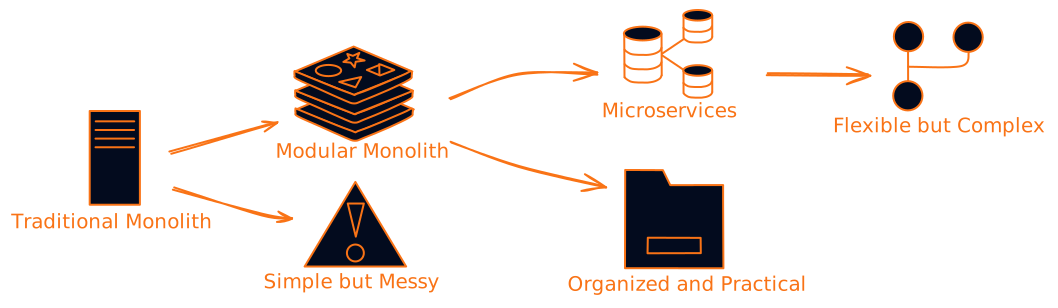
Here's the thing: some of the biggest names in tech (Netflix, Shopify, Amazon) are quietly moving toward something called modular monoliths. It's not the old-school tangled mess of spaghetti code your senior dev warns you about. This is something different, something smarter.
What Actually Is a Modular Monolith?
Think of a modular monolith like a well-designed apartment complex. You've got separate units with their own kitchens, bathrooms, and living spaces, but they all share the same foundation, utilities, and address. Each tenant minds their own business, but when it comes to maintenance or major changes, you're dealing with one building, not managing a scattered neighborhood of tiny houses.
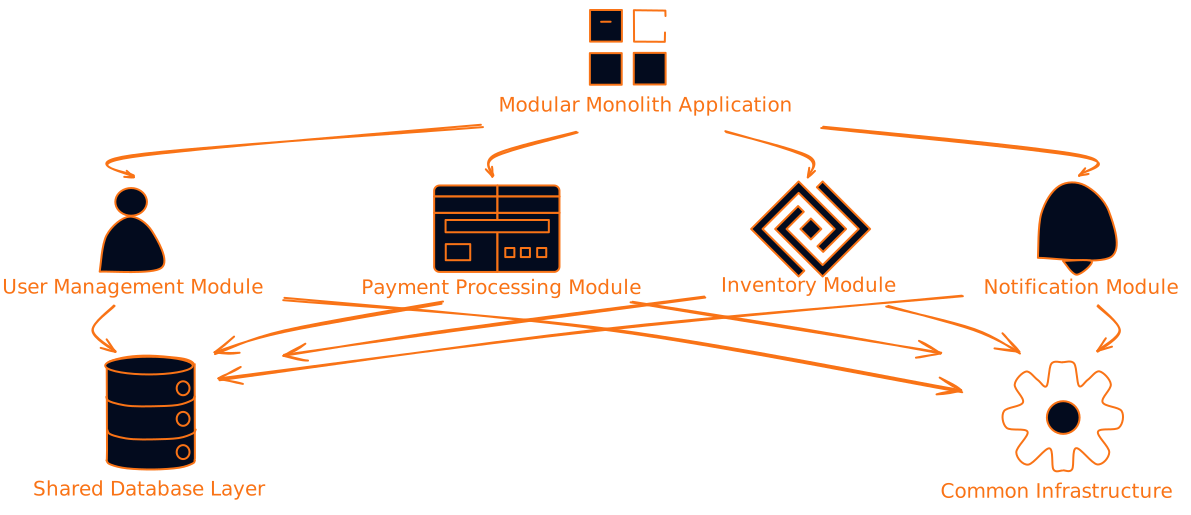
Technically speaking, a modular monolith structures your application into independent modules with well-defined boundaries while keeping everything in a single deployable unit. You get the organizational benefits of microservices without the operational nightmare of managing distributed systems.
Why Everyone's Suddenly Talking About This
The Microservices Reality Check
Remember when everyone was splitting their monoliths into microservices like it was going out of style? "Conway's Law!" they shouted. "Independent scaling!" they promised. Well, turns out managing 47 different services, each with their own CI/CD pipeline, monitoring setup, and unique failure modes, isn't exactly the productivity boost we were hoping for.
Here's what actually happens with microservices in the real world:
- Your "simple" feature now needs coordination across 6 different teams
- Network calls everywhere (goodbye, performance!)
- Debugging becomes a detective story across multiple log streams
- Your cloud bill starts looking like a mortgage payment
The Sweet Spot Architecture
Modular monoliths hit that perfect middle ground between "everything's tangled together" chaos and "everything's isolated but nothing works" complexity. You get clean separation of concerns without the distributed systems headaches.
The Core Principles That Make It Work
1. Strict Module Boundaries (No Cheating!)
Each module is like its own little kingdom with clear borders. It owns:
- Its business logic and rules
- Its data models and validation
- Its internal APIs and interfaces
- Its specific responsibilities
The key rule: modules communicate through well-defined interfaces only. No sneaky direct database access, no shared global state, no "just this once" shortcuts.
// Good: Clean module interface
class PaymentModule {
  async processPayment(userId, amount, paymentMethod) {
    // All the complex payment logic stays hidden inside
    const result = await this.paymentService.charge(userId, amount, paymentMethod);
    this.eventBus.emit('payment.processed', { userId, amount, result });
    return result;
  }
}

// Bad: Breaking module boundaries
const payment = new PaymentProcessor();
payment.database.users.update(userId, {balance: newBalance}); // Nope!
2. Domain-Driven Design Integration
This is where modular monoliths get really smart. Each module represents a bounded context from your actual business domain. Instead of organizing by technical layers (all controllers here, all databases there), you group everything related to user management together, everything related to payments together, and so on.
It's like organizing your company by departments instead of by job titles. Makes way more sense, right?
3. Communication Patterns That Actually Scale
Modules need to talk to each other, but they do it the right way:
Event-Driven Communication:
// When something important happens
userModule.emit('user.registered', {
  userId: newUser.id,
  email: newUser.email,
  timestamp: Date.now()
});

// Other modules can react independently
notificationModule.on('user.registered', sendWelcomeEmail);
paymentModule.on('user.registered', createBillingAccount);
analyticsModule.on('user.registered', trackNewUser);
Facade Pattern for Clean Interfaces:
class UserFacade {
  async getUser(id) {
    // Handles caching, validation, formatting internally
    return this.userService.getFormattedUser(id);
  }

  async updateUser(id, updates) {
    // Coordinates validation, persistence, and notifications
    const user = await this.userService.update(id, updates);
    this.eventBus.emit('user.updated', user);
    return user;
  }
}
Real Companies Actually Using This (Not Just Talking About It)
Shopify's Practical Approach
Shopify made a fascinating decision that goes against the microservices hype. Instead of breaking their monolith apart, they made it more modular. The result? They kept their development velocity high while gaining better organization and maintainability.
Their strategy focuses on "modular boundaries that align with team boundaries." Each team owns a module, can develop independently, but everyone deploys as part of the same system. No coordination nightmares, no deployment dependencies.
Netflix's Pragmatic Reality
Here's something that might surprise you: Netflix, the poster child for microservices, actually uses modular monoliths for significant parts of their system. They call it their "Functional Monolith" approach.
Why would the microservices champions do this? Because sometimes the overhead of distributed systems just isn't worth it. When you need tight data consistency and don't require independent scaling, a well-structured monolith wins every time.

Amazon's Retail Platform Reality
Amazon's core retail platform is essentially a massive, well-designed modular monolith. Think about it: when you buy something, the inventory, payment, shipping, and notification systems all need to work together seamlessly and consistently. Breaking this into microservices would create a coordination and consistency nightmare.
They use microservices where it makes sense (like recommendation engines that need independent scaling), but keep tightly coupled business processes in modular monoliths.
The Technical Implementation (Getting Your Hands Dirty)
Setting Up Module Boundaries
Here's how you actually structure this thing in practice:
src/
├── modules/
│   ├── user-management/
│   │   ├── domain/          # Business logic and entities
│   │   ├── infrastructure/  # Database, external APIs
│   │   ├── application/     # Use cases and services
│   │   └── interfaces/      # Controllers, event handlers
│   ├── payment-processing/
│   │   ├── domain/
│   │   ├── infrastructure/
│   │   ├── application/
│   │   └── interfaces/
│   └── inventory-management/
├── shared/
│   ├── database/           # Connection management
│   ├── events/            # Event bus implementation
│   ├── logging/           # Shared utilities
│   └── validation/        # Common validation rules
└── main.js               # Application bootstrap
Each module follows the same internal structure but remains completely independent in terms of business logic. No shared business code between modules.
Database Strategy (The Tricky Part)
This is where it gets interesting. You have several options, each with trade-offs:
Option 1: Shared Database with Schema Separation
-- Each module gets its own schema namespace
CREATE SCHEMA user_management;
CREATE SCHEMA payment_processing;
CREATE SCHEMA inventory_management;

-- Modules only access their own tables
CREATE TABLE user_management.users (
  id UUID PRIMARY KEY,
  email VARCHAR(255) UNIQUE NOT NULL,
  created_at TIMESTAMP DEFAULT NOW()
);

CREATE TABLE payment_processing.transactions (
  id UUID PRIMARY KEY,
  user_id UUID NOT NULL, -- Reference, but no foreign key constraint
  amount DECIMAL(10,2) NOT NULL,
  status VARCHAR(50) NOT NULL
);
Option 2: Single Database with Access Control
class UserRepository {
  constructor(database) {
    // Repository only gets access to specific tables
    this.db = database.restrictTo([
      'users',
      'user_profiles',
      'user_sessions'
    ]);
  }

  async findById(id) {
    // Can only query allowed tables
    return this.db.query('SELECT * FROM users WHERE id = ?', [id]);
  }
}
Event System Implementation
class EventBus {
  constructor() {
    this.listeners = new Map();
    this.middleware = [];
  }

  emit(eventName, data) {
    const handlers = this.listeners.get(eventName) || [];

    // Process through middleware first
    const processedData = this.middleware.reduce(
      (acc, middleware) => middleware(eventName, acc),
      data
    );

    // Execute handlers asynchronously to prevent blocking
    handlers.forEach(handler => {
      setImmediate(() => {
        try {
          handler(processedData);
        } catch (error) {
          console.error(`Error in event handler for ${eventName}:`, error);
        }
      });
    });
  }

  on(eventName, handler) {
    if (!this.listeners.has(eventName)) {
      this.listeners.set(eventName, []);
    }
    this.listeners.get(eventName).push(handler);
  }

  // Middleware for logging, validation, etc.
  use(middleware) {
    this.middleware.push(middleware);
  }
}

// Usage example
const eventBus = new EventBus();

// Add logging middleware
eventBus.use((eventName, data) => {
  console.log(`Event emitted: ${eventName}`, data);
  return data;
});

// Modules register their handlers
userModule.on('user.created', async (userData) => {
  await notificationService.sendWelcomeEmail(userData.email);
});

paymentModule.on('user.created', async (userData) => {
  await billingService.createAccount(userData.id);
});
When Modular Monoliths Make Sense (And When They Don't)
Perfect Scenarios for Modular Monoliths
You're building a new product from scratch: Start with a modular monolith. You can always extract modules into microservices later if you actually need to (spoiler: you probably won't).
Your team is small to medium-sized (under 50 developers): Managing microservices requires significant DevOps overhead. If you don't have dedicated platform engineers, stick with modular monoliths.
You need strong data consistency: Financial systems, inventory management, anything where ACID transactions matter. Distributed transactions are a nightmare.
You're refactoring a legacy monolith: Instead of the risky big-bang microservices migration, gradually introduce module boundaries. Much safer approach.
Your business domains are tightly coupled: If changes in one area frequently require changes in another, keep them together.
When to Consider Microservices Instead
You have truly independent business domains: If parts of your system genuinely don't need to talk to each other and serve completely different user bases.
You need independent scaling patterns: One part of your system gets 1000x more traffic than others and has completely different performance characteristics.
You have multiple teams with different technology needs: Some teams need real-time processing in Go, others need machine learning in Python.
Regulatory or compliance requirements: Sometimes you need physical separation for legal reasons.
You have the operational maturity: Dedicated DevOps team, sophisticated monitoring, service mesh, the whole nine yards.
The Migration Path: From Chaos to Order
Step 1: Understand Your Business Domains
Don't start by looking at your code. Start by understanding your business:
- What are the main capabilities your system provides?
- Which data naturally belongs together?
- What are the natural team boundaries?
- Where do you have tight coupling that makes sense?
Step 2: Identify Module Boundaries
// Before: Everything mixed together in a controller
class OrderController {
  async createOrder(req, res) {
    // User validation mixed with business logic
    const user = await User.findById(req.userId);
    if (!user.isActive) throw new Error('Inactive user');

    // Inventory check mixed in
    const product = await Product.findById(req.productId);
    if (product.stock < req.quantity) throw new Error('Out of stock');

    // Payment processing mixed in
    const charge = await stripe.charges.create({
      amount: req.amount,
      currency: 'usd',
      source: req.paymentToken
    });

    // Order creation mixed in
    const order = await Order.create({
      userId: req.userId,
      productId: req.productId,
      quantity: req.quantity,
      chargeId: charge.id
    });

    // Email notification mixed in
    await sendEmail(user.email, 'Order confirmed', orderTemplate(order));

    res.json(order);
  }
}

// After: Clean module separation
class OrderController {
  constructor(userModule, inventoryModule, paymentModule, orderModule, notificationModule) {
    this.userModule = userModule;
    this.inventoryModule = inventoryModule;
    this.paymentModule = paymentModule;
    this.orderModule = orderModule;
    this.notificationModule = notificationModule;
  }

  async createOrder(req, res) {
    // Each module handles its own concerns
    await this.userModule.validateActiveUser(req.userId);
    await this.inventoryModule.reserveStock(req.productId, req.quantity);

    const payment = await this.paymentModule.processPayment({
      amount: req.amount,
      paymentToken: req.paymentToken,
      userId: req.userId
    });

    const order = await this.orderModule.createOrder({
      userId: req.userId,
      productId: req.productId,
      quantity: req.quantity,
      paymentId: payment.id
    });

    // Notification happens via event, not direct call
    this.eventBus.emit('order.created', order);

    res.json(order);
  }
}
Step 3: Implement Communication Patterns Gradually
Start simple, then add sophistication as needed:
// Phase 1: Direct method calls (simple refactoring)
const user = await userModule.getUser(userId);

// Phase 2: Add events for loose coupling
userModule.on('user.updated', (userData) => {
  cacheModule.invalidateUser(userData.id);
  analyticsModule.trackUserUpdate(userData);
  auditModule.logUserChange(userData);
});

// Phase 3: Add middleware for cross-cutting concerns
eventBus.use(loggingMiddleware);
eventBus.use(validationMiddleware);
eventBus.use(retryMiddleware);
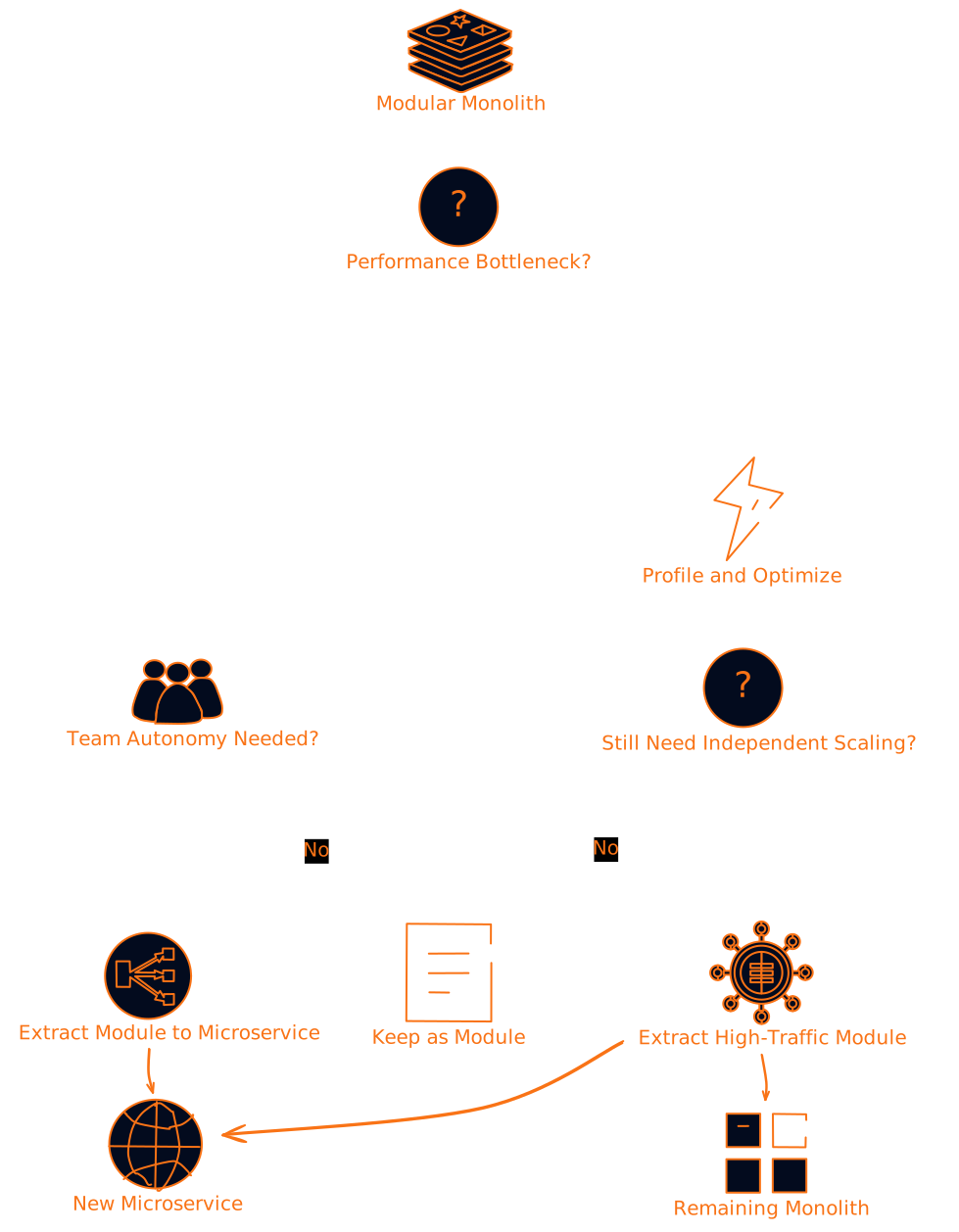
Step 4: Gradual Extraction (If You Actually Need It)
The beauty of modular monoliths is that you can extract modules into microservices later if you have a genuine business need:
Common Pitfalls (Learn From Others' Mistakes)
The "Shared Everything" Trap
Just because you're in a monolith doesn't mean modules should share everything:
// Bad: Shared mutable state creates coupling
const globalCache = new Map();
const globalConfig = { /* shared config */ };

userModule.cache = globalCache;      // Now they're coupled!
paymentModule.cache = globalCache;   // Changes affect everyone
orderModule.config = globalConfig;   // Tight coupling through shared state

// Good: Each module manages its own state
class UserModule {
  constructor(eventBus) {
    this.cache = new Map();           // Private to this module
    this.config = new UserConfig();   // Module-specific configuration
    this.eventBus = eventBus;
  }

  // Clean interface, internal implementation hidden
  async getUser(id) {
    if (this.cache.has(id)) {
      return this.cache.get(id);
    }

    const user = await this.repository.findById(id);
    this.cache.set(id, user);
    return user;
  }
}
The "God Module" Anti-Pattern
Don't let one module become responsible for everything:
// Bad: UserModule doing way too much
class UserModule {
  async createUser(userData) { /* user creation logic */ }
  async processPayment(paymentData) { /* This belongs in PaymentModule! */ }
  async sendEmail(emailData) { /* This belongs in NotificationModule! */ }
  async updateInventory(inventoryData) { /* This belongs in InventoryModule! */ }
  async generateReport(reportData) { /* This belongs in ReportingModule! */ }
}

// Good: Single responsibility per module
class UserModule {
  async createUser(userData) {
    const user = await this.repository.create(userData);

    // Emit event for other modules to handle their concerns
    this.eventBus.emit('user.created', {
      userId: user.id,
      email: user.email,
      createdAt: user.createdAt
    });

    return user;
  }

  async updateUser(id, updates) {
    const user = await this.repository.update(id, updates);
    this.eventBus.emit('user.updated', user);
    return user;
  }
}
The "Chatty Modules" Problem
Modules shouldn't be constantly talking to each other for simple operations:
// Bad: Too much inter-module communication for one operation
async function processOrder(orderId) {
  const order = await orderModule.getOrder(orderId);
  const user = await userModule.getUser(order.userId);
  const product = await inventoryModule.getProduct(order.productId);
  const discount = await promotionModule.getDiscount(user.id, product.id);
  const tax = await taxModule.calculateTax(user.address, product.price);
  const shipping = await shippingModule.calculateShipping(user.address, product.weight);
  // This is getting ridiculous...
}

// Good: Aggregate data within modules, minimize cross-module calls
async function processOrder(orderId) {
  // OrderModule internally coordinates with other modules as needed
  const orderDetails = await orderModule.getOrderWithAllDetails(orderId);
  return orderDetails;
}

// Inside OrderModule
class OrderModule {
  async getOrderWithAllDetails(orderId) {
    const order = await this.repository.findById(orderId);

    // Batch requests to other modules
    const [user, product, pricing] = await Promise.all([
      this.userModule.getUser(order.userId),
      this.inventoryModule.getProduct(order.productId),
      this.pricingModule.calculatePricing({
        userId: order.userId,
        productId: order.productId,
        quantity: order.quantity
      })
    ]);

    return { order, user, product, pricing };
  }
}
Testing Strategies That Actually Work
Module-Level Testing (The Foundation)
Each module should be testable in complete isolation:
describe('UserModule', () => {
  let userModule;
  let mockDatabase;
  let mockEventBus;

  beforeEach(() => {
    // Mock all external dependencies
    mockDatabase = {
      users: {
        create: jest.fn(),
        findById: jest.fn(),
        update: jest.fn()
      }
    };

    mockEventBus = {
      emit: jest.fn(),
      on: jest.fn()
    };

    userModule = new UserModule(mockDatabase, mockEventBus);
  });

  describe('createUser', () => {
    it('should create user and emit event', async () => {
      const userData = { email: 'test@example.com', name: 'Test User' };
      const createdUser = { id: 'user123', ...userData, createdAt: new Date() };

      mockDatabase.users.create.mockResolvedValue(createdUser);

      const result = await userModule.createUser(userData);

      expect(result).toEqual(createdUser);
      expect(mockDatabase.users.create).toHaveBeenCalledWith(userData);
      expect(mockEventBus.emit).toHaveBeenCalledWith('user.created', {
        userId: 'user123',
        email: 'test@example.com',
        createdAt: createdUser.createdAt
      });
    });

    it('should handle validation errors', async () => {
      const invalidUserData = { email: 'invalid-email' };

      await expect(userModule.createUser(invalidUserData))
        .rejects.toThrow('Invalid email format');

      expect(mockDatabase.users.create).not.toHaveBeenCalled();
      expect(mockEventBus.emit).not.toHaveBeenCalled();
    });
  });
});
Integration Testing (Where the Magic Happens)
Test how modules work together without mocking everything:
describe('Order Processing Integration', () => {
  let app;
  let database;

  beforeEach(async () => {
    // Set up test database and real modules
    database = await setupTestDatabase();
    app = createTestApp(database);

    // Seed test data
    await database.users.create({
      id: 'user123',
      email: 'test@example.com',
      isActive: true
    });

    await database.products.create({
      id: 'product456',
      name: 'Test Product',
      price: 29.99,
      stock: 10
    });
  });

  afterEach(async () => {
    await cleanupTestDatabase(database);
  });

  it('should process complete order flow', async () => {
    const orderRequest = {
      userId: 'user123',
      productId: 'product456',
      quantity: 2,
      paymentToken: 'test_token_123'
    };

    const response = await request(app)
      .post('/orders')
      .send(orderRequest)
      .expect(201);

    const order = response.body;
    expect(order.id).toBeDefined();
    expect(order.status).toBe('confirmed');

    // Verify side effects across modules
    const updatedProduct = await database.products.findById('product456');
    expect(updatedProduct.stock).toBe(8); // Was 10, now 8

    const payments = await database.payments.findByUserId('user123');
    expect(payments).toHaveLength(1);
    expect(payments[0].amount).toBe(59.98); // 2 * 29.99

    // Verify events were emitted (check event log or side effects)
    const notifications = await database.notifications.findByUserId('user123');
    expect(notifications.some(n => n.type === 'order_confirmation')).toBe(true);
  });

  it('should handle insufficient inventory gracefully', async () => {
    const orderRequest = {
      userId: 'user123',
      productId: 'product456',
      quantity: 15, // More than available stock (10)
      paymentToken: 'test_token_123'
    };

    await request(app)
      .post('/orders')
      .send(orderRequest)
      .expect(400);

    // Verify no side effects occurred
    const product = await database.products.findById('product456');
    expect(product.stock).toBe(10); // Unchanged

    const payments = await database.payments.findByUserId('user123');
    expect(payments).toHaveLength(0); // No payment processed
  });
});
Contract Testing Between Modules
Ensure modules maintain their interfaces:
describe('Module Contracts', () => {
  describe('UserModule Interface', () => {
    it('should maintain stable interface for getUser', async () => {
      const userModule = new UserModule(mockDatabase, mockEventBus);

      // Test the contract, not the implementation
      const user = await userModule.getUser('user123');

      expect(user).toHaveProperty('id');
      expect(user).toHaveProperty('email');
      expect(user).toHaveProperty('createdAt');
      expect(typeof user.id).toBe('string');
      expect(typeof user.email).toBe('string');
      expect(user.createdAt).toBeInstanceOf(Date);
    });
  });

  describe('Event Contracts', () => {
    it('should emit user.created event with correct structure', async () => {
      const userModule = new UserModule(mockDatabase, mockEventBus);

      await userModule.createUser({ email: 'test@example.com' });

      const emittedEvents = mockEventBus.emit.mock.calls;
      const userCreatedEvent = emittedEvents.find(call => call[0] === 'user.created');

      expect(userCreatedEvent).toBeDefined();
      expect(userCreatedEvent[1]).toHaveProperty('userId');
      expect(userCreatedEvent[1]).toHaveProperty('email');
      expect(userCreatedEvent[1]).toHaveProperty('createdAt');
    });
  });
});
Performance Considerations (Making It Fast)
The Good News About Performance
Modular monoliths can be surprisingly fast because:
- No network latency between modules (everything's in-process)
- Shared database connections and connection pooling
- Simpler caching strategies (no cache invalidation across services)
- Fewer moving parts to optimize and monitor
Smart Optimization Strategies
Lazy Loading Modules:
class Application {
  constructor() {
    this.modules = new Map();
    this.moduleConfigs = new Map();
  }

  getModule(name) {
    if (!this.modules.has(name)) {
      console.log(`Loading module: ${name}`);
      const ModuleClass = require(`./modules/${name}`);
      const config = this.moduleConfigs.get(name) || {};
      this.modules.set(name, new ModuleClass(config));
    }
    return this.modules.get(name);
  }

  // Pre-load critical modules at startup
  async preloadCriticalModules() {
    const criticalModules = ['user', 'auth', 'logging'];
    await Promise.all(
      criticalModules.map(name => this.getModule(name))
    );
  }
}
Intelligent Caching Across Modules:
class ModuleCache {
  constructor(eventBus) {
    this.cache = new Map();
    this.dependencies = new Map(); // Track what depends on what

    // Smart cache invalidation based on events
    eventBus.on('*.updated', this.handleUpdate.bind(this));
    eventBus.on('*.deleted', this.handleDeletion.bind(this));
  }

  set(key, value, dependencies = []) {
    this.cache.set(key, value);
    this.dependencies.set(key, dependencies);
  }

  get(key) {
    return this.cache.get(key);
  }

  handleUpdate(event) {
    // Invalidate related cache entries
    const affectedKeys = this.findAffectedKeys(event.type, event.data);
    affectedKeys.forEach(key => {
      this.cache.delete(key);
      this.dependencies.delete(key);
    });
  }

  findAffectedKeys(eventType, eventData) {
    const affectedKeys = [];

    for (const [key, deps] of this.dependencies.entries()) {
      if (deps.some(dep => this.isAffected(dep, eventType, eventData))) {
        affectedKeys.push(key);
      }
    }

    return affectedKeys;
  }
}
Database Query Optimization:
class OptimizedRepository {
  constructor(database) {
    this.db = database;
    this.queryCache = new Map();
  }

  async findWithRelated(id, includes = []) {
    const cacheKey = `${id}:${includes.join(',')}`;

    if (this.queryCache.has(cacheKey)) {
      return this.queryCache.get(cacheKey);
    }

    // Build optimized query based on what's needed
    let query = this.db.select('*').from('users').where('id', id);

    if (includes.includes('profile')) {
      query = query.leftJoin('user_profiles', 'users.id', 'user_profiles.user_id');
    }

    if (includes.includes('preferences')) {
      query = query.leftJoin('user_preferences', 'users.id', 'user_preferences.user_id');
    }

    const result = await query.first();
    this.queryCache.set(cacheKey, result);

    return result;
  }
}
Deployment and DevOps (Keeping It Simple)
The Simplicity Advantage
One of the biggest wins with modular monoliths is deployment simplicity. Compare this:
# Modular monolith: One simple deployment
version: '3.8'
services:
  app:
    build: .
    ports:
      - "3000:3000"
    environment:
      - DATABASE_URL=${DATABASE_URL}
      - REDIS_URL=${REDIS_URL}
      - NODE_ENV=production
    healthcheck:
      test: ["CMD", "curl", "-f", "http://localhost:3000/health"]
      interval: 30s
      timeout: 10s
      retries: 3

  database:
    image: postgres:15
    environment:
      - POSTGRES_DB=myapp
      - POSTGRES_USER=myapp
      - POSTGRES_PASSWORD=${DB_PASSWORD}
    volumes:
      - postgres_data:/var/lib/postgresql/data

volumes:
  postgres_data:
To managing 15 different microservices, each with their own deployment pipeline, health checks, service discovery, load balancing, and monitoring setup. The operational overhead difference is massive.
Monitoring Strategy That Works
class ModuleMetrics {
  constructor(moduleName, metricsCollector) {
    this.moduleName = moduleName;
    this.metrics = metricsCollector;
  }

  trackOperation(operation, duration, success, metadata = {}) {
    const labels = {
      module: this.moduleName,
      operation,
      success: success.toString(),
      ...metadata
    };

    this.metrics.histogram('operation_duration_ms', duration, labels);
    this.metrics.counter('operations_total', 1, labels);

    if (!success) {
      this.metrics.counter('operation_errors_total', 1, labels);
    }
  }

  trackEvent(eventName, metadata = {}) {
    this.metrics.counter('events_emitted_total', 1, {
      module: this.moduleName,
      event: eventName,
      ...metadata
    });
  }
}

// Usage in modules
class UserModule {
  constructor(database, eventBus, metrics) {
    this.database = database;
    this.eventBus = eventBus;
    this.metrics = new ModuleMetrics('user', metrics);
  }

  async createUser(userData) {
    const startTime = Date.now();
    let success = false;

    try {
      const user = await this.database.users.create(userData);
      this.eventBus.emit('user.created', user);

      success = true;
      return user;
    } catch (error) {
      this.metrics.trackOperation('create_user', Date.now() - startTime, false, {
        error_type: error.constructor.name
      });
      throw error;
    } finally {
      if (success) {
        this.metrics.trackOperation('create_user', Date.now() - startTime, true);
      }
    }
  }
}
You get module-level insights without the complexity of distributed tracing across multiple services.
The Future Evolution Path (When to Extract)
Signals That a Module Might Need Extraction
Here are the real-world signals that indicate a module might be ready for extraction to a microservice:
- Genuine performance bottleneck: This specific module needs different scaling characteristics (CPU vs memory vs I/O intensive)
- Team autonomy requirements: A team wants to deploy independently and has the operational maturity to handle it
- Technology mismatch: This module would genuinely benefit from a different tech stack (real-time processing, machine learning, etc.)
- Regulatory requirements: Legal or compliance needs require physical separation
- Different SLA requirements: This module needs 99.99% uptime while others can tolerate 99.9%
The Safe Extraction Process
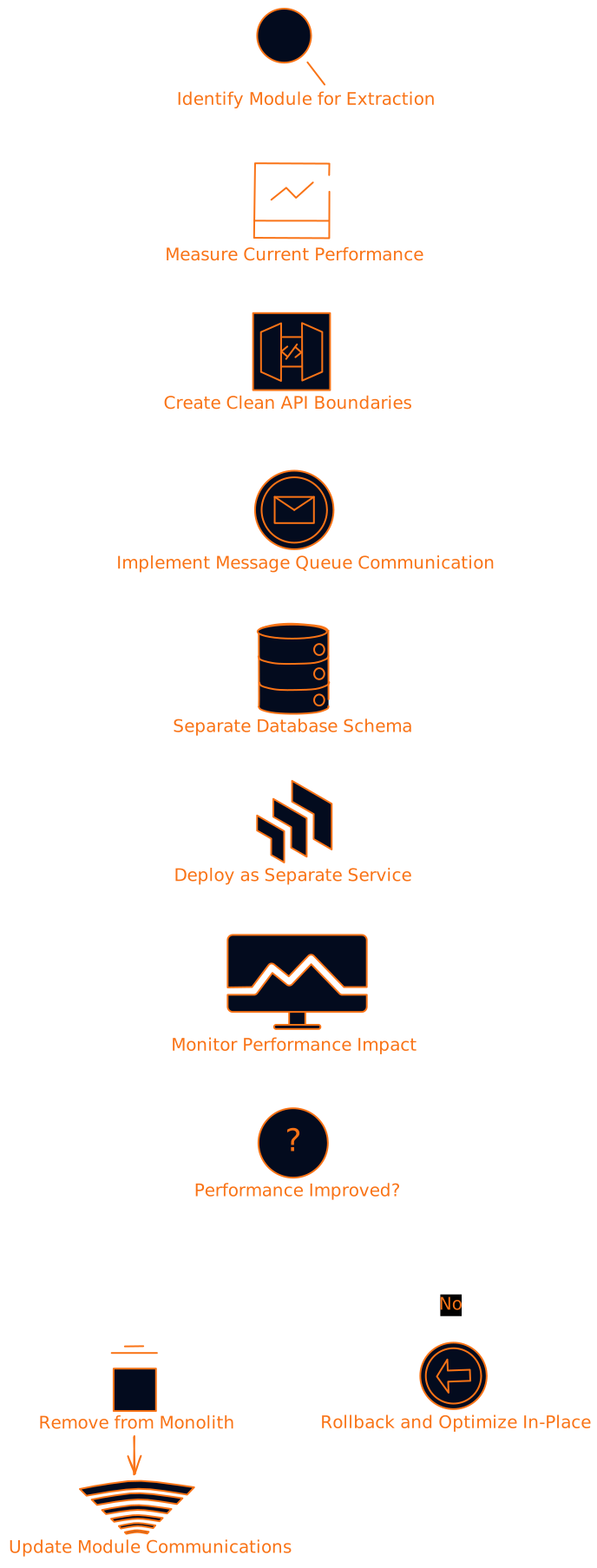
The key insight: extraction should be driven by genuine business needs, not architectural fashion.
Tools and Frameworks to Get Started
.NET Ecosystem
Wolverine Framework: Built specifically for modular monoliths
public class UserModule : IModule
{
    public void Configure(IServiceCollection services)
    {
        services.AddScoped<IUserService, UserService>();
        services.AddScoped<UserRepository>();
        services.AddScoped<UserEventHandlers>();
    }

    public void Configure(IApplicationBuilder app)
    {
        // Module-specific middleware
        app.UseMiddleware<UserAuthenticationMiddleware>();
    }
}

// Clean event handling
public class UserEventHandlers
{
    [EventHandler]
    public async Task Handle(UserCreated userCreated)
    {
        // Handle user creation event
        await SendWelcomeEmail(userCreated.Email);
    }
}
Node.js/JavaScript Options
Custom Module System:
class ModuleLoader {
  static async load(modulePath, dependencies = {}) {
    const ModuleClass = require(modulePath);
    const module = new ModuleClass(dependencies);

    // Initialize module
    if (typeof module.initialize === 'function') {
      await module.initialize();
    }

    return module;
  }

  static async loadAll(moduleConfigs) {
    const modules = new Map();

    // Load modules in dependency order
    for (const config of moduleConfigs) {
      const dependencies = this.resolveDependencies(config.dependencies, modules);
      const module = await this.load(config.path, dependencies);
      modules.set(config.name, module);
    }

    return modules;
  }
}
Java Spring Boot
Spring Boot's component scanning works great for modular monoliths:
@Component
@ComponentScan(basePackages = "com.myapp.user")
public class UserModule {

    @Autowired
    private EventBus eventBus;

    @PostConstruct
    public void initialize() {
        // Register event handlers
        eventBus.register(new UserEventHandlers());
    }
}

@Service
public class UserService {

    @Autowired
    private UserRepository userRepository;

    @Autowired
    private EventBus eventBus;

    @Transactional
    public User createUser(CreateUserRequest request) {
        User user = userRepository.save(new User(request));
        eventBus.post(new UserCreatedEvent(user));
        return user;
    }
}
Making the Decision: A Practical Framework
The Decision Matrix
Ask yourself these questions honestly:
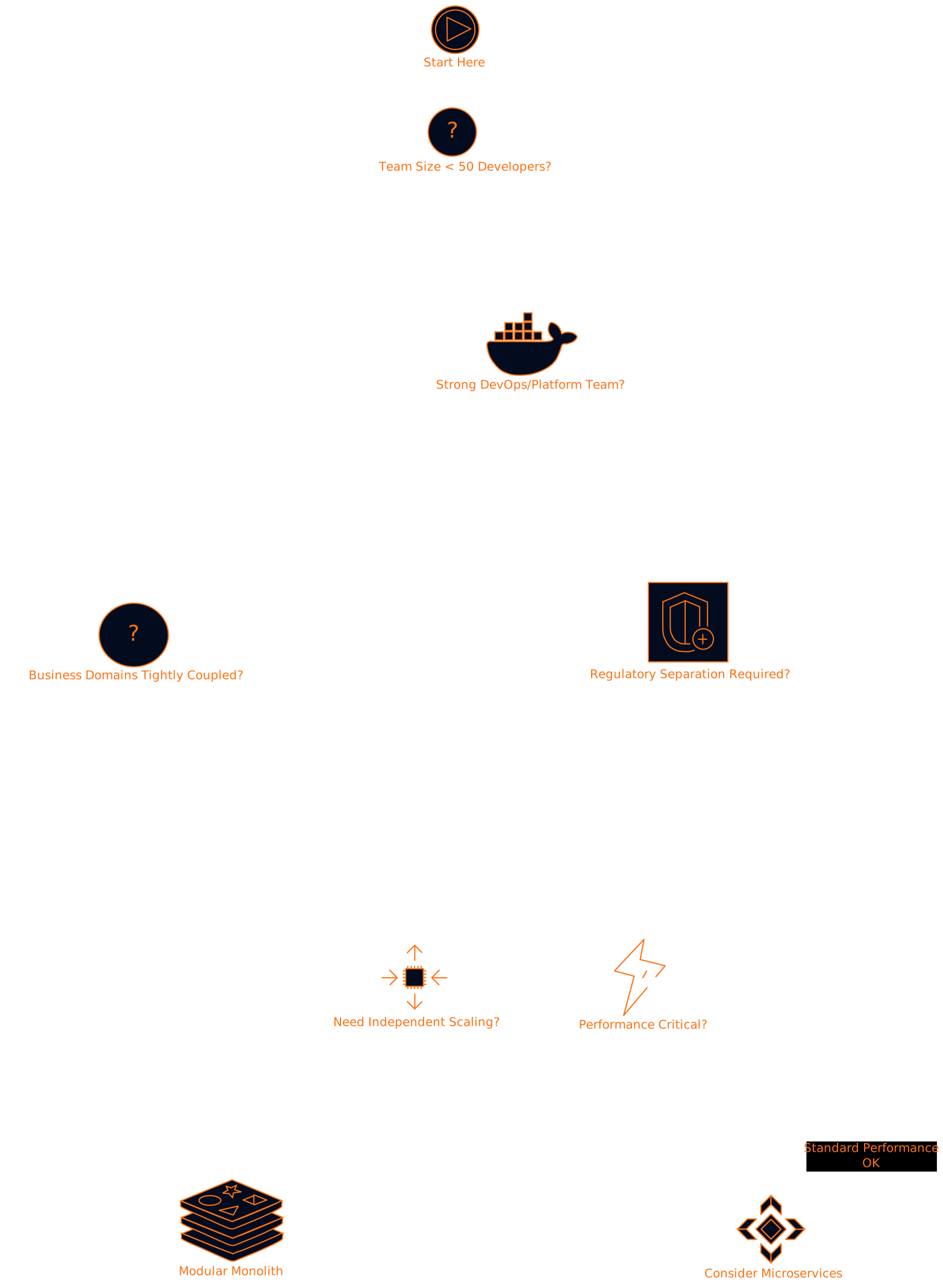
The Honest Assessment Checklist
Team and Organization:
- Do you have fewer than 50 developers?
- Do you have dedicated DevOps/platform engineers?
- Can teams coordinate releases without major friction?
- Do you have strong operational monitoring and alerting?
Technical Requirements:
- Do your business domains need to share data frequently?
- Do you need ACID transactions across business logic?
- Are your performance requirements reasonable (not sub-millisecond)?
- Can you handle eventual consistency where needed?
Business Context:
- Are you building a new product (vs. scaling an existing one)?
- Do you need to move fast and iterate quickly?
- Are your business requirements still evolving?
- Do you have regulatory requirements for data separation?
If you answered "yes" to most questions in the first two categories, modular monolith is probably your best bet.
Wrapping Up: The Pragmatic Choice for Real Teams
Here's the uncomfortable truth about modular monoliths: they're not sexy. They don't generate conference talks about "how we scaled to a billion requests with 500 microservices." They don't make for impressive architecture diagrams that look like subway maps.
But you know what they do? They work. They let you build software that's organized, maintainable, and scalable without the operational overhead that kills productivity and burns out teams.
The best part about modular monoliths is that you're not making an irreversible architectural decision. Start with a well-designed modular monolith, and if you genuinely need the benefits of microservices later (not just because it sounds cool), you can extract modules one by one. It's like having an architectural escape hatch built right in.
Think of it this way: microservices are like living in separate apartments across the city. Sure, everyone has their own space and independence, but coordinating dinner plans becomes a logistical nightmare. Modular monoliths are like a well-designed house where everyone has their own room, but you share the kitchen, living room, and utilities. Much easier to coordinate, much lower overhead, and you can always build an addition if you need more space.
So next time someone asks about your architecture and you say "modular monolith," don't feel like you need to justify not using microservices. Sometimes the boring, practical choice is the right one. Your future self (and your ops team, and your sleep schedule) will thank you for it.
The modular monolith isn't just making a comeback, it's proving that sometimes the best innovation is knowing when not to over-engineer. It's architecture for people who want to build great software, not great slide decks.
What's your experience with modular monoliths? Have you made the transition from microservices back to a more monolithic approach, or are you considering it? What challenges are you facing with your current architecture? Share your thoughts and experiences in the comments below.