How DNA Sequencers Handle Terabytes of Data: A Deep Dive into Genomic System Architecture
Ever wondered how modern DNA sequencers process terabytes of genetic data without breaking a sweat? Or why some sequencing systems can handle massive genomic datasets while others choke on basic transcriptomics? The answer isn't just better hardware, it's smarter system design.
Let's dive into the nitty-gritty of sequencer architecture and uncover what makes these biological data processing powerhouses tick.
What Makes a Sequencer More Than Just a Data Processor?
Think of a sequencer like a high-performance restaurant kitchen during rush hour. You've got multiple orders coming in (data streams), different cooking stations (processing units), and everything needs to be coordinated perfectly to avoid chaos. But unlike a restaurant, sequencers deal with life-critical data where a single error could invalidate months of research.
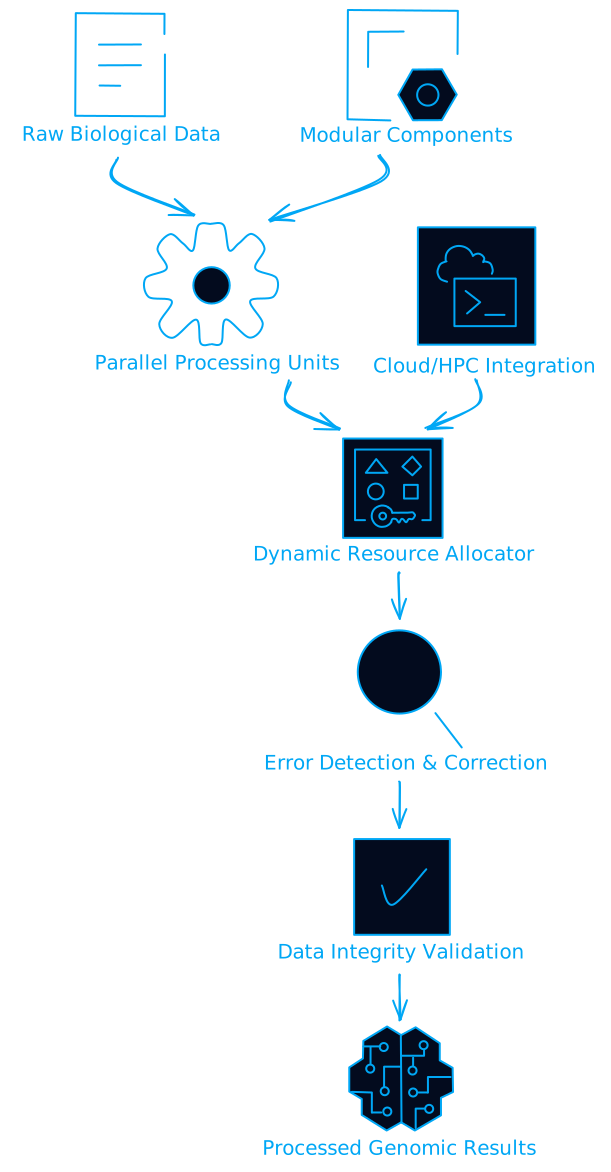
The magic happens in how these systems orchestrate parallel processing, dynamic resource allocation, and bulletproof error handling. It's not just about raw computational power, it's about intelligent coordination.
The Parallel Processing Revolution: Why Sequential Just Doesn't Cut It
Here's where things get interesting. Traditional data processing follows a linear path, but biological data doesn't play by those rules. When you're dealing with millions of DNA fragments that need simultaneous analysis, sequential processing is like trying to fill a swimming pool with a garden hose.
Modern sequencers leverage multi-core processors and specialized hardware accelerators to create what I call "computational orchestras." Each processing unit handles its own data stream while staying synchronized with the entire system.
But what happens when workloads are unpredictable?
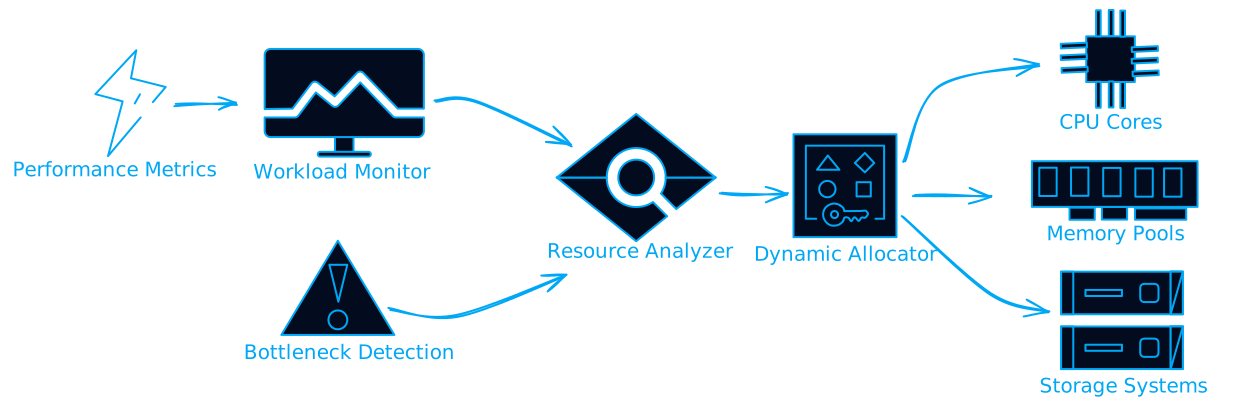
That's where dynamic resource allocation comes in. Instead of pre-allocating fixed resources, smart sequencers continuously monitor workload patterns and redistribute computing power, memory, and storage on the fly. It's like having a restaurant manager who can instantly reassign chefs based on order complexity.
Error Handling: When "Good Enough" Isn't Good Enough
In most software systems, you can tolerate occasional glitches. Drop a frame in a video? No big deal. Lose a packet in a web request? Retry it. But in genomics, a single corrupted base pair could mean the difference between identifying a life-saving treatment and missing it entirely.
Sequencers implement what I call "paranoid computing" - multiple layers of error detection and correction that would make a bank's security system jealous:
- Real-time error detection algorithms that catch corruption as it happens
- Data validation checkpoints at every processing stage
- Redundancy measures that maintain multiple copies of critical data
- Rollback mechanisms that can restore previous states when errors are detected
But what about when errors slip through anyway?
That's where the memento pattern becomes crucial. By capturing system states at regular intervals, sequencers can roll back to known-good configurations without losing hours of processing time.
Scalability: Building Systems That Grow With Your Ambitions
Here's a question that keeps system architects up at night: How do you design a system that can handle today's workload but also scale to tomorrow's demands?
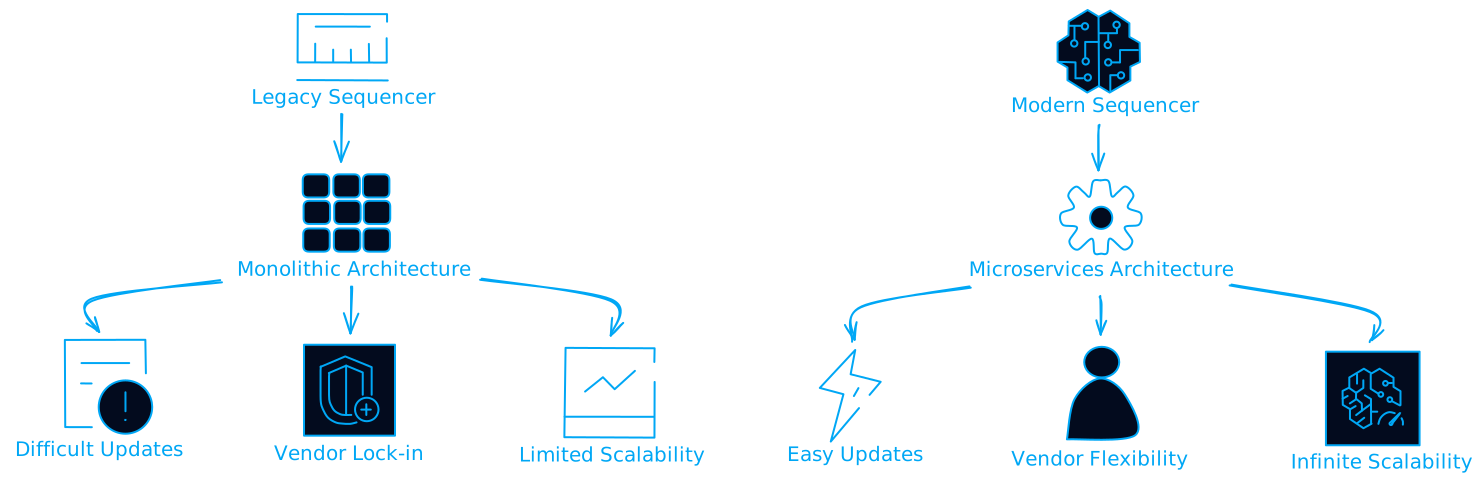
The answer lies in modular design. Instead of building monolithic systems, modern sequencers use a component-based architecture where individual pieces can be upgraded, replaced, or scaled independently.
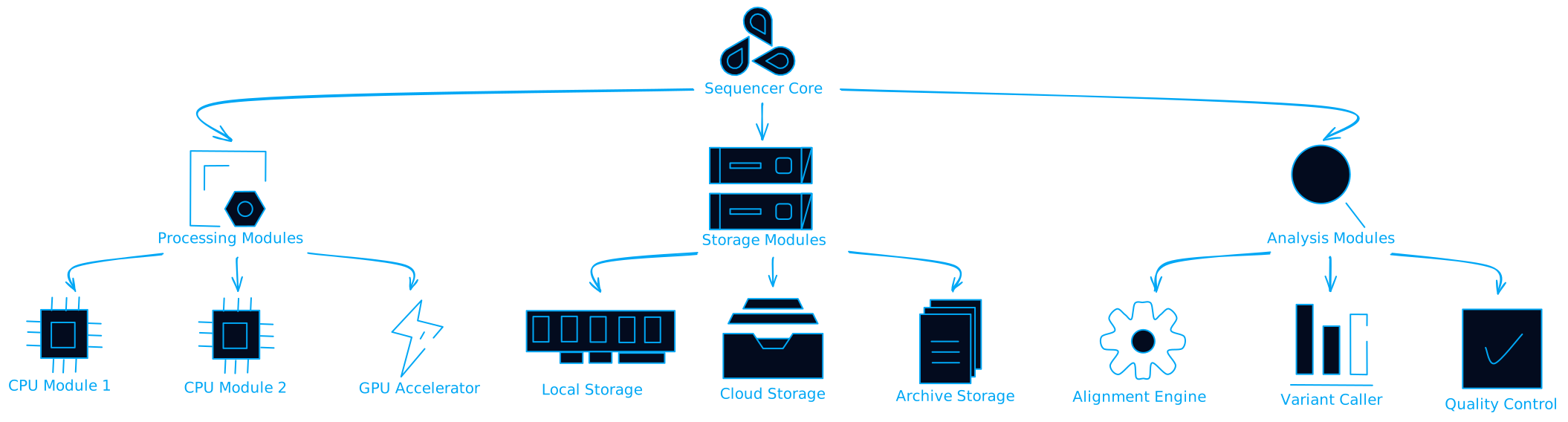
This modular approach means you can start with a basic configuration and add components as your needs grow. Need more processing power? Add CPU modules. Running out of storage? Plug in additional storage units. It's like building with LEGO blocks, but for enterprise-grade biological data processing.
Cloud Integration: When Local Resources Hit Their Limits
What happens when your local sequencer hits a computational wall?
This is where cloud and HPC integration becomes a game-changer. Modern sequencers don't just process data locally, they can seamlessly offload computationally intensive tasks to cloud platforms or high-performance computing clusters.
The key is designing systems that can intelligently decide what to process locally versus what to send to the cloud. Factors include:
- Data sensitivity (some genomic data can't leave secure environments)
- Network bandwidth (uploading terabytes takes time)
- Cost considerations (cloud computing isn't free)
- Processing urgency (some analyses need results immediately)
class CloudResourceManager:
    def decide_processing_location(self, task):
        if task.sensitivity_level == "HIGH":
            return "local"
        elif task.data_size > self.bandwidth_threshold:
            return "local"
        elif task.urgency == "CRITICAL":
            return "local"
        else:
            return "cloud"
Design Patterns That Actually Matter in Sequencer Architecture
Let's talk about the design patterns that separate amateur sequencer implementations from professional-grade systems.
Event-Driven Architecture: The Nervous System of Sequencers
Instead of components constantly checking on each other (polling), event-driven systems let components communicate through events. When a processing unit finishes analyzing a DNA fragment, it fires an event. Other components that care about this completion can react accordingly.
This approach reduces system overhead and creates more responsive, scalable architectures.
Observer Pattern: Keeping Everyone in Sync
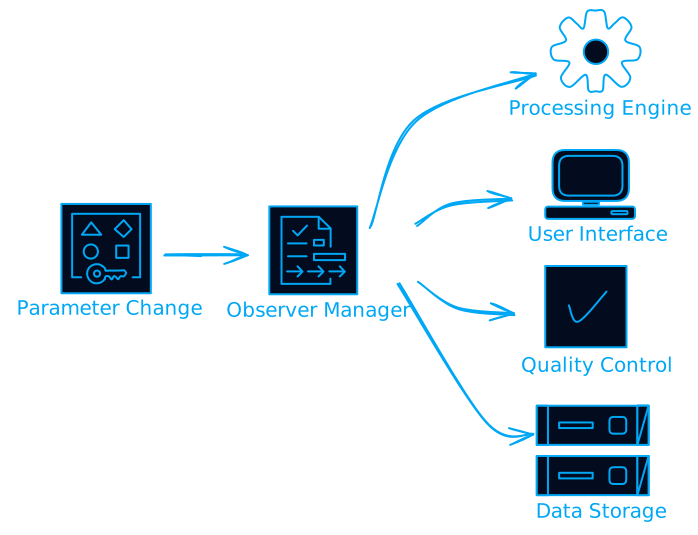
When a user modifies sequencing parameters, multiple system components need to know about it. The observer pattern ensures that changes propagate automatically without tight coupling between components.
Composite Pattern: Managing Complex Data Hierarchies
Genomic data has natural hierarchies - genomes contain chromosomes, chromosomes contain genes, genes contain exons. The composite pattern lets you treat individual elements and collections uniformly, simplifying data management.
Real-World Applications: Where This All Comes Together
But does this actually matter in practice?
Absolutely. Let's look at how these design principles play out in real applications:
Genomics and Transcriptomics
Modern whole-genome sequencing generates 100+ gigabytes per sample. Without proper parallel processing and dynamic resource allocation, analysis would take weeks instead of hours.
Metagenomics and Microbiome Analysis
When studying microbial communities, you're not just analyzing one genome but potentially thousands simultaneously. The modular architecture allows sequencers to scale processing power based on community complexity.
Clinical Diagnostics and Precision Medicine
In clinical settings, turnaround time can be life-or-death critical. Event-driven architectures ensure that high-priority samples get processed immediately while routine samples queue appropriately.
The Security Challenge: Protecting Sensitive Biological Data
What about data security in sequencer systems?
This is where things get really interesting. Genomic data is arguably the most sensitive information humans possess - it's literally your biological blueprint. Sequencer systems need enterprise-grade security that includes:
- End-to-end encryption for data in transit and at rest
- Role-based access controls that limit who can see what data
- Audit trails that track every data access and modification
- Compliance frameworks for regulations like GDPR and HIPAA
The challenge is implementing this security without killing performance. Heavy encryption can slow down data processing, but the alternative - unsecured genomic data - is unacceptable.
Performance Optimization: The Devil in the Details
Here's where system design gets really technical. Sequencer performance isn't just about having fast processors, it's about optimizing the entire data pipeline:
Memory Management: Genomic datasets can exceed available RAM. Smart sequencers use hierarchical storage systems that keep frequently accessed data in fast memory while archiving older data to slower but cheaper storage.
I/O Optimization: Disk I/O is often the bottleneck in data-intensive applications. Techniques like data compression, efficient file formats, and parallel I/O can dramatically improve throughput.
Network Optimization: When integrating with cloud resources, network latency and bandwidth become critical factors. Smart data transfer protocols and compression can make the difference between practical and impractical cloud integration.
Future-Proofing: Building for Tomorrow's Challenges
What happens when sequencing technology evolves?
The best sequencer architectures are designed for change. This means:
- API-driven interfaces that allow new analysis algorithms to plug in easily
- Container-based deployments that simplify software updates and rollbacks
- Microservices architectures that let you update individual components without system-wide downtime
- Machine learning integration points for AI-powered analysis improvements
Common Pitfalls and How to Avoid Them
After working with sequencer systems, I've seen the same mistakes repeated over and over:
Pitfall #1: Over-engineering for current needs Don't build a system that can handle 1000x your current workload if you're not sure you'll ever need it. Start modular and scale up.
Pitfall #2: Ignoring data lifecycle management Genomic data accumulates fast. Plan for archiving, compression, and eventual deletion from day one.
Pitfall #3: Underestimating integration complexity Sequencers don't exist in isolation. They need to integrate with laboratory information systems, analysis pipelines, and reporting tools. Design these interfaces early.
Pitfall #4: Neglecting user experience The most powerful sequencer is useless if researchers can't figure out how to use it. Invest in intuitive interfaces and comprehensive documentation.
The Bottom Line: Why This Matters
Building effective sequencer systems isn't just an academic exercise. These systems are accelerating medical breakthroughs, enabling personalized treatments, and helping us understand life at the molecular level.
The difference between a well-designed and poorly-designed sequencer system can be:
- Weeks vs. hours for analysis completion
- Thousands vs. millions in infrastructure costs
- Reliable vs. questionable research results
- Scalable vs. limited research capabilities
What's Next?
The future of sequencer system design is heading toward even more intelligent, adaptive systems. We're seeing:
- AI-powered resource allocation that predicts workload patterns
- Automated quality control that catches errors before they propagate
- Self-healing systems that can recover from failures automatically
- Edge computing integration for real-time analysis in field settings
The key is staying focused on the fundamentals: parallel processing, dynamic resource allocation, robust error handling, and modular design. Get these right, and you'll have a foundation that can adapt to whatever the future brings.
Whether you're building sequencer systems, working with genomic data, or just trying to understand how complex biological data processing works, remember that good system design isn't about using the latest technology - it's about solving real problems elegantly and efficiently.
The next time someone asks you about sequencer architecture, you'll know it's not just about processing DNA. It's about building systems that can handle the complexity of life itself.
Want to dive deeper into system design patterns for biological data processing? The references in this post point to cutting-edge research and practical implementations that are shaping the future of genomics.