How AI is Revolutionizing System Design Interview Prep
How AI is Revolutionizing System Design Interview Prep
Look, let's be honest here. System design interviews are brutal. You walk into that room (or Zoom call) knowing you've got 45 minutes to architect the next Facebook, and somehow you need to sound confident while discussing load balancers, database sharding, and CAP theorem trade-offs. It's like being asked to build a skyscraper with Legos while someone watches and judges your every move.
But here's the thing that's got me excited, AI is completely changing how we prepare for these interviews. And I'm not talking about just another flashcard app or yet another "Grokking the System Design Interview" clone. We're seeing some genuinely smart tools that can simulate real interviews, give you personalized feedback, and help you practice without needing to bug your senior engineer friends for mock interviews.
The Old Way Was... Not Great
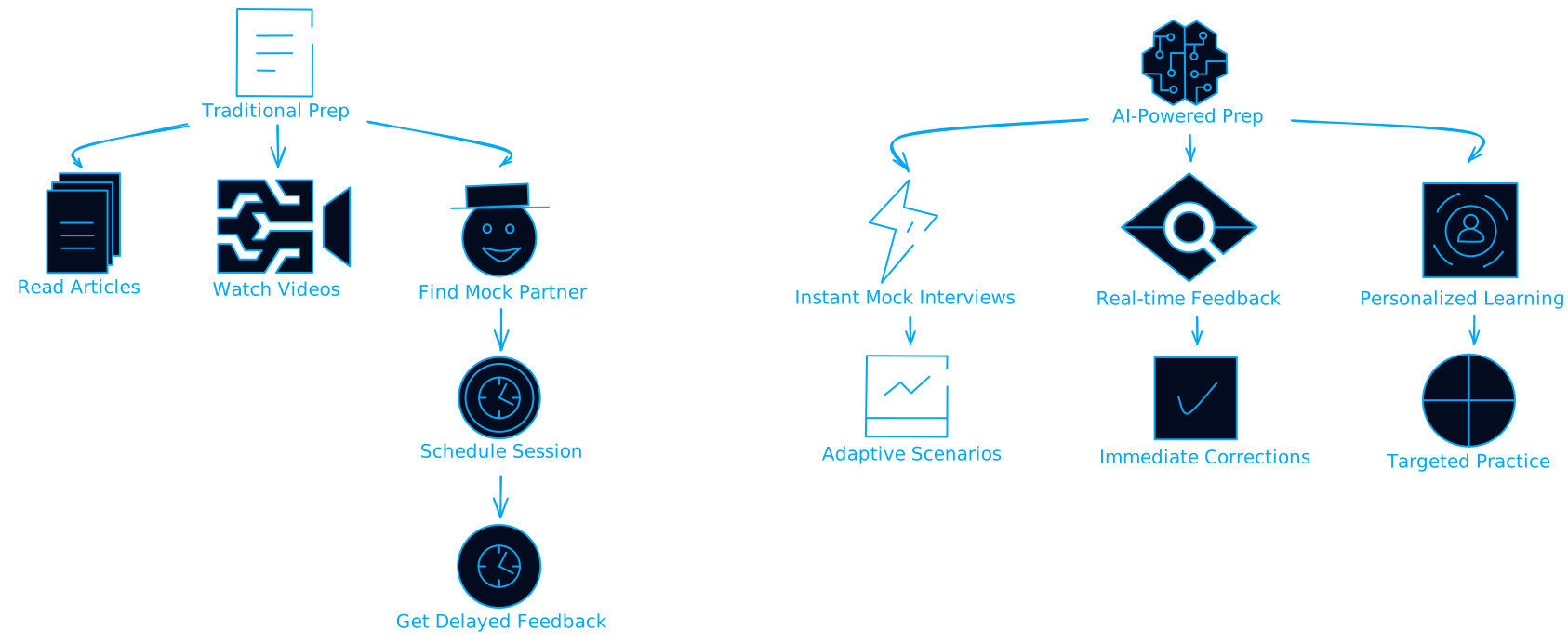
Remember how we used to prep for system design interviews? You'd read through a bunch of blog posts, maybe watch some YouTube videos, and if you were lucky, you'd convince a colleague to grill you for an hour. The feedback was inconsistent, the scenarios were limited, and honestly, most of us just winged it and hoped for the best.
The traditional approach had some serious gaps:
- Inconsistent feedback: Your friend might catch your scaling issues but miss your data consistency problems
- Limited scenarios: How many times can you design Twitter before it gets stale?
- No real-time guidance: You'd only know what went wrong after the mock interview was over
- Scheduling nightmares: Finding someone available for mock interviews was like herding cats
Enter AI-Powered Interview Prep
Now we've got AI tools that can simulate realistic interview scenarios, provide instant feedback, and adapt to your specific weaknesses. Companies like bugfree.ai, Verve AI, and platforms like Educative are building some seriously impressive stuff.
Here's what makes these tools different:
What These AI Tools Actually Do
Live Interview Simulation
The best AI interview tools don't just throw questions at you. They engage in actual conversations. You can explain your approach, and the AI will ask follow-up questions like "How would you handle a sudden 10x increase in traffic?" or "What happens if your primary database goes down?"
It's surprisingly realistic. The AI can detect when you're being vague and push for specifics, just like a real interviewer would.
Interactive Whiteboarding
Most platforms include digital whiteboards where you can sketch your architecture in real-time. This is huge because system design is inherently visual. You need to draw those boxes and arrows to show data flow, service boundaries, and scaling strategies.
Real-Time Feedback and Scoring
Here's where it gets interesting. These AI systems can analyze your responses and provide immediate feedback on:
- Technical accuracy: Are you using the right technologies for the problem?
- Communication clarity: Are you explaining your decisions well?
- Completeness: Did you address scalability, reliability, and consistency?
- Trade-off awareness: Do you understand the implications of your choices?
Some tools even provide content relevancy scoring, which helps ensure you're staying on track and addressing the actual requirements.
The Game-Changing Features
Personalized Learning Paths
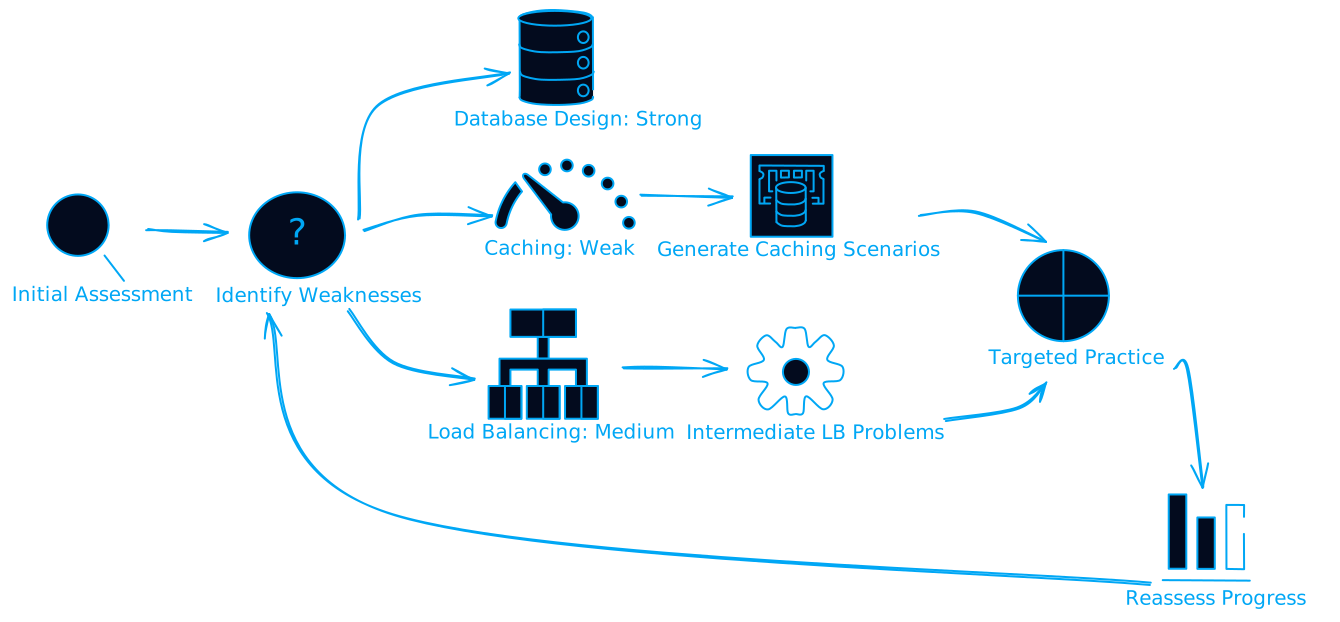
Instead of generic practice problems, AI can identify your specific weak spots. Maybe you're solid on database design but struggle with caching strategies. The system adapts and gives you more caching-focused scenarios.
Unlimited Practice Scenarios
Traditional prep materials give you maybe 20-30 practice problems. AI can generate infinite variations. Want to practice designing a ride-sharing app? The AI can create scenarios with different constraints, user bases, and technical requirements each time.
Instant Transcription and Review
Advanced platforms provide real-time transcription of your explanations. This means you can review exactly what you said and identify patterns in your communication style. Did you forget to mention monitoring? The transcript will show it.
But Wait, What About the Limitations?
Let's be real here. AI isn't magic, and these tools have some genuine limitations that you should know about.
The Depth Problem
AI can catch obvious technical mistakes, but it might miss subtle architectural issues that an experienced engineer would spot immediately. For example, it might not catch that your proposed solution would create a distributed transaction nightmare.
Communication Nuances
System design interviews aren't just about technical knowledge. They're about demonstrating how you think, how you handle ambiguity, and how you collaborate. AI is getting better at this, but it's still not quite at the level of understanding the soft skills that matter in real interviews.
Real-World Experience Gap
The AI might not fully appreciate the practical constraints you'd face in a real production environment. It knows the textbook answers but might not understand why you'd choose a "worse" solution because of team expertise, budget constraints, or technical debt.
How to Actually Use These Tools Effectively
Start with Assessment
Don't just jump into random practice problems. Use the AI's assessment features to understand where you actually stand. You might be surprised by what you discover.
Focus on Weak Areas
Once you know your gaps, be ruthless about focusing on them. If you're weak on distributed systems concepts, don't waste time practicing database design problems you already understand.
Practice Explaining, Not Just Designing
The AI can help you practice articulating your thoughts clearly. This is crucial because many candidates fail not because they don't know the concepts, but because they can't explain them coherently under pressure.
Use Multiple Tools
Different platforms have different strengths. Some are better at technical feedback, others excel at communication coaching. Don't limit yourself to just one tool.
The Technical Architecture Behind These Tools
Ever wonder how these AI interview systems actually work? Here's a simplified view:
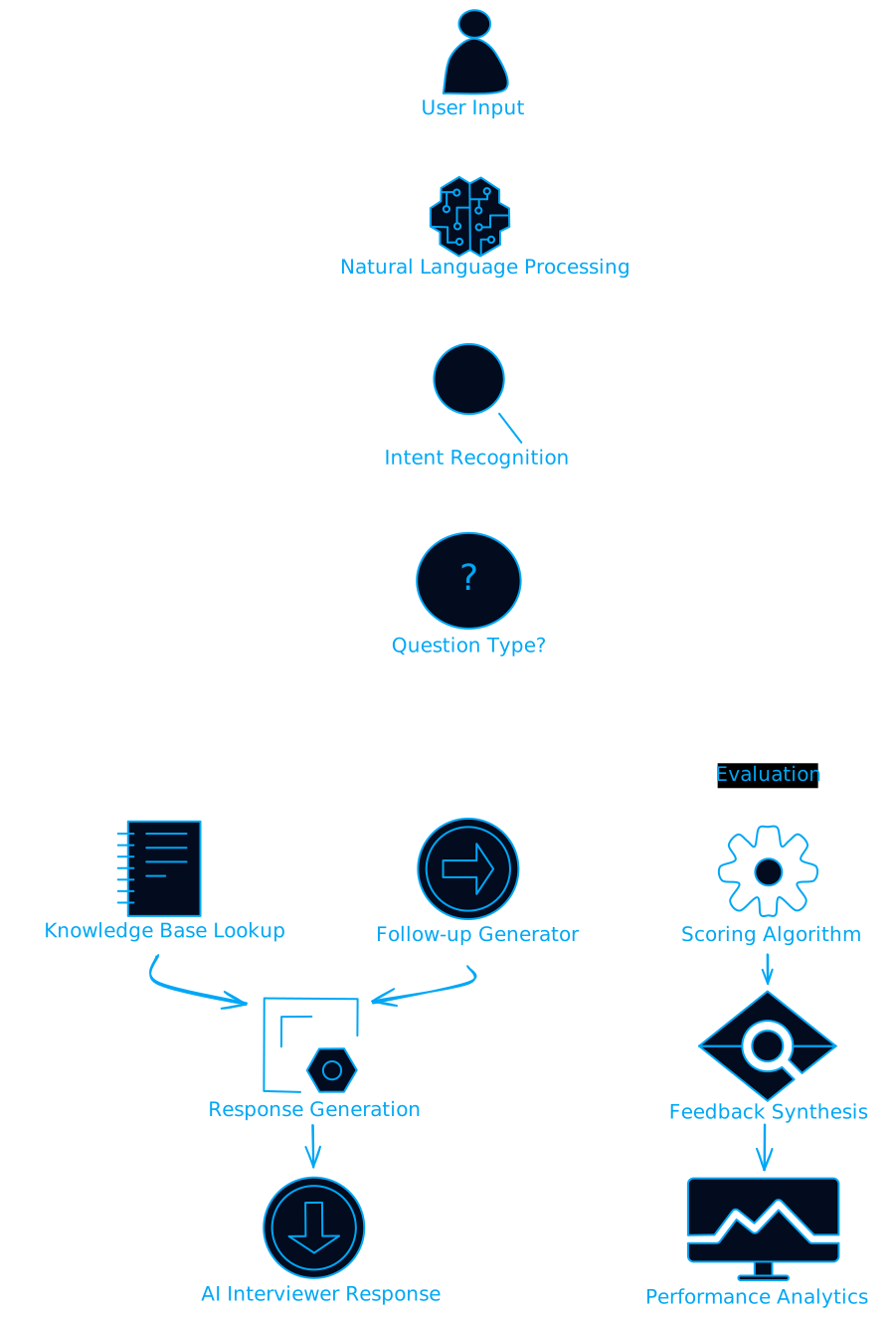
Most systems use a combination of:
- Large Language Models for natural conversation
- Knowledge graphs for technical accuracy
- Pattern matching for common architectural patterns
- Scoring algorithms for performance evaluation
What's Coming Next?
The AI interview prep space is moving fast. Here's what I'm seeing on the horizon:
Better Context Understanding
Future AI systems will better understand the business context behind technical decisions. Instead of just evaluating technical correctness, they'll assess whether your solution actually makes sense for the given business requirements.
Integration with Real Codebases
Imagine practicing system design with real production systems as examples. AI could analyze actual architectures and help you understand the trade-offs that led to specific design decisions.
Collaborative AI Interviews
Instead of just one AI interviewer, you might have multiple AI personas representing different stakeholders (product manager, senior engineer, DevOps specialist) each asking questions from their perspective.
Should You Actually Use These Tools?
Here's my honest take: yes, but with some caveats.
These AI tools are genuinely useful for:
- Getting consistent practice without scheduling headaches
- Identifying knowledge gaps you didn't know you had
- Improving communication skills through repeated practice
- Building confidence before real interviews
But they're not a complete replacement for:
- Human feedback on soft skills and communication nuances
- Real-world experience with production systems
- Understanding company-specific interview styles and expectations
The Bottom Line
AI-powered interview prep tools are changing the game, but they're not magic bullets. They're really good at helping you practice consistently, identify weak spots, and build confidence. But you still need to understand the fundamentals, gain real experience, and practice with humans too.
Think of AI tools as your training wheels, not your bicycle. They'll help you get better faster, but you still need to do the work.
The interview landscape is evolving, and candidates who adapt to these new tools will have a real advantage. Just don't forget that at the end of the day, you're still going to be talking to humans who want to see that you can think clearly, communicate effectively, and solve real problems.
So go ahead, try out these AI tools. But also keep reading those system design blogs, building side projects, and asking your senior colleagues for advice. The best preparation combines the efficiency of AI with the wisdom of human experience.
And remember, the goal isn't just to pass the interview. It's to actually become the kind of engineer who can design systems that millions of people rely on. AI can help you practice, but only real experience will make you truly great at it.
FAQ
1. How is AI changing system design interview preparation?
AI is transforming system design interview prep by simulating realistic conversations, asking follow-up questions, providing real-time feedback, and adapting to each candidate’s strengths and weaknesses. This creates a more personalized and effective preparation experience compared to traditional study methods.
2. What are the main benefits of AI tools for system design interview practice?
AI tools offer consistent feedback, unlimited practice scenarios, interactive whiteboarding, instant transcription, performance scoring, and personalized learning paths. They help candidates improve technical depth, clarity of communication, scalability planning, and understanding of trade-offs.
3. Do AI-powered system design interview tools have limitations?
Yes. AI tools may miss deep architectural flaws, cannot fully assess soft skills, and may not always understand real-world constraints such as budget, technical debt, or team expertise. They are powerful training aids but should not replace human interviewers or real engineering experience.
4. How can candidates use AI interview prep tools effectively?
Candidates should begin with an initial assessment, focus on weak areas, practice explaining design decisions clearly, review transcripts to improve communication, and use multiple platforms for broader learning. Combining AI practice with human mock interviews delivers the best results.
5. Should engineers rely only on AI tools for system design interview preparation?
No. AI tools are excellent for structured practice, confidence building, and targeted improvement, but they should complement human feedback, real-world engineering experience, and company-specific preparation. A combined approach leads to stronger interview performance.
What's your experience with AI-powered interview prep? Have you tried any of these tools? Drop a comment and let me know what worked (or didn't work) for you.