From Vibe Coding to Vibe Engineering
*Why Your AI-Assisted Development Needs Structure (And How to Get There) The wild west of AI coding is over. Here's how seasoned developers are turning chaos into craft.
The Problem Everyone's Talking About (But Few Are Solving)
You know that feeling when you watch someone "vibe code" their way through a project? They're throwing prompts at ChatGPT, copying and pasting code without understanding it, and somehow... it works? Until it doesn't.
I've been there. We've all been there. The allure of AI-generated code is real, but the aftermath? That's where things get messy.
Here's the thing nobody wants to admit: Most AI-assisted coding today is just expensive technical debt with extra steps.
But what if I told you there's a better way? A way that harnesses AI's power without sacrificing your sanity, your code quality, or your career prospects?
Enter vibe engineering – the structured approach to AI-assisted development that's quietly revolutionizing how experienced developers work.
What Exactly Is Vibe Coding (And Why It's Everywhere)?
Let's start with the basics. Vibe coding is that fast, loose, "let's see what happens" approach to AI-assisted development. You know:
- Throwing natural language prompts at AI tools
- Accepting whatever code comes out if it "looks right"
- Zero testing, minimal review, maximum YOLO energy
- Building entire features without understanding the underlying logic
The numbers don't lie: Gartner predicts 80% growth in citizen developers by 2028. That's a lot of people who can suddenly "code" without traditional programming knowledge.
And honestly? For simple projects, prototypes, or one-off scripts, vibe coding works. It's democratized software creation in ways we never imagined.
But here's where it gets problematic:
The Hidden Costs of Vibe Coding
- Technical Debt Explosion: That "quick fix" becomes a maintenance nightmare
- Security Vulnerabilities: AI doesn't inherently understand security best practices
- Scalability Issues: Code that works for 10 users might crash with 1,000
- Knowledge Gaps: When something breaks, nobody knows how to fix it
The Rise of Vibe Engineering: Structure Meets Speed
Here's where things get interesting. While everyone's been debating whether AI will replace developers, experienced engineers have been quietly figuring out how to make AI work for them, not instead of them.
Vibe engineering isn't about rejecting AI – it's about applying engineering discipline to AI-assisted development.
Think of it this way: vibe coding is like letting a talented but unpredictable intern write production code unsupervised. Vibe engineering is like having that same intern work under the guidance of a senior architect.
The Core Principles of Vibe Engineering

1. Prompts as Architectural Artifacts
Instead of treating prompts as throwaway commands, vibe engineering treats them as version-controlled, reviewable, and maintainable pieces of your architecture.
What this looks like in practice:
- Prompts are stored in your repo alongside your code
- They're reviewed like any other architectural decision
- They're documented with context and reasoning
- They evolve with your codebase
# Example: Prompt Artifact
## Context
Generating API endpoint handlers for user management

## Prompt Template
Create a REST API endpoint for [OPERATION] user data with:
- Input validation using Joi schema
- Error handling with standardized responses
- Logging for audit trail
- Rate limiting middleware
- Unit tests with 90%+ coverage
## Success Criteria
- All tests pass
- Security scan shows no vulnerabilities
- Performance under 200ms for 95th percentile
2. Continuous Measurement and Adaptation
Vibe engineering isn't "set it and forget it." It's about constantly measuring outcomes and refining your approach.
Key metrics to track:
- Code quality scores (complexity, maintainability)
- Security vulnerability counts
- Test coverage percentages
- Performance benchmarks
- Developer velocity (but not just speed!)
3. Collaborative Intelligence
This isn't about replacing human intelligence with artificial intelligence. It's about amplifying human expertise with AI capabilities.
The magic happens when:
- Senior developers design the architecture
- AI handles the boilerplate and repetitive tasks
- Humans review, test, and refine the output
- Knowledge gets shared across the team
But Wait, What About the Challenges?
Let's be real – transitioning from vibe coding to vibe engineering isn't all sunshine and rainbows. There are legitimate challenges:
Challenge 1: Code Quality and Consistency
The Problem: AI-generated code can be inconsistent, especially when different team members use different prompting strategies.
The Solution: Establish coding standards that apply to both human and AI-generated code. Use automated linting, formatting, and quality gates.
Challenge 2: Integration with Existing Workflows
The Problem: Your current development process wasn't designed for AI-assisted coding.
The Solution: Adapt incrementally. Start with non-critical components, build confidence, then expand.
Challenge 3: Accountability and Governance
The Problem: When AI writes the code, who's responsible when it breaks?
The Solution: The human who approved it. Always. This is why review processes are crucial.
The SRE Connection: Why Reliability Engineering Principles Matter
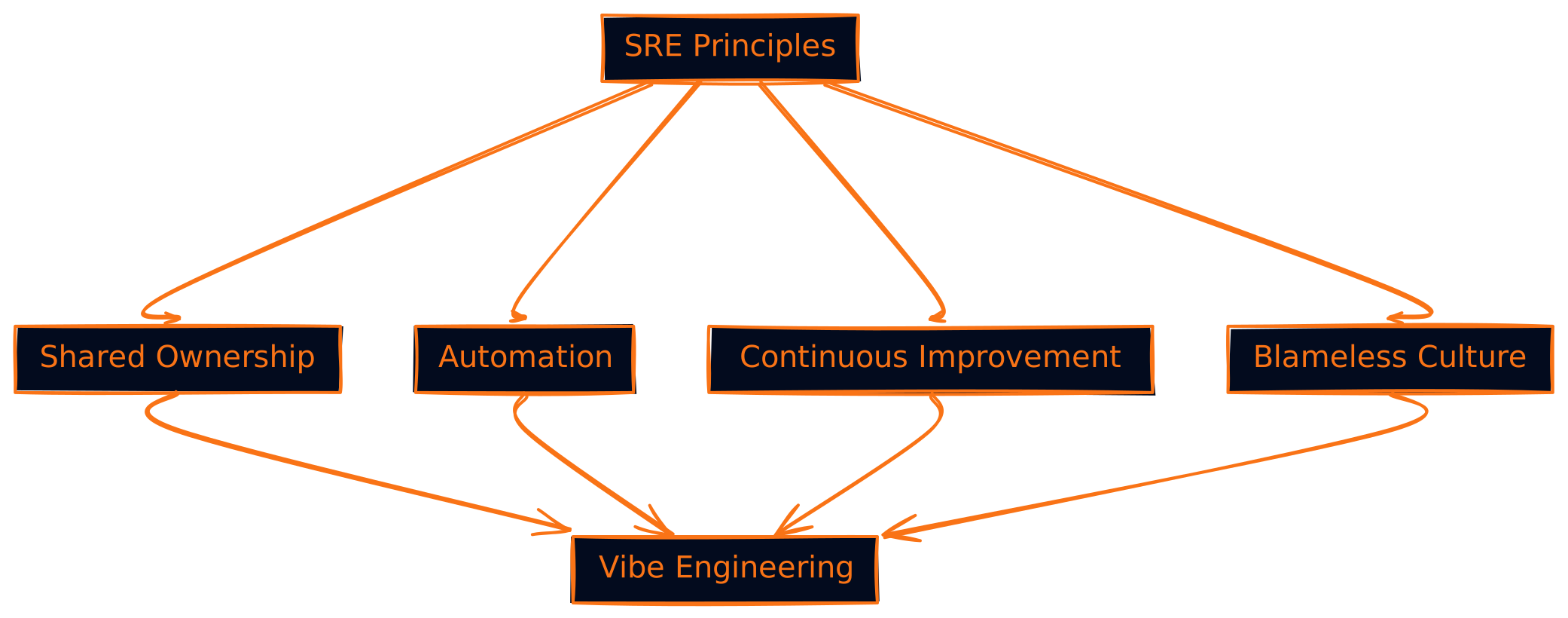
Here's something most people miss: the best practices from Site Reliability Engineering (SRE) map perfectly onto vibe engineering challenges.
Shared Ownership
In SRE, everyone owns reliability. In vibe engineering, everyone owns the AI-generated code quality.
Automation and Scalability
SRE automates toil. Vibe engineering automates code generation while maintaining human oversight.
Continuous Improvement
SRE uses error budgets and postmortems. Vibe engineering uses prompt refinement and outcome measurement.
Blameless Culture
When AI-generated code causes issues, focus on improving the process, not blaming the person who used the tool.
What Skills Actually Matter in the AI Era?
This is the question everyone's asking: "What should I focus on learning if AI can write code?"
Based on the research and real-world experience, here are the skills that become more important, not less:
1. Automated Testing Mastery
AI tools fly when they have comprehensive test suites to work with. Without tests? You're flying blind.
Why this matters: AI can generate code that passes basic functionality tests but fails edge cases. Robust testing catches these issues.
2. Planning and Architecture
AI is great at implementing solutions but terrible at deciding what to build. High-level planning becomes your superpower.
3. Documentation Skills
AI needs context to generate good code. The better your documentation, the better your AI-generated code.
4. Version Control Expertise
When AI is making changes, understanding Git becomes crucial. You need to track what changed, when, and why.
5. Code Review Superpowers
You'll be reviewing more code than ever – both human and AI-generated. Getting good at spotting issues quickly is essential.
6. Quality Assurance Instincts
Beyond automated tests, you need to be excellent at manual testing and edge case discovery.
The Practical Roadmap: How to Make the Transition
Alright, enough theory. How do you actually move from vibe coding to vibe engineering? Here's a step-by-step approach:
Phase 1: Assessment and Foundation (Weeks 1-2)
Audit your current AI usage:
- What tools are your team using?
- How are prompts being created and shared?
- What's the current code quality situation?
Establish baselines:
- Code quality metrics
- Security scan results
- Test coverage percentages
- Development velocity
Phase 2: Standardization (Weeks 3-6)
Create prompt templates:
- Document successful prompts
- Establish prompt review processes
- Build a shared prompt library
Implement quality gates:
- Automated testing requirements
- Security scanning
- Code review checklists
Phase 3: Integration (Weeks 7-12)
Embed AI tools into your workflow:
- CI/CD pipeline integration
- Automated prompt testing
- Outcome measurement systems
Train your team:
- Best practices workshops
- Prompt engineering training
- Code review guidelines for AI-generated code
Phase 4: Optimization (Ongoing)
Continuous improvement:
- Regular prompt refinement
- Metric analysis and adjustment
- Knowledge sharing sessions

Real-World Success Stories (And Failures)
Success: The E-commerce Platform Migration
A mid-size e-commerce company used vibe engineering principles to migrate their legacy PHP codebase to Node.js. Instead of rewriting everything manually, they:
- Created detailed architectural prompts
- Generated code in small, testable chunks
- Maintained 95%+ test coverage throughout
- Completed the migration 60% faster than estimated
Key insight: The structured approach actually made them faster, not slower.
Failure: The "AI-First" Startup
A startup decided to build their entire product using pure vibe coding. Six months in:
- 40% of features had critical bugs
- Security audit found 23 vulnerabilities
- Technical debt was so high they had to rewrite core components
- Development velocity had actually decreased
Key insight: Speed without structure is just expensive chaos.
The Future: Where Vibe Engineering Is Heading
Based on current trends and emerging tools, here's where I see vibe engineering evolving:
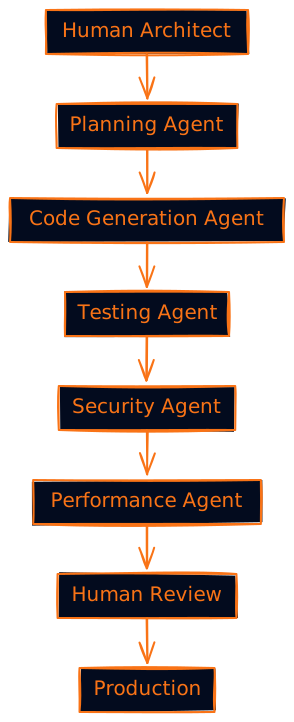
1. Specialized AI Agents
Instead of general-purpose coding assistants, we'll see AI agents specialized for specific tasks:
- Security-focused code generation
- Performance optimization agents
- Testing and QA agents
2. Integrated Development Environments
IDEs will become AI-native, with built-in prompt management, outcome tracking, and quality assurance.
3. Collaborative AI Workflows
Teams will work with multiple AI agents simultaneously, each handling different aspects of the development process.
Common Questions (And Honest Answers)
"Isn't this just overengineering simple AI tools?"
Not if you're building anything that matters. The structure pays for itself the first time you need to debug AI-generated code at 2 AM.
"Will this slow down development?"
Initially, yes. Long-term, no. You're trading short-term setup time for long-term maintainability and velocity.
"What if my team resists the structure?"
Start small. Pick one project, show the benefits, then expand. Success speaks louder than mandates.
"How do I measure ROI on vibe engineering?"
Track:
- Bug reduction rates
- Security vulnerability counts
- Development velocity over time
- Developer satisfaction scores
The Bottom Line: Why This Matters Now
We're at an inflection point. AI-assisted coding is moving from "interesting experiment" to "business critical capability." The teams that figure out how to do it right will have a massive competitive advantage.
The choice is simple:
- Continue with chaotic vibe coding and deal with the technical debt later
- Invest in structured vibe engineering and build sustainable AI-assisted development practices
The companies that choose structure will be the ones still standing when the AI coding hype settles into reality.
Your Next Steps
- Audit your current AI usage – What tools are you using? How are you using them?
- Start small – Pick one project to apply vibe engineering principles
- Measure everything – You can't improve what you don't measure
- Share knowledge – Build a culture of learning and improvement
- Stay curious – This field is evolving rapidly
The future of software development isn't human vs. AI. It's human with AI, done right.
And "done right" looks a lot like vibe engineering.
What's your experience with AI-assisted coding? Are you still in the vibe coding phase, or have you started building more structure? Share your thoughts and experiences – the community learns best when we learn together.
Further Reading
- The Original Vibe Engineering Field Manual
- Why AI Coding Fails in Enterprises
- Gartner's Citizen Developer Growth Predictions
- Site Reliability Engineering Principles
Tags: AI-assisted development, software engineering, code quality, developer productivity, technical leadership, software architecture