Database Tradeoffs: Understanding the Fundamental Choices in Database Architecture
Database Tradeiffs
You know that feeling when you're building something awesome and suddenly realize your database is the bottleneck? Yeah, we've all been there. The thing is, databases aren't just storage boxes you throw data into and hope for the best. They're complex beasts with personalities, quirks, and most importantly, trade-offs that can make or break your application.
Let me walk you through the wild world of database trade-offs, because understanding these is like having a superpower in the tech world.
The Fundamental Truth: You Can't Have It All
Here's the brutal reality: there's no perfect database. Every single choice you make comes with consequences. It's like choosing a superpower, you get something amazing but you also get a weakness that comes with it.
The most famous example? The CAP theorem. This isn't just some academic concept, it's the harsh reality of distributed systems.
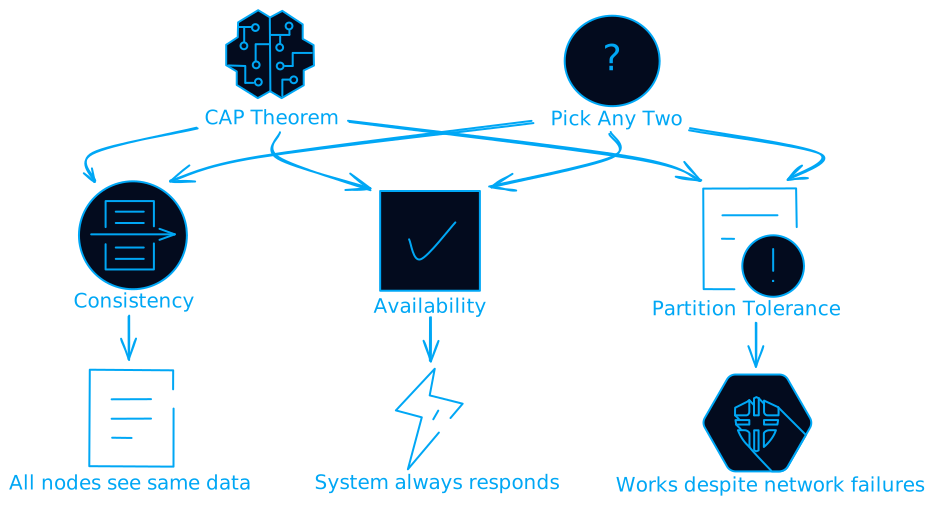
You literally cannot have all three. It's mathematically impossible. So every database architect has to make this choice, and it affects everything downstream.
The Great SQL vs NoSQL Showdown
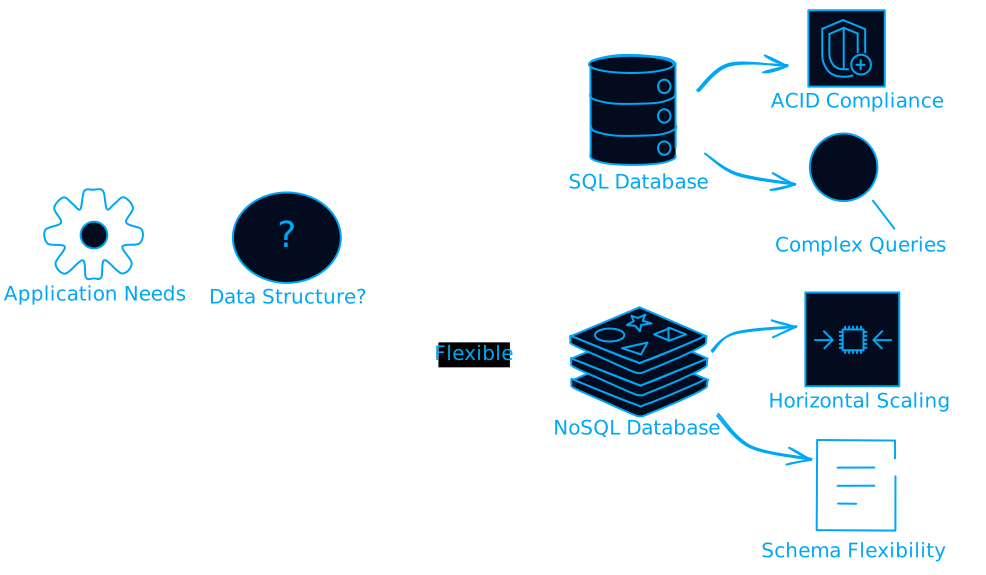
This isn't just a technical debate, it's a philosophical one. Are you team "structure and rules" or team "flexibility and scale"?
SQL Databases: The Strict Parent
Relational databases are like that strict parent who makes you clean your room before you can go out. They enforce rules, maintain order, and everything has its place.
What you get:
- ACID transactions (your data stays consistent)
- Complex queries with JOINs
- Mature tooling and expertise
- Data integrity guarantees
What you sacrifice:
- Horizontal scaling becomes a nightmare
- Schema changes can be painful
- Performance hits with complex relationships
NoSQL: The Cool Aunt
NoSQL databases are like that cool aunt who lets you eat ice cream for breakfast. They're flexible, fun, and don't judge your life choices.
What you get:
- Massive scalability
- Flexible schemas
- Better performance for simple queries
- Handles unstructured data like a champ
What you sacrifice:
- Eventual consistency (sometimes)
- Limited query capabilities
- Less mature tooling
- You might lose some data integrity
The Normalization Paradox
Here's where things get really interesting. In SQL land, we have this concept called normalization. It's supposed to make everything better by reducing redundancy and improving data integrity.
But here's the kicker: the more normalized your data, the more JOINs you need. And JOINs are expensive.
The Normalization Levels
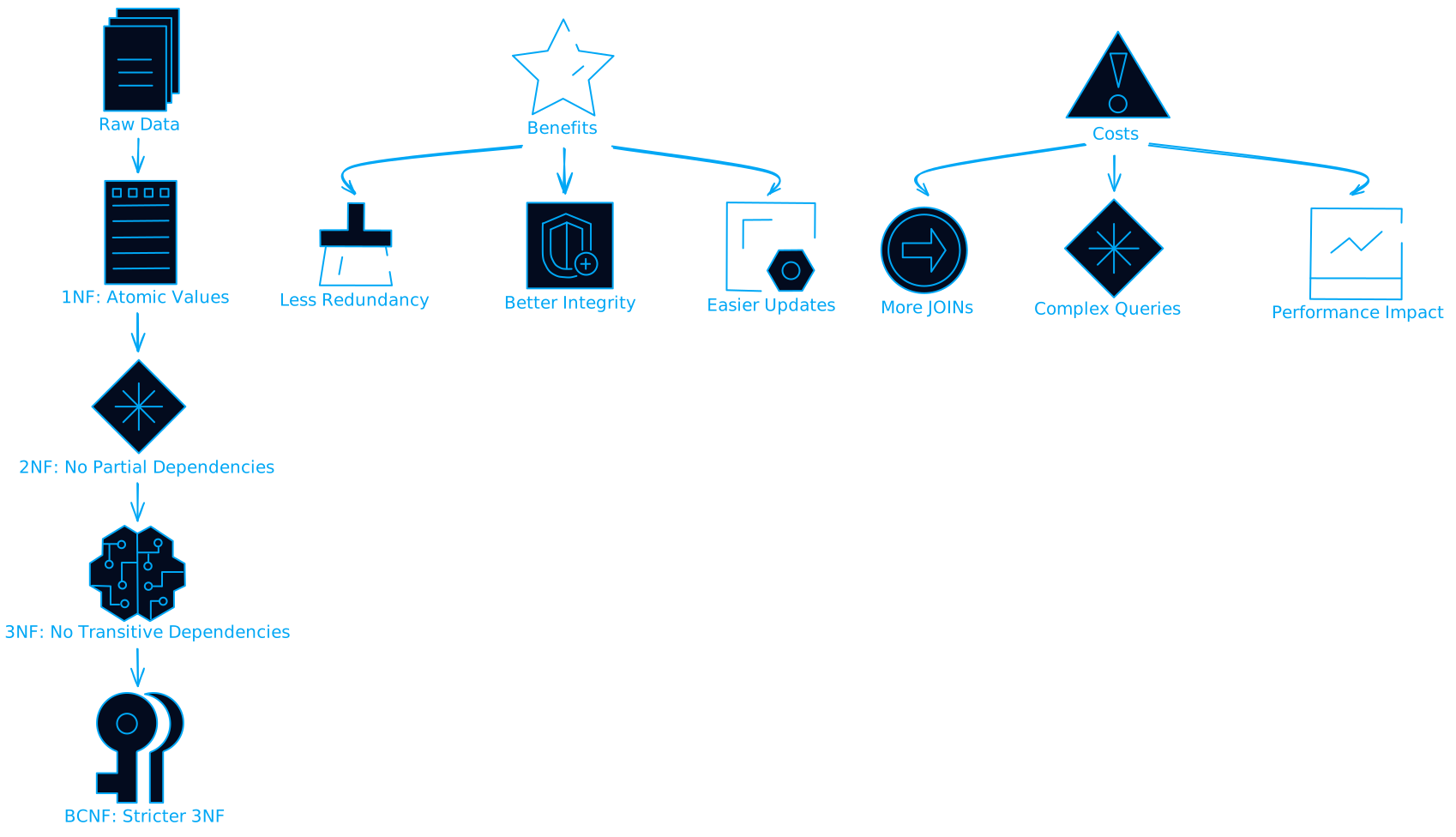
So you end up with this weird situation where "doing it right" according to database theory might actually hurt your performance. It's like following a recipe perfectly but ending up with food that takes forever to cook.
Read vs Write: The Eternal Struggle
Every database has to balance between being good at reading data and being good at writing data. It's like trying to be both a marathon runner and a weightlifter, you can be decent at both but you'll excel at one.
Read-Optimized Systems
These are built for speed when you're fetching data:
# Example: Data warehouse with denormalized tables
class ReadOptimizedDB:
    def __init__(self):
        # Lots of indexes
        # Denormalized data
        # Materialized views
        pass

    def read_user_profile(self, user_id):
        # Single query, super fast
        return self.execute("SELECT * FROM user_profile_complete WHERE id = ?", user_id)

    def write_user_update(self, user_id, data):
        # Might need to update multiple denormalized tables
        # Slower writes, but reads are blazing fast
        pass
Write-Optimized Systems
These prioritize getting data in quickly:
# Example: Log aggregation system
class WriteOptimizedDB:
    def __init__(self):
        # Minimal indexes
        # Append-only structures
        # Batch processing
        pass

    def log_event(self, event):
        # Super fast write
        self.append_to_log(event)

    def get_user_events(self, user_id):
        # Might need to scan lots of data
        # Slower reads, but writes are instant
        pass
The Storage Engine Dilemma
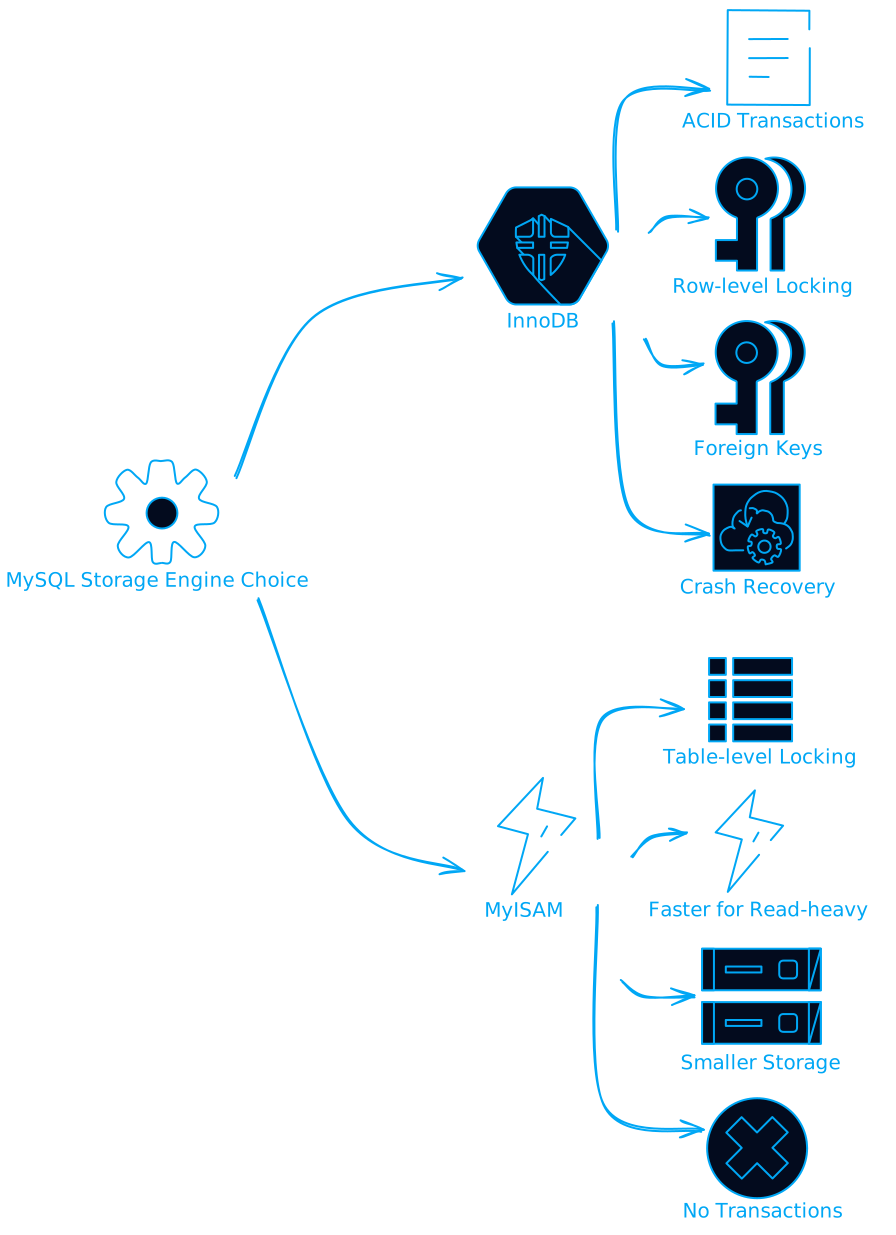
Even within the same database system, you often have to choose storage engines. Each one optimized for different use cases.
InnoDB vs MyISAM (MySQL Example)
Real-World Scenarios: When Trade-offs Matter
Let me give you some concrete examples where these trade-offs play out in the real world.
Scenario 1: E-commerce Platform
You're building the next Amazon. What do you choose?
For Product Catalog:
- NoSQL (like MongoDB) for flexibility
- Products have wildly different attributes
- Need to scale horizontally
For Orders and Payments:
- SQL (like PostgreSQL) for ACID compliance
- Money is involved, consistency is critical
- Complex relationships between orders, users, payments
For Analytics:
- Data warehouse (like Snowflake) for read optimization
- Denormalized data for fast reporting
- Batch processing is acceptable
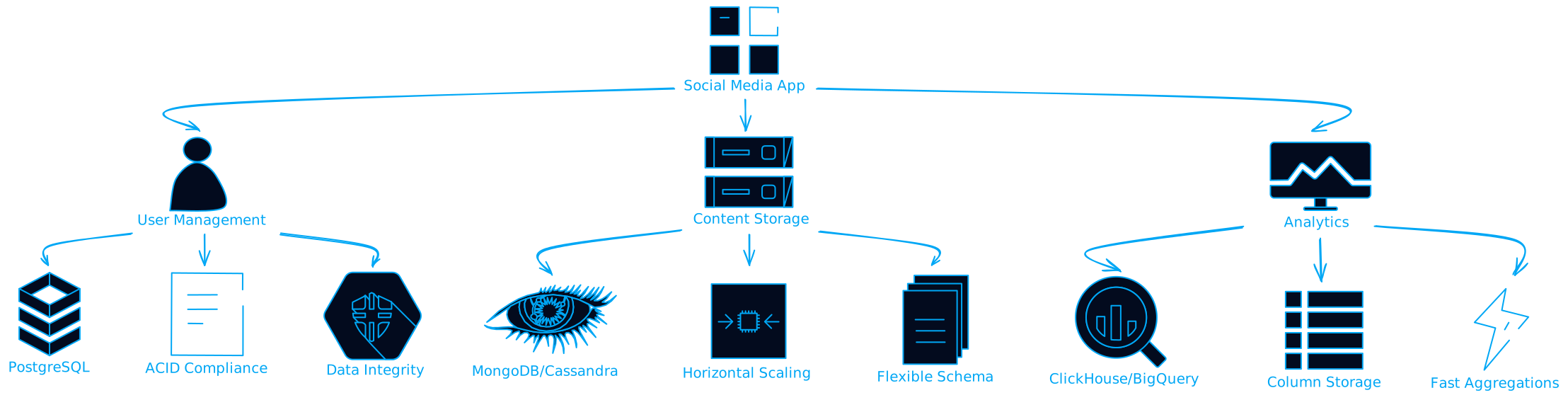
Scenario 2: Social Media App
Building the next TikTok? Different priorities:
For User Posts:
- NoSQL for massive scale
- Eventual consistency is okay
- Need to handle viral content spikes
For User Authentication:
- SQL for data integrity
- User accounts need to be consistent
- Security is paramount
The Hidden Costs of Database Decisions
Here's what nobody tells you about database trade-offs: the real cost isn't just performance or features. It's everything else that comes with your choice.
Operational Complexity
Choosing a distributed NoSQL database? Congratulations, you now need:
- Cluster management expertise
- Monitoring for multiple nodes
- Backup strategies across shards
- Network partition handling
Team Expertise
Your team knows SQL inside and out? Switching to a graph database means:
- Learning new query languages
- Understanding different data modeling approaches
- Retraining your entire team
Vendor Lock-in
Cloud-managed databases are convenient but:
- Migration becomes expensive
- You're tied to their pricing model
- Limited control over optimizations
Making Smart Trade-offs: A Practical Framework
So how do you actually make these decisions without losing your mind? Here's a framework I use:
1. Define Your Non-Negotiables
What absolutely cannot fail in your system?
- Data consistency for financial transactions
- Sub-second response times for user-facing features
- 99.99% uptime for critical services
2. Identify Your Growth Patterns
# Questions to ask yourself:
growth_patterns = {
    "data_volume": "10x in 2 years or steady growth?",
    "read_write_ratio": "90% reads or 50/50 split?",
    "query_complexity": "Simple lookups or complex analytics?",
    "geographic_distribution": "Single region or global?",
    "team_size": "2 developers or 50-person team?"
}
3. Plan for Change
The biggest mistake? Optimizing for today's problems without considering tomorrow's. Build in flexibility where you can afford it.
The Polyglot Persistence Approach
Here's a radical idea: why choose just one database? Modern applications often use multiple databases, each optimized for specific use cases.
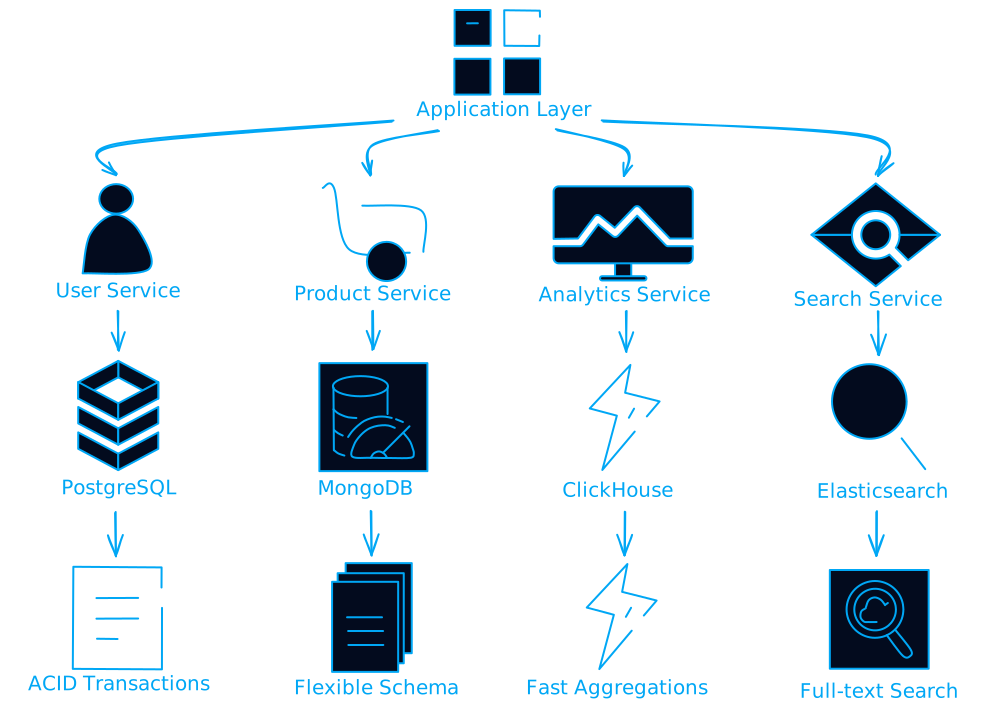
This approach lets you optimize each service for its specific needs, but it comes with its own trade-offs:
- Increased operational complexity
- Data consistency across systems
- More moving parts to monitor
Common Anti-Patterns to Avoid
Let me save you from some painful mistakes I've seen (and made):
The "One Size Fits All" Trap
Using the same database for everything because "it's what we know." This is like using a hammer for every job, sometimes you need a screwdriver.
The "Latest and Greatest" Syndrome
Choosing a database because it's new and shiny, not because it solves your actual problems. That blockchain database might be cool, but do you really need it?
The "Premature Optimization" Problem
Over-engineering for scale you don't have yet. Don't build for Netflix scale when you're still trying to get your first 1000 users.
Performance Tuning: The Art of Compromise
Even after choosing your database, you're not done with trade-offs. Performance tuning is all about finding the right balance.
Indexing Strategy
-- Fast reads, slow writes
CREATE INDEX idx_user_email ON users(email);
CREATE INDEX idx_user_created_at ON users(created_at);
CREATE INDEX idx_user_status ON users(status);

-- vs

-- Slower reads, fast writes
-- Minimal indexes, rely on full table scans for complex queries
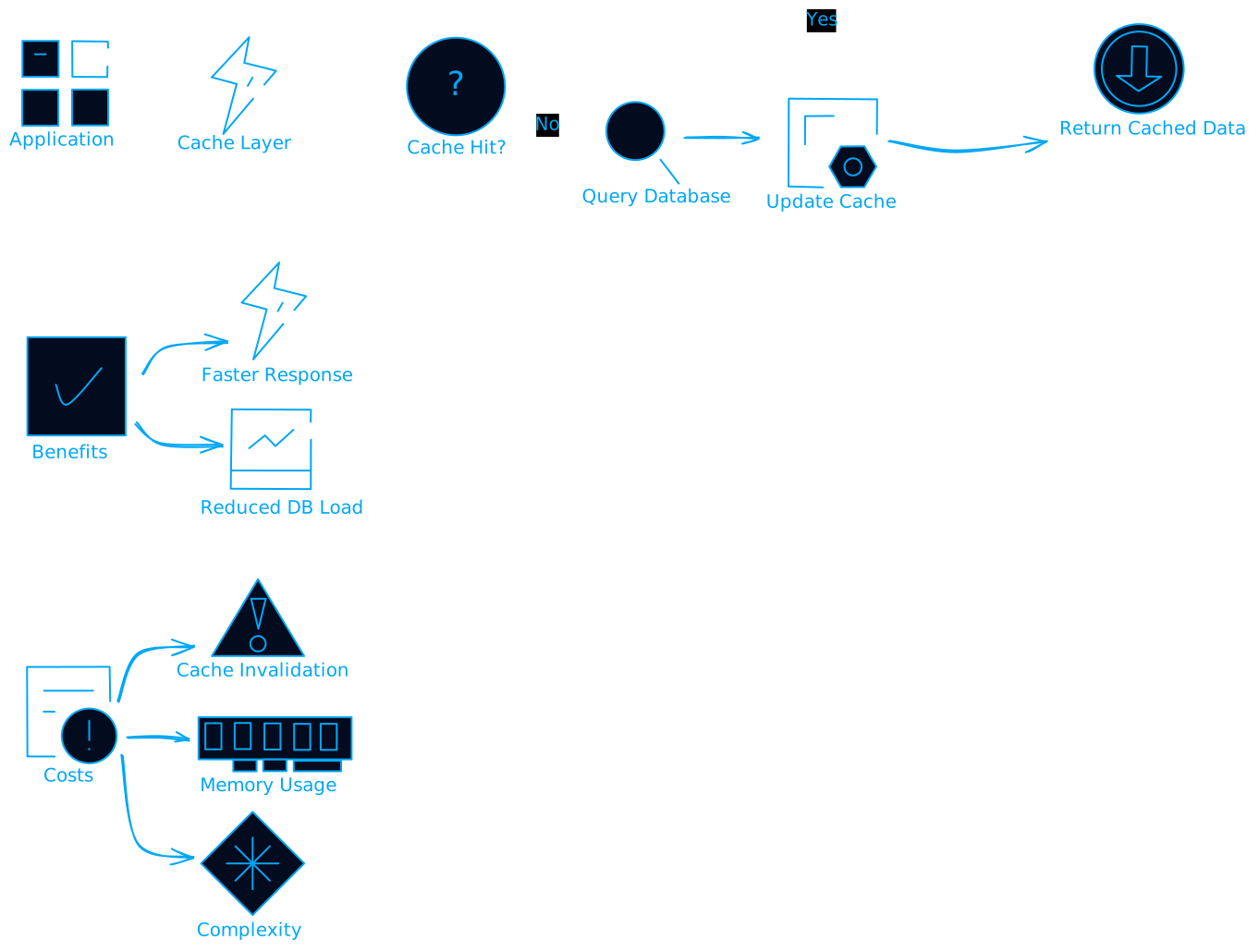
Caching Layers
Adding caching introduces its own trade-offs:
The Future of Database Trade-offs
The database world keeps evolving, and new technologies are trying to eliminate some traditional trade-offs:
NewSQL Databases
Trying to combine SQL's consistency with NoSQL's scalability:
- CockroachDB
- TiDB
- Google Spanner
Serverless Databases
Abstracting away operational complexity:
- AWS Aurora Serverless
- PlanetScale
- Neon
Multi-Model Databases
Supporting multiple data models in one system:
- ArangoDB
- CosmosDB
- OrientDB
But remember, even these "solutions" come with their own trade-offs. There's no free lunch in the database world.
Making Peace with Imperfection
Here's the thing about database trade-offs: they're not bugs, they're features. They force you to think clearly about what your application actually needs.
The best database architects aren't the ones who know every feature of every database. They're the ones who understand trade-offs and can make informed decisions based on real requirements, not theoretical perfection.
Your Action Plan
So what should you do with all this information?
-
Audit your current setup: What trade-offs are you already making? Are they still the right ones?
-
Document your requirements: Write down what actually matters for your use case, not what you think should matter.
-
Experiment safely: Use feature flags and gradual rollouts to test new approaches without risking everything.
-
Monitor everything: You can't optimize what you don't measure. Set up proper monitoring for your database performance.
-
Plan for evolution: Your needs will change. Build systems that can evolve with you.
The Bottom Line
Database trade-offs aren't something to be solved, they're something to be understood and embraced. Every choice you make opens some doors and closes others. The key is making sure you're walking through the right doors for your specific situation.
Remember, the best database is the one that solves your actual problems, not the one that looks best on paper or gets the most upvotes on Hacker News.
The next time someone asks you which database to use, don't give them a technology recommendation. Ask them about their trade-offs. Because in the end, that's what really matters.
What trade-offs are you dealing with in your current projects? Have you found any creative solutions to the classic database dilemmas? Share your experiences, because we're all figuring this out together.