Database Replication: The Complete Guide to Keeping Your Data Alive and Kicking
Database Replication: The Complete Guide to Keeping Your Data Alive and Kicking
Ever wondered how Netflix keeps streaming even when half their servers catch fire? Or how your bank never loses track of your money, even during system outages? The secret sauce is database replication, and it's way more fascinating than most people think.
Let's dive deep into the world of data replication, where copies aren't just backups, they're lifelines.
What Exactly Is Database Replication?
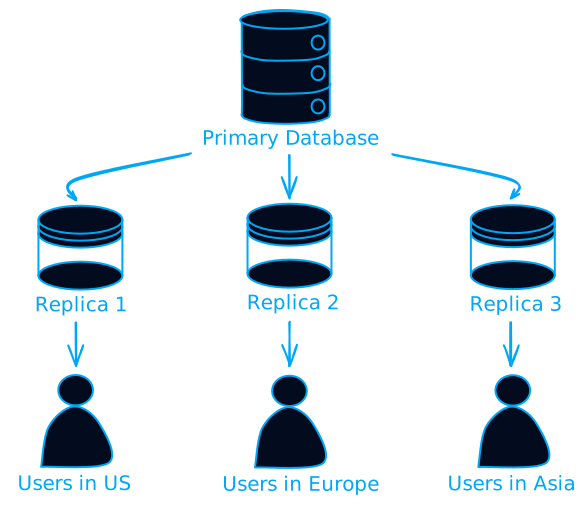
Think of database replication like having multiple photocopiers in different buildings, all making copies of the same important document at the same time. But instead of paper, we're dealing with data, and instead of buildings, we're talking about servers scattered across the globe.
Database replication is the process of creating and maintaining multiple copies of your database across different locations or systems. It's not just about having backups sitting in a dusty corner, it's about having live, active copies that can jump into action the moment something goes wrong.
The Five Flavors of Database Replication
1. Synchronous Replication: The Perfectionist
Synchronous replication is like that friend who won't leave the house until everyone's ready. Every write operation waits for ALL replicas to confirm they've received the data before saying "okay, we're done."
The Good:
- Perfect data consistency across all nodes
- Zero data loss if a server crashes
- Your auditors will love you
The Not-So-Good:
- Slower write operations (everyone has to wait)
- Network hiccups can bring everything to a crawl
- Higher latency, especially across continents
# Pseudo-code for synchronous replication
def write_data(data):
    primary_db.write(data)

    # Wait for ALL replicas to confirm
    confirmations = []
    for replica in replicas:
        confirmations.append(replica.write_and_confirm(data))

    if all(confirmations):
        return "Success"
    else:
        rollback_all()
        return "Failed"
2. Asynchronous Replication: The Speed Demon
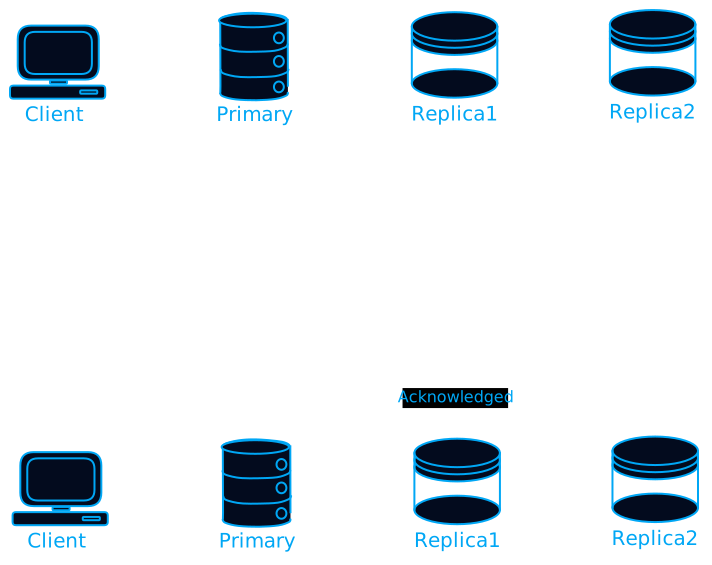
Asynchronous replication is the "fire and forget" approach. The primary database writes the data, gives you a thumbs up, and then casually mentions to the replicas, "Hey, when you get a chance, here's some new data."
The Good:
- Lightning-fast write operations
- Network issues don't block your application
- Great for high-throughput scenarios
The Trade-offs:
- Slight delay between primary and replicas
- Potential data loss if primary crashes before replication
- Eventual consistency (not immediate)
3. Multi-Master Replication: The Democracy
Imagine a group project where everyone can edit the same document simultaneously. That's multi-master replication, where multiple databases can accept writes and sync with each other.
When It Shines:
- Distributed teams across different regions
- High availability requirements
- Load distribution across multiple nodes
The Challenges:
- Conflict resolution becomes crucial
- More complex to set up and maintain
- Potential for data inconsistencies
Suggested image: Multiple database icons with bidirectional arrows between them, showing equal status
4. Log-Based Replication: The Historian
This approach captures every change in a transaction log and ships it to replicas. Think of it as keeping a detailed diary of everything that happens to your data.
-- Example of log entries
INSERT INTO users (id, name) VALUES (1, 'Alice');
UPDATE users SET name = 'Alice Smith' WHERE id = 1;
DELETE FROM orders WHERE user_id = 1 AND status = 'cancelled';
Why It's Awesome:
- Captures the exact sequence of changes
- Works across different database platforms
- Minimal impact on primary database performance
5. Snapshot Replication: The Time Traveler
Snapshot replication takes a complete picture of your database at a specific moment and copies it to replicas. It's like taking a family photo, but for data.
Perfect For:
- Data warehousing scenarios
- Reporting databases that don't need real-time updates
- Initial setup of new replicas
But Wait, There's More: The Benefits That Actually Matter
1. Your App Stays Online (Even When Things Go Sideways)
Remember the last time a major service went down and everyone lost their minds? With proper replication, if your primary database decides to take an unscheduled nap, your replicas can step in faster than you can say "404 error."
2. Performance That Doesn't Suck
Instead of everyone hammering the same database server, you can spread read operations across multiple replicas. It's like opening multiple checkout lanes at a grocery store, nobody likes waiting in line.
3. Disaster Recovery That Actually Works
Natural disasters, hardware failures, or that intern who accidentally deleted the production database, replication gives you a fighting chance to recover without losing your job (or your sanity).
4. Global Reach Without the Lag
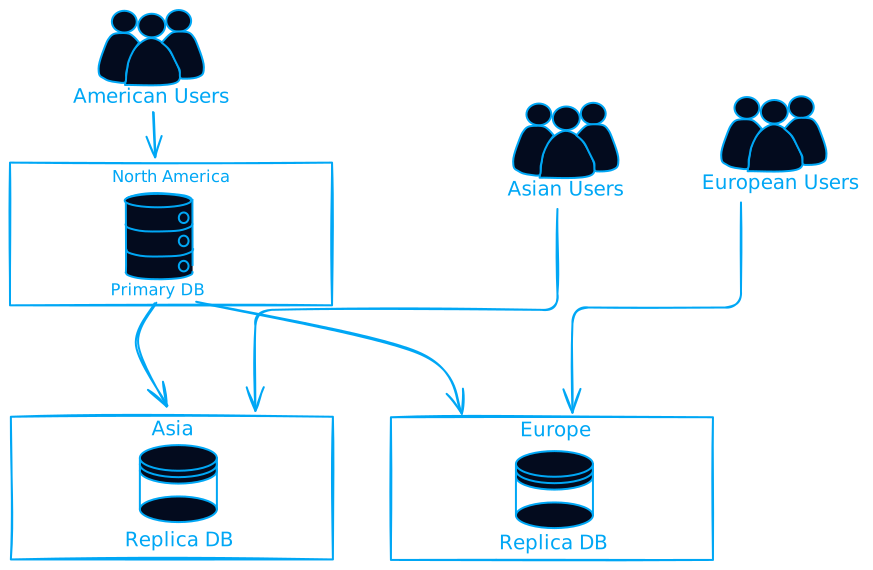
Users in Tokyo don't want to wait for data to travel from a server in New York. With geographically distributed replicas, everyone gets snappy performance.
The Dark Side: Challenges That'll Keep You Up at Night
Network Latency: The Silent Killer
When your replicas are spread across continents, network latency becomes your nemesis. Data traveling from New York to Singapore doesn't teleport, it takes time, and that time adds up.
Solutions That Actually Work:
- Use compression for replication traffic
- Implement smart routing algorithms
- Consider regional clustering strategies
Conflict Resolution: When Databases Fight
In multi-master setups, what happens when two users update the same record simultaneously on different nodes? Someone has to be the referee.
Common Strategies:
- Last Write Wins: Simple but potentially lossy
- Timestamp-based: More sophisticated but requires synchronized clocks
- Application-level resolution: Custom logic for your specific use case
# Example conflict resolution
def resolve_conflict(record_a, record_b):
    if record_a.timestamp > record_b.timestamp:
        return record_a
    elif record_b.timestamp > record_a.timestamp:
        return record_b
    else:
        # Same timestamp? Use application logic
        return merge_records(record_a, record_b)
Security: Protecting Data in Transit
Your data is traveling across networks, potentially through the wild west of the internet. Encryption isn't optional, it's mandatory.
Security Checklist:
- ✅ SSL/TLS for all replication traffic
- ✅ Certificate-based authentication
- ✅ Network segmentation and firewalls
- ✅ Regular security audits
- ✅ Encrypted storage on replicas
Replication Strategies That Don't Suck
Master-Slave: The Classic
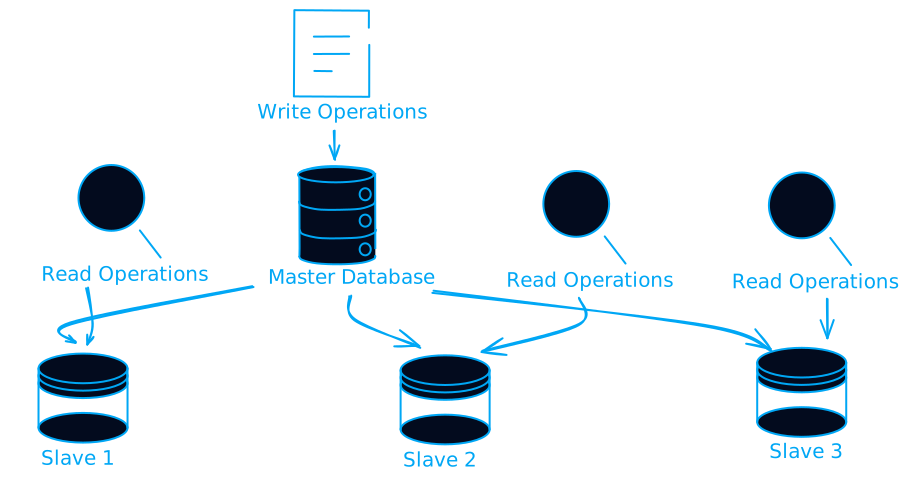
One primary database handles all writes, multiple read-only replicas handle queries. Simple, reliable, and battle-tested.
Ring Topology: The Circle of Life
Each node replicates to the next node in the ring. If one node fails, data can still flow around the circle.
Tree Topology: The Family Tree
Hierarchical replication where each level can have multiple children. Great for organizations with regional offices.
Monitoring: Because Flying Blind Is Stupid
Key Metrics to Watch
Replication Lag: How far behind are your replicas?
-- Example query to check replication lag
SELECT
    replica_name,
    TIMESTAMPDIFF(SECOND, last_update, NOW()) as lag_seconds
FROM replication_status;
Error Rates: Are replications failing? Network Throughput: Is your network keeping up? Disk Space: Are your replicas running out of room?
Alerting That Doesn't Cry Wolf
Set up alerts that matter:
- Replication lag > 30 seconds
- Any replication errors
- Replica disk usage > 80%
- Network connectivity issues
Real-World Implementation Tips
Start Small, Scale Smart
Don't try to build a global replication network on day one. Start with a simple master-slave setup and evolve as your needs grow.
Test Your Disaster Recovery
Having replicas is great, but if you've never actually failed over to them, you're just playing pretend. Regular disaster recovery drills aren't optional.
Monitor Everything
If you can't measure it, you can't manage it. Comprehensive monitoring and alerting are crucial for maintaining healthy replication.
Plan for Growth
Your replication strategy should grow with your business. Design for scale from the beginning, even if you don't need it yet.
The Future of Database Replication
Cloud-Native Solutions
Modern cloud platforms are making replication easier with managed services that handle the complexity for you. AWS RDS, Google Cloud SQL, and Azure Database all offer built-in replication features.
AI-Powered Optimization
Machine learning is starting to optimize replication patterns based on usage patterns and performance metrics.
Edge Computing Integration
As edge computing grows, we're seeing more sophisticated replication strategies that push data closer to where it's needed.
Wrapping Up: Your Data's Insurance Policy
Database replication isn't just a nice-to-have feature, it's your data's insurance policy. Whether you're running a small startup or a global enterprise, having a solid replication strategy can mean the difference between a minor hiccup and a business-ending disaster.
The key is understanding your specific needs:
- How much data loss can you tolerate?
- What's your performance requirements?
- How geographically distributed are your users?
- What's your budget for complexity?
Start with the basics, monitor everything, and evolve your strategy as you grow. Your future self (and your users) will thank you when things inevitably go sideways.
Remember, the best replication strategy is the one that works reliably when you need it most. And trust me, you'll need it when you least expect it.
What's your experience with database replication? Have you had to deal with any spectacular failures or surprising successes? Share your war stories in the comments below.
Further Reading:
Tools Worth Checking Out:
- MySQL Replication
- PostgreSQL Streaming Replication
- MongoDB Replica Sets
- Redis Sentinel