CDN Design Evaluation: The Complete Guide to Building High-Performance Content Delivery Networks
CDN Design Evaluation: The Complete Guide to Building High-Performance Content Delivery Networks
Ever wondered why Netflix streams seamlessly to millions of users worldwide while your website struggles to load a simple image? The answer lies in Content Delivery Network (CDN) design. But here's the thing, not all CDNs are created equal, and the architecture choices you make can literally make or break your user experience.
Let's dive deep into the world of CDN design evaluation, where milliseconds matter and the wrong architectural decision can cost you millions in lost revenue.
What Makes CDN Design So Critical?
Think of a CDN as the highway system of the internet. Just like how poorly designed roads create traffic jams, a badly architected CDN creates bottlenecks that frustrate users and hurt your bottom line. The global CDN market is expected to reach $27.9 billion by 2025, but most organizations still struggle with fundamental design decisions.
The reality? CDN design isn't just about caching files anymore. Modern CDNs are complex distributed systems that need to handle everything from DDoS attacks to real-time content personalization. And if you get the architecture wrong, you're not just dealing with slow load times, you're looking at security vulnerabilities, scalability nightmares, and operational headaches.
CDN Architecture: The Foundation That Everything Builds On
Hierarchical Architecture: The Traditional Powerhouse
Most CDNs still rely on hierarchical architecture because it works. Picture this: you have origin servers at the top, parent nodes in the middle, and edge servers closest to users. It's like a well-organized company where information flows down through management layers.
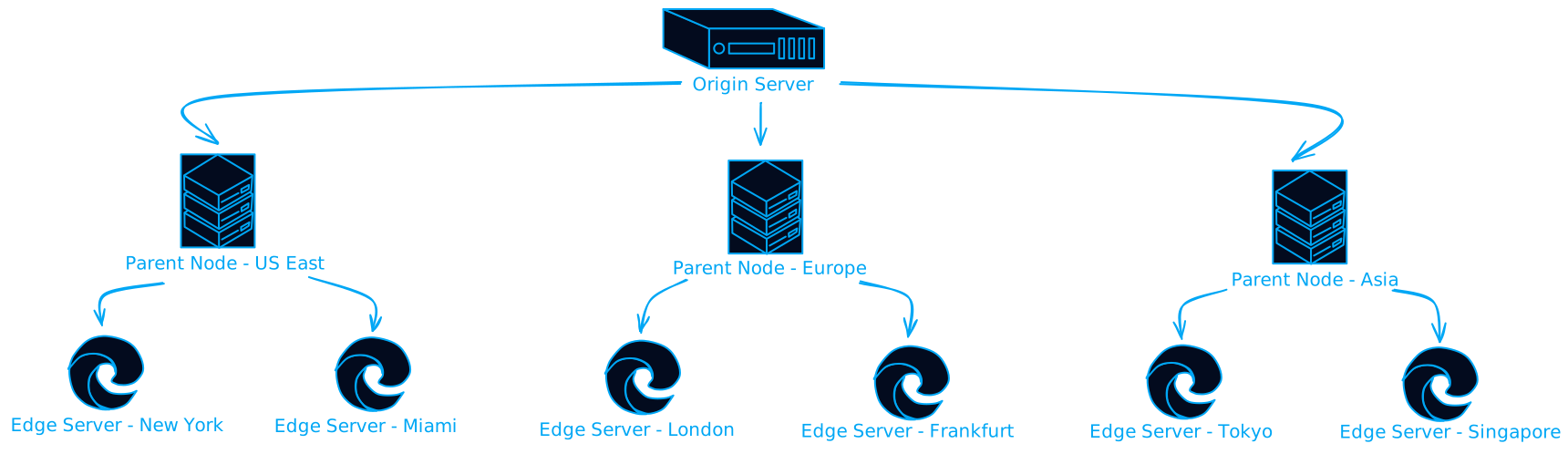
But here's where it gets interesting. Hierarchical architecture has a dirty little secret: it creates single points of failure. If your parent node in Europe goes down, all edge servers in that region are essentially blind. That's why smart CDN architects are moving beyond pure hierarchical models.
Peer-to-Peer Architecture: When Edge Servers Talk to Each Other
Imagine if your edge servers could share content directly with each other, like a group chat where everyone can help everyone else. That's P2P architecture in a nutshell. Instead of always going back to the parent node, edge servers can grab content from their neighbors.
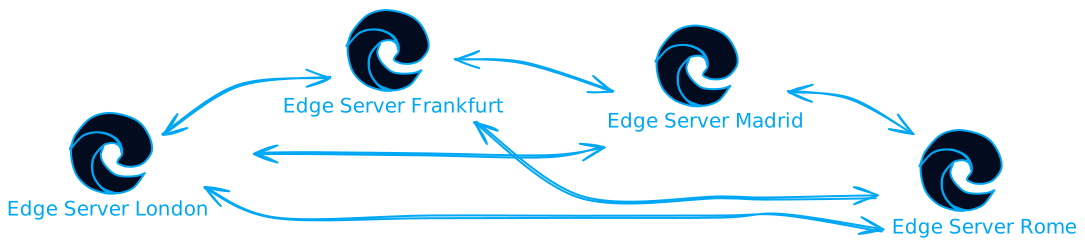
The beauty of P2P? Resilience. If one server goes down, the others can still communicate. The downside? Complexity. Managing a mesh network of edge servers is like herding cats, each with its own personality and quirks.
Hybrid Architecture: The Best of Both Worlds?
Most modern CDNs use hybrid architecture because, let's face it, pure approaches rarely work in the real world. You get the reliability of hierarchical structure with the resilience of P2P communication. It's like having a backup plan for your backup plan.
But here's the catch: hybrid architectures are notoriously difficult to debug. When something goes wrong, figuring out whether the issue is in the hierarchical layer or the P2P mesh can be like finding a needle in a haystack.
Federated CDNs: When CDN Providers Play Nice
Ever heard of CDN federation? It's when multiple CDN providers interconnect their networks and share resources. Think of it as the Avengers of content delivery, where different CDN providers team up to serve content more efficiently.
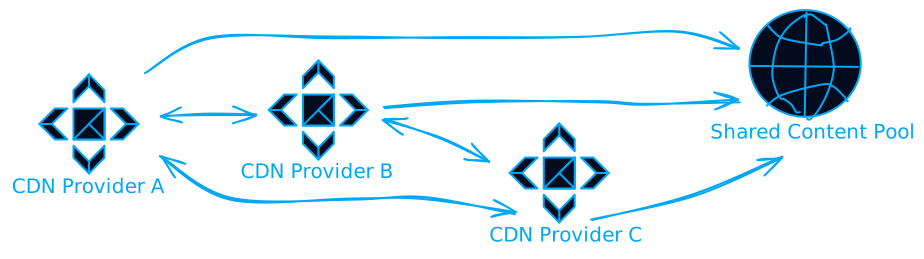
The promise is compelling: global reach without the massive infrastructure investment. The reality? Federated CDNs are still in their infancy, and getting different providers to play nice is harder than it sounds.
Performance and Scalability: Where the Rubber Meets the Road
Caching Strategies: It's Not Just About Storage
Everyone thinks caching is simple: store popular content closer to users. But modern caching strategies are way more sophisticated than that. Let's break down the approaches that actually matter:
Object Caching is your bread and butter. You cache entire files, images, videos, whatever. It's straightforward, but here's the twist: not all objects are created equal. A 4K video file needs different caching logic than a tiny CSS file.
Byte-Range Caching is where things get interesting. Instead of caching entire large files, you cache specific byte ranges. This is huge for video streaming. Users can jump to any point in a video without downloading the entire file first.
// Example of byte-range request
fetch('/video.mp4', {
  headers: {
    'Range': 'bytes=1000000-2000000'
  }
})
Hierarchical Caching creates a cache hierarchy where edge servers can pull content from other caches before hitting the origin. It's like having multiple levels of storage, each optimized for different access patterns.
But here's what most people miss: cache invalidation. It's not enough to cache content; you need to know when to throw it away. Get this wrong, and users see stale content. Get it right, and you've solved one of the hardest problems in distributed systems.
Load Balancing: The Art of Traffic Distribution
Load balancing in CDNs isn't just about distributing requests evenly. It's about making intelligent decisions based on geography, server health, network conditions, and even the type of content being requested.
Geographic Load Balancing seems obvious: send users to the nearest server. But "nearest" isn't always fastest. A server in the same city might be overloaded while one two cities away is sitting idle.
Anycast Routing is network-level magic. Multiple servers share the same IP address, and the network automatically routes traffic to the closest available server. It's elegant, but debugging anycast issues can be a nightmare.
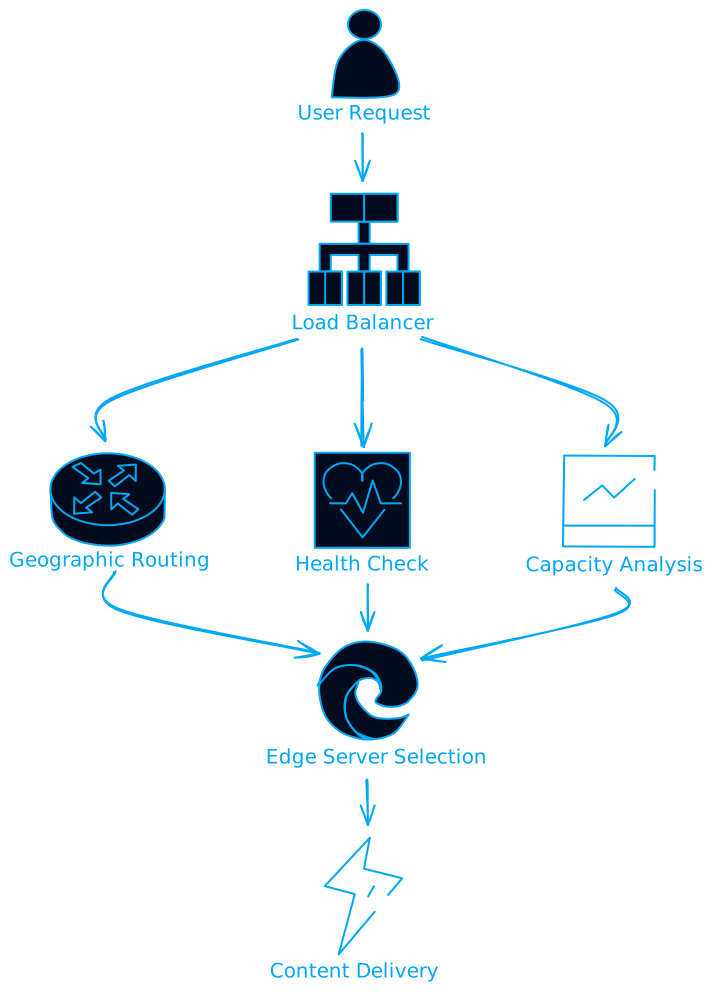
Dynamic Load Balancing uses real-time data to make routing decisions. Server CPU at 90%? Route traffic elsewhere. Network latency spiking? Find an alternative path. It's reactive load balancing that adapts to changing conditions.
Content Optimization: Making Every Byte Count
Content optimization is where CDNs can really shine. It's not just about delivering content faster; it's about delivering less content while maintaining quality.
Image Optimization is low-hanging fruit. Modern CDNs can automatically convert images to WebP or AVIF formats, resize them based on device capabilities, and compress them without visible quality loss. A single image optimization can reduce file sizes by 70% or more.
Minification removes unnecessary characters from code files. Whitespace, comments, long variable names, all gone. It might seem trivial, but when you're serving millions of requests, every byte matters.
// Before minification
function calculateUserScore(userActivity, timeSpent, engagementLevel) {
    // Calculate the final score based on multiple factors
    const baseScore = userActivity * 0.4;
    const timeBonus = timeSpent * 0.3;
    const engagementBonus = engagementLevel * 0.3;
    return baseScore + timeBonus + engagementBonus;
}

// After minification
function calculateUserScore(a,b,c){return a*.4+b*.3+c*.3}
Lazy Loading is about timing. Instead of loading everything at once, you load content as users need it. Images below the fold? Load them when users scroll. Video thumbnails? Load them when they come into view.
Security Considerations: The Dark Side of Content Delivery
DDoS Protection: When the Internet Attacks
CDNs are natural DDoS targets because they're designed to handle massive traffic volumes. But there's a difference between legitimate traffic spikes and malicious attacks.
Modern CDN DDoS protection works in layers:
- Rate Limiting: Block requests that exceed normal patterns
- Traffic Scrubbing: Filter out malicious packets
- Behavioral Analysis: Identify bot traffic vs. human traffic
- Capacity Absorption: Use the CDN's distributed nature to absorb attack traffic
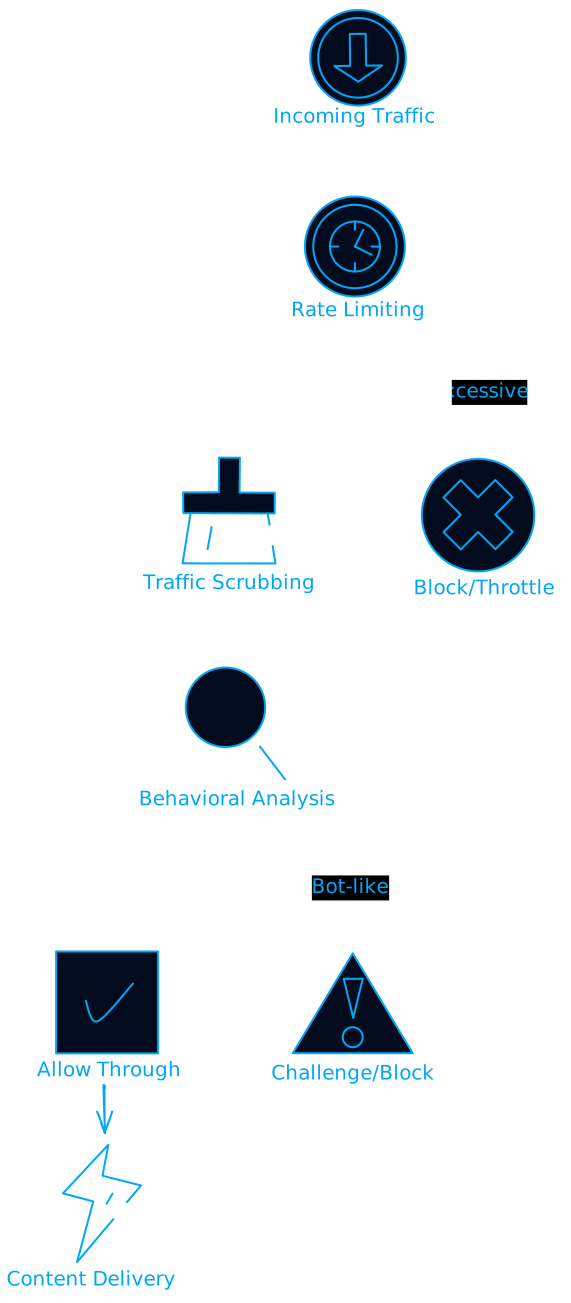
But here's the thing about DDoS protection: it's an arms race. Attackers get smarter, so defenses need to evolve constantly. What worked last year might be useless today.
Secure Content Delivery: Trust But Verify
HTTPS is table stakes now, but CDN security goes way beyond encryption in transit. You need to think about:
Content Integrity: How do you know the content hasn't been tampered with? Digital signatures and content hashes provide verification, but implementing them correctly is tricky.
Access Control: Not all content should be public. CDNs need sophisticated access control mechanisms that can handle everything from geographic restrictions to user-based permissions.
Web Application Firewalls (WAF): CDNs often include WAF functionality to filter malicious requests before they reach your origin servers. But configuring WAF rules is an art form that requires deep understanding of both your application and common attack patterns.
Emerging Trends: The Future of CDN Design
Edge Computing: When CDNs Become Computers
Edge computing is transforming CDNs from simple content caches into distributed computing platforms. Instead of just serving static files, edge servers can now run code, process data, and make real-time decisions.

This opens up incredible possibilities:
- Real-time image resizing based on device capabilities
- Personalized content generation at the edge
- A/B testing without origin server involvement
- Real-time fraud detection and blocking
But edge computing also introduces new complexities. Managing code deployments across thousands of edge servers is challenging. Debugging distributed edge functions can be a nightmare. And ensuring consistent behavior across different edge locations requires careful orchestration.
Serverless CDN Architecture: Pay-Per-Request Computing
Serverless CDNs take edge computing to the next level. Instead of running dedicated servers, you deploy functions that execute on-demand. It's like having a CDN that scales to zero when not in use and can handle massive spikes without pre-provisioning capacity.
The benefits are compelling:
- Zero infrastructure management
- Automatic scaling
- Pay only for what you use
- Global deployment with a single command
The challenges are real:
- Cold start latency
- Vendor lock-in concerns
- Limited execution time and memory
- Debugging distributed serverless functions
Intelligent Caching: When AI Meets Content Delivery
Machine learning is revolutionizing CDN caching strategies. Instead of relying on simple rules like "cache everything for 24 hours," intelligent caching systems can:
- Predict which content will be popular before it's requested
- Optimize cache eviction policies based on access patterns
- Automatically adjust TTL values based on content type and usage
- Identify and pre-cache trending content
# Simplified example of ML-driven cache prediction
def predict_cache_value(content_metadata):
    features = extract_features(content_metadata)
    popularity_score = ml_model.predict(features)

    if popularity_score > 0.8:
        return "cache_aggressively"
    elif popularity_score > 0.5:
        return "cache_normally"
    else:
        return "cache_minimally"
But AI-driven caching isn't magic. It requires massive amounts of data, sophisticated models, and constant tuning. Get it wrong, and you might cache content nobody wants while evicting popular content.
Real-World Implementation Challenges
The Multi-CDN Strategy Dilemma
Should you use one CDN provider or multiple? It's a question that keeps CTOs awake at night. Single CDN is simpler to manage but creates vendor lock-in and single points of failure. Multi-CDN provides redundancy and performance optimization but adds operational complexity.
Here's what a multi-CDN strategy looks like in practice:
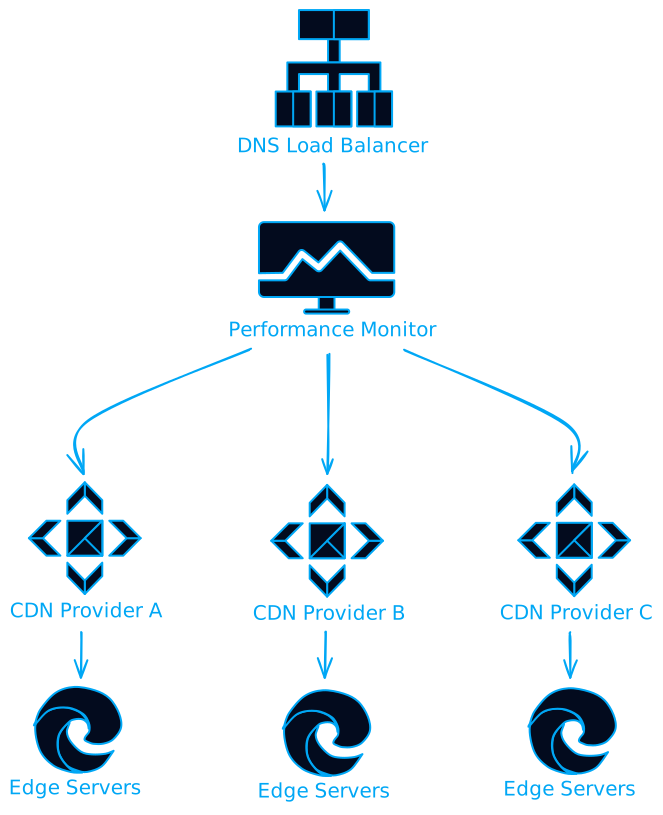
The complexity comes from:
- Managing different APIs and configurations
- Monitoring performance across providers
- Handling failover scenarios
- Optimizing costs across multiple billing models
Monitoring and Observability: You Can't Improve What You Can't Measure
CDN monitoring goes way beyond simple uptime checks. You need visibility into:
Performance Metrics:
- Cache hit ratios by location and content type
- Origin server load and response times
- Edge server resource utilization
- Network latency and throughput
User Experience Metrics:
- Real User Monitoring (RUM) data
- Core Web Vitals scores
- Geographic performance variations
- Device-specific performance patterns
Business Metrics:
- Cost per GB delivered
- Revenue impact of performance improvements
- Customer satisfaction scores
- Conversion rate correlations
The challenge is correlating all this data to make actionable decisions. A spike in cache misses might indicate a configuration issue, or it might be normal behavior for new content. Context is everything.
Cost Optimization: Making CDNs Affordable
Understanding CDN Pricing Models
CDN pricing is more complex than it appears. Most providers use tiered pricing based on data transfer volume, but the devil is in the details:
- Geographic pricing variations: Delivering content in Asia costs more than North America
- Request-based charges: Some providers charge per request, not just bandwidth
- Feature-based pricing: Advanced features like edge computing or WAF cost extra
- Commit discounts: Volume commitments can significantly reduce costs
Smart Caching for Cost Reduction
Intelligent caching strategies can dramatically reduce CDN costs:
// Example of cost-aware caching logic
function calculateCacheStrategy(content) {
    const deliveryCost = getDeliveryCost(content.size, content.region);
    const popularityScore = getPredictedPopularity(content);
    const storageCost = getStorageCost(content.size);

    const cacheValue = (popularityScore * deliveryCost) - storageCost;

    if (cacheValue > threshold) {
        return "cache_aggressively";
    } else {
        return "cache_selectively";
    }
}
The key is balancing cache storage costs against origin bandwidth costs. Sometimes it's cheaper to serve from origin than to cache content that's rarely accessed.
Performance Testing and Optimization
Synthetic vs. Real User Monitoring
Testing CDN performance requires both synthetic monitoring (automated tests from fixed locations) and Real User Monitoring (RUM) data from actual users.
Synthetic Monitoring provides:
- Consistent baseline measurements
- Early detection of performance regressions
- Ability to test from specific geographic locations
- Controlled testing conditions
Real User Monitoring reveals:
- Actual user experience variations
- Performance on different devices and networks
- Geographic performance patterns
- Impact of third-party dependencies
The magic happens when you combine both approaches to get a complete picture of CDN performance.
A/B Testing CDN Configurations
CDN optimization isn't guesswork; it's science. A/B testing different configurations helps identify what actually improves performance:
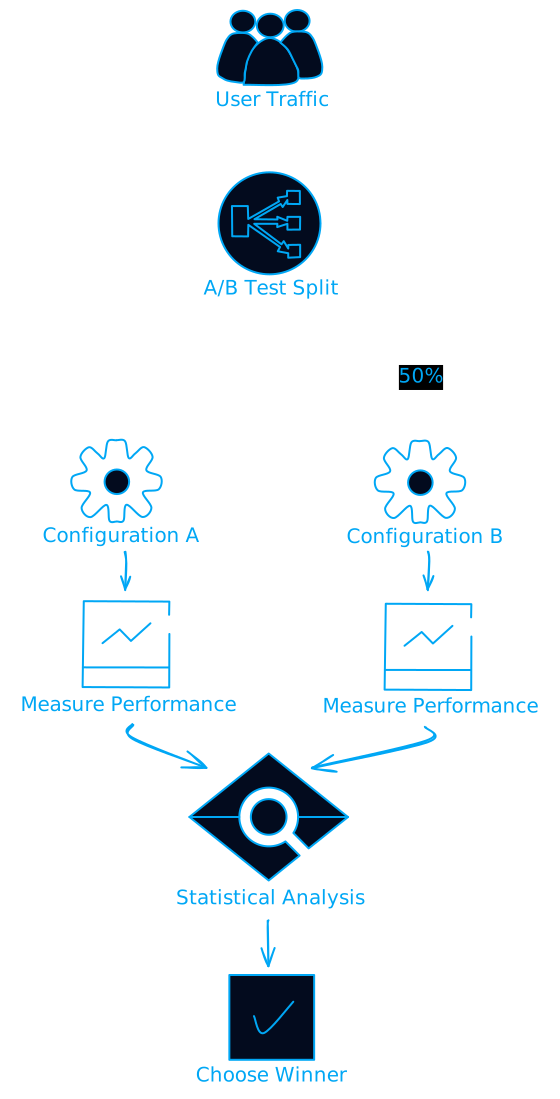
Test variables might include:
- Cache TTL values
- Compression algorithms
- Image optimization settings
- Edge server selection logic
The Bottom Line: CDN Design That Actually Works
Building a high-performance CDN isn't about following a checklist; it's about understanding the tradeoffs and making informed decisions based on your specific requirements.
Start with your users: Where are they located? What devices do they use? What's their tolerance for latency? These questions should drive your architectural decisions.
Plan for failure: Every component will fail eventually. Design your CDN architecture with redundancy and graceful degradation in mind.
Measure everything: You can't optimize what you don't measure. Invest in comprehensive monitoring and analytics from day one.
Iterate constantly: CDN optimization is an ongoing process, not a one-time project. User behavior changes, content evolves, and technology advances.
The future of CDN design is exciting. Edge computing, AI-driven optimization, and serverless architectures are opening up new possibilities. But the fundamentals remain the same: deliver content fast, reliably, and securely.
Whether you're building a CDN from scratch or optimizing an existing deployment, remember that the best CDN design is the one that serves your users' needs while meeting your business objectives. Everything else is just engineering details.
Want to dive deeper into CDN architecture? The landscape is constantly evolving, and staying current requires continuous learning. Consider following CDN provider blogs, attending networking conferences, and experimenting with different architectures in test environments.
