Back-of-the-Envelope Calculations: The Secret Weapon Every System Designer Needs
Back-of-the-Envelope Calculations: The Secret Weapon Every System Designer Needs
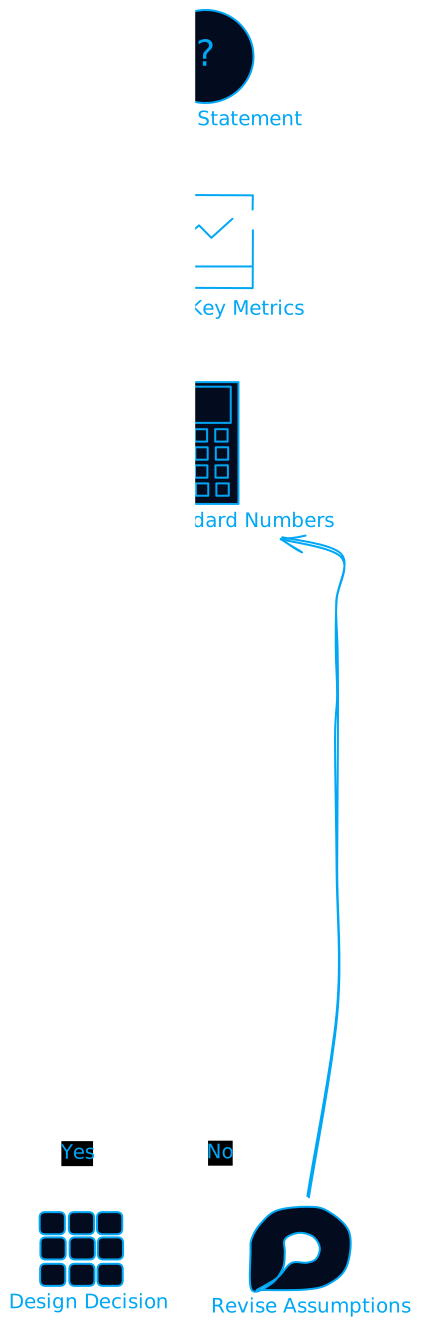
You know that feeling when someone asks you to estimate how many servers you'd need for a million users, and you just... freeze? Yeah, we've all been there. The thing is, most engineers think they need to pull out spreadsheets and run complex simulations to answer these questions. But here's the truth: some of the best system architects I know can ballpark these numbers on a napkin in under 5 minutes.
Welcome to the world of back-of-the-envelope calculations (BOTECs) – the art of making surprisingly accurate estimates with nothing but basic math and a few key numbers you should have memorized.
Why Your Brain Needs This Skill (And Why School Didn't Teach It)
Let's be real for a second. In school, they taught us to be precise. Show your work. Get the exact answer. But in the real world of system design, precision is often the enemy of progress. You don't need to know that your system will handle exactly 47,293 requests per second. You need to know if it's closer to 50K or 500K, because that determines whether you need 5 servers or 50.
BOTECs are like having a superpower in technical discussions. While everyone else is saying "we need to research this," you're already sketching out the rough architecture on a whiteboard.
The Numbers You Need to Memorize (Yes, Actually Memorize)
Here's the thing about BOTECs – they only work if you have the right reference points burned into your brain. Think of these as your mental toolkit:
Powers of Two (Your New Best Friends)
| Power | Approximate Value | What It Means |
|---|---|---|
| 2^10 | ~1K | 1 KB |
| 2^16 | ~65K | 64 KB |
| 2^20 | ~1M | 1 MB |
| 2^30 | ~1B | 1 GB |
| 2^40 | ~1T | 1 TB |
Why these matter: When someone says "we have 100 million users," you immediately think "that's about 2^27, so we're in the hundreds of millions range." This helps you scale your thinking appropriately.
Latency Numbers That Actually Matter
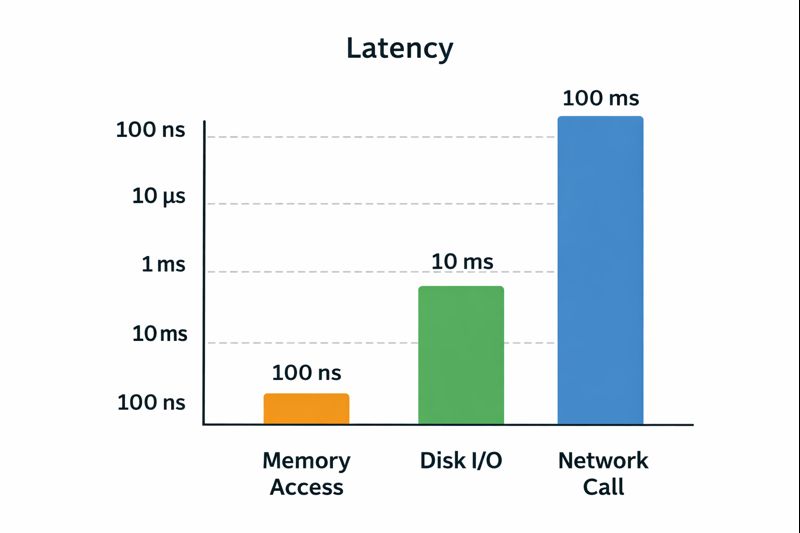
Here's where most people get tripped up. They memorize the famous "latency numbers every programmer should know" but then can't apply them. Let me give you the practical version:
- L1 cache: ~1 ns (basically instant)
- RAM access: ~100 ns (still basically instant)
- SSD read: ~100 μs (fast enough for most things)
- Network within datacenter: ~500 μs (acceptable)
- Cross-continent network: ~100 ms (noticeable to users)
The real insight? Anything under 1ms is "fast," anything under 100ms is "acceptable," and anything over 1 second is "slow."
Real-World BOTEC in Action: The Social Media Platform
Let me walk you through a real example. Say you're designing a Twitter-like platform and someone asks: "How much storage do we need for a year?"
Here's how a seasoned engineer thinks through this:

Step 1: Start with users
- 100 million active users (round number, easy to work with)
Step 2: Estimate behavior
- Each user tweets ~10 times per day (seems reasonable)
- That's 1 billion tweets per day
Step 3: Calculate storage per tweet
- Average tweet: ~280 characters
- Each character: ~1 byte (ASCII)
- So ~280 bytes per tweet
Step 4: Do the math
- 1B tweets × 280 bytes = 280 GB per day
- 280 GB × 365 days ≈ 100 TB per year
Step 5: Add the reality check
- This is just text. What about metadata, indexes, replication?
- Multiply by 3-5x for safety: 300-500 TB per year
Boom. In 2 minutes, you've got a storage estimate that's probably within an order of magnitude of the real answer. And honestly? That's good enough for most architectural decisions.
The Server Sizing Game: How Many Boxes Do You Need?
This is where BOTECs really shine. Let's say you need to handle 10,000 requests per second. How many servers?
# The basic BOTEC formula
requests_per_second = 10000
requests_per_server = 1000  # Conservative estimate
servers_needed = requests_per_second / requests_per_server
# Result: 10 servers

# But wait, add some reality:
servers_with_redundancy = servers_needed * 2  # For failover
servers_with_growth = servers_with_redundancy * 1.5  # For growth
# Final answer: ~30 servers
The key insight here is that you're not trying to be exact. You're trying to understand the scale. Are we talking about 10 servers or 1000 servers? Because that changes everything about your architecture.
Different Server Types for Different Problems
Not all servers are created equal, and understanding the landscape helps you make better estimates:
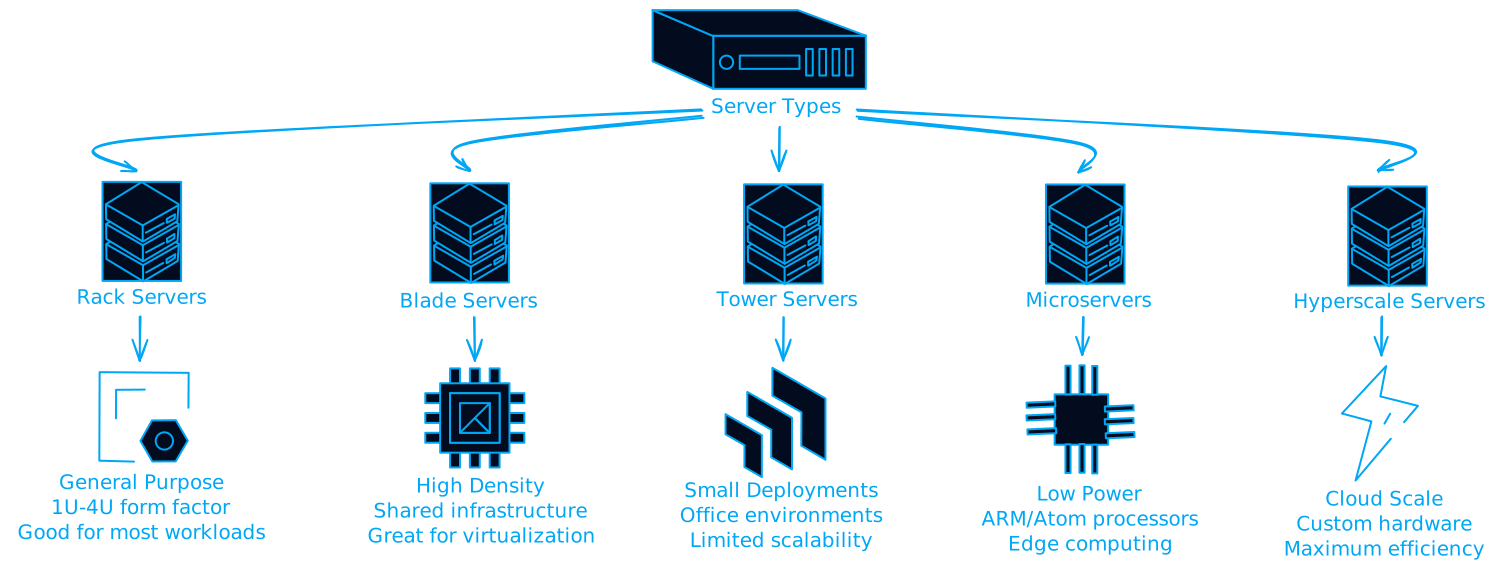
Rack servers are your bread and butter – think of them as the Honda Civic of servers. Reliable, versatile, and you can fit a bunch of them in a standard rack.
Blade servers are like living in an apartment building. You share power and cooling infrastructure, which makes them super efficient when you need lots of compute in a small space.
Microservers are the new kids on the block. They're perfect when you have lots of small, independent workloads. Think of them as the microservices of hardware.
The HTTP Request Reality Check
Here's something that trips up a lot of people doing BOTECs: not all requests are created equal. Understanding the different types helps you estimate load more accurately:
- GET requests: Read-only, cacheable, usually fast
- POST requests: Create new data, hit the database, slower
- PUT requests: Update entire resources, moderate complexity
- PATCH requests: Partial updates, can be tricky
- DELETE requests: Remove data, often the fastest writes
When someone says "we handle 100K requests per second," your next question should be: "What's the read/write ratio?" Because 90K GETs + 10K POSTs is very different from 50K GETs + 50K POSTs in terms of infrastructure needs.
When BOTECs Go Wrong (And How to Avoid It)
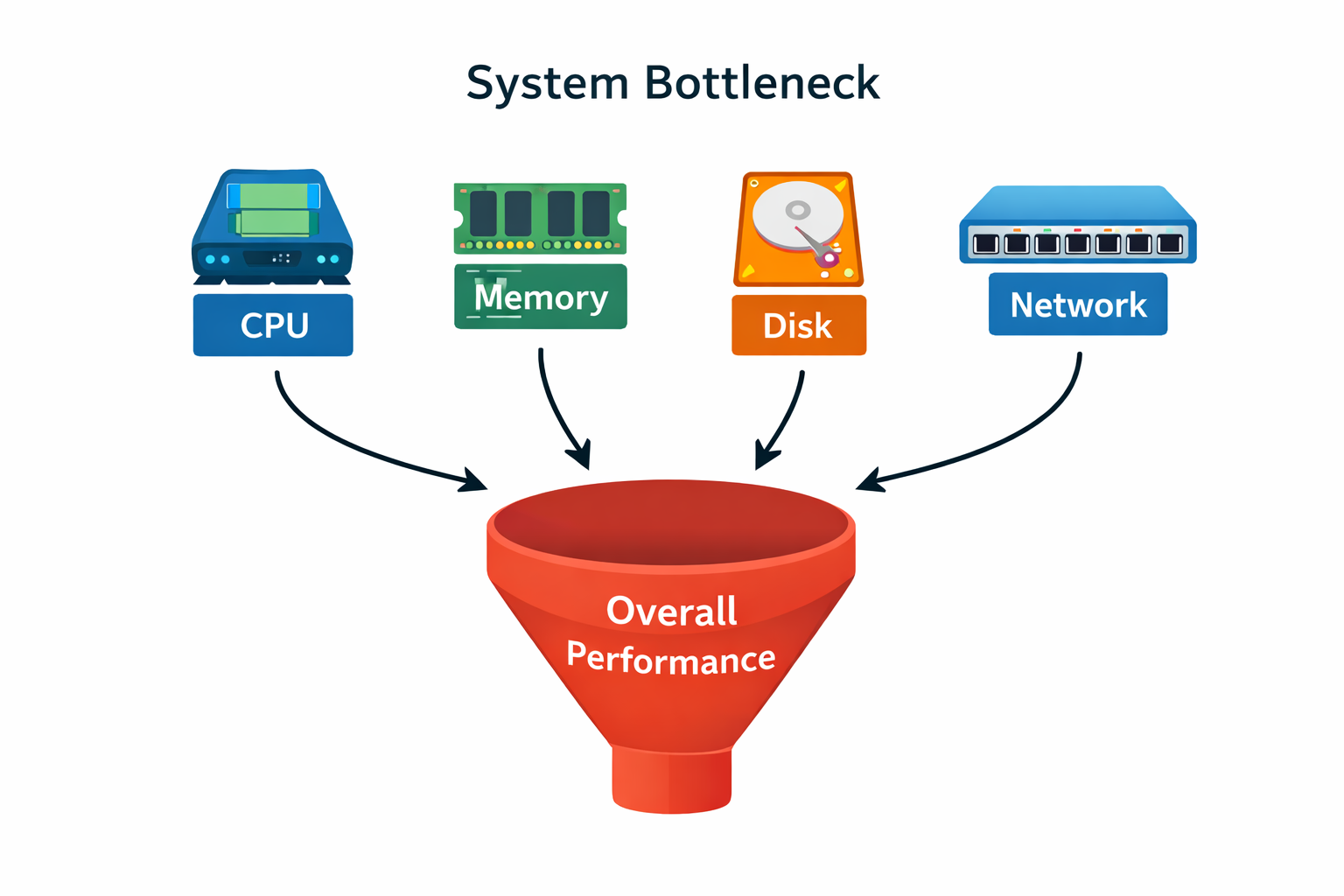
Let me tell you about the time I estimated we'd need 10 servers and we ended up needing 100. The problem? I forgot about the database bottleneck. Each request was doing 5 database queries, and I was only thinking about web server capacity.
Common BOTEC mistakes:
- Forgetting about bottlenecks: Your web servers might handle 1000 RPS, but can your database?
- Ignoring data growth: That 1TB of storage becomes 10TB real quick when users start uploading videos
- Not accounting for spikes: Your average load might be 1000 RPS, but what about during the Super Bowl?
- Underestimating overhead: Monitoring, logging, backups – they all eat resources
The Art of Sanity Checking Your Numbers
Here's the secret sauce: always do a sanity check with a different approach. If you calculated you need 100TB of storage, try working backwards:
100TB = 100,000 GB
If each user generates 1GB per year
That supports 100,000 users
Does that match your user estimates?
Or use real-world comparisons:
- "Netflix streams about 15 petabytes per day"
- "Facebook processes about 4 petabytes of data daily"
- "Google handles about 8.5 billion searches per day"
If your estimates are wildly different from these benchmarks, you might want to double-check your math.
Building Your BOTEC Muscle Memory
The only way to get good at this is practice. Start small:
- Estimate your own usage: How many emails do you send per day? How much data do you use?
- Question everything: When you see a number in the news, try to reverse-engineer it
- Practice with friends: Make it a game – estimate the storage needs for Instagram or the bandwidth for Zoom
The Bottom Line: Why This Matters More Than Ever
In our world of infinite cloud resources and auto-scaling everything, you might think BOTECs are becoming irrelevant. But here's the thing – they're more important than ever.
When you're making architectural decisions, you need to understand the order of magnitude you're dealing with. Are you building something that needs to handle thousands of users or millions? Because the architecture for those two scenarios is completely different.
BOTECs help you:
- Make faster decisions in meetings
- Avoid over-engineering solutions
- Spot potential problems early
- Communicate effectively with non-technical stakeholders
Your Next Steps
Start building your BOTEC toolkit today:
- Memorize the key numbers (powers of 2, basic latencies)
- Practice on real problems (estimate the infrastructure for your current project)
- Always sanity check (use multiple approaches to verify your estimates)
- Learn from mistakes (when your estimates are off, figure out why)
Remember, the goal isn't to be perfect. It's to be useful. A rough estimate that helps you make a decision is infinitely more valuable than a precise calculation that takes too long to compute.
The next time someone asks you how many servers you'd need for a million users, you won't freeze. You'll grab a napkin, do some quick math, and give them an answer that's probably within 2x of the real number. And in the world of system design, that's more than good enough to get started.
Want to dive deeper into system design? Check out these resources for more advanced techniques and real-world case studies. And remember – the best system designers aren't the ones with the most precise calculations, they're the ones who can make good decisions quickly with incomplete information.