AI Governance
AI Governance: The Wild West Is Getting Sheriffs (Finally)
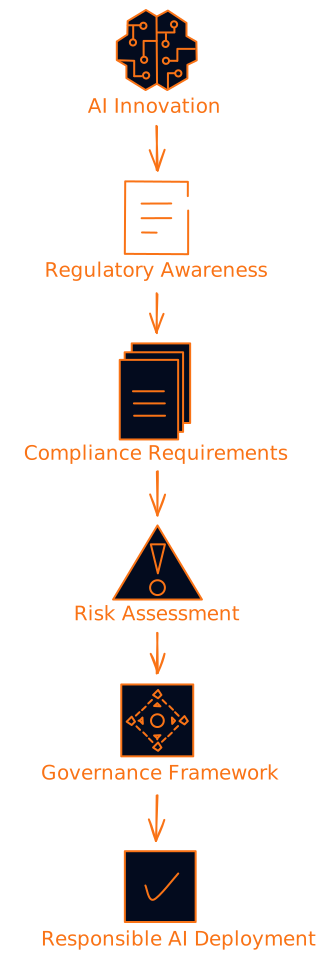
So you thought AI was just about cool chatbots and image generators? Think again. We're now in the phase where lawyers, regulators, and compliance officers are having nightmares about AI systems making decisions that could land companies in court, cost millions, or worse, hurt real people.
The Reality Check Nobody Wanted
Here's the thing about AI governance that nobody talks about at tech conferences: it's not optional anymore. While everyone was busy building the next GPT killer, governments around the world were quietly drafting laws that could shut down your AI project faster than you can say "algorithmic bias."
The EU just dropped the AI Act, which is basically the GDPR of artificial intelligence. Colorado became the first US state to regulate high-risk AI systems. And this is just the beginning. We're moving from "move fast and break things" to "move carefully or get sued into oblivion."
Why Everyone's Freaking Out About AI Governance
The Liability Nightmare
Remember when Facebook's ad targeting algorithm was found to discriminate in housing ads? Or when Amazon's hiring AI turned out to hate women? Those weren't just PR disasters, they were legal nightmares that cost millions in settlements and fines.
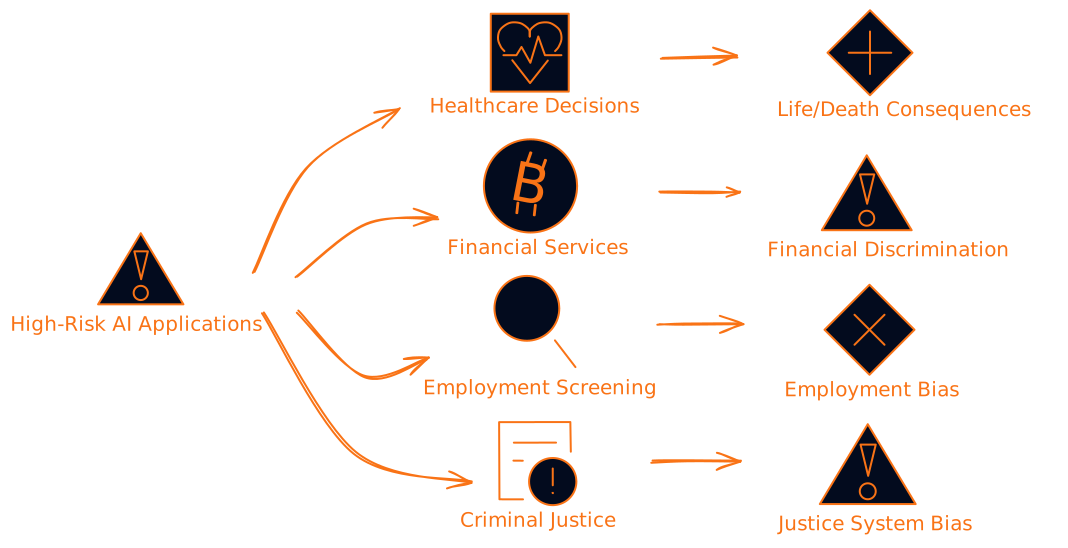
Now imagine that happening with AI systems that make decisions about healthcare, criminal justice, or financial services. The stakes are getting higher, and the lawyers are getting hungrier.
The Patchwork Problem
Right now, AI regulation is like a crazy quilt. You've got federal guidelines, state laws, industry standards, and international regulations all overlapping in confusing ways. A company operating in multiple states might need to comply with completely different AI rules depending on where their users are located.
The Shared Responsibility Mess
Here's where it gets really fun. New laws like Colorado's AI Act are creating a "shared responsibility" model. AI developers have to assess risks and set usage guidelines, while companies deploying the AI have to follow those guidelines and monitor performance.
It's like having two people responsible for driving the same car. When something goes wrong, who's liable? The person who built the car or the person driving it? Spoiler alert: probably both.
The Real-World Impact Stories
Healthcare's High-Stakes Game
Hospitals are using AI to decide who gets priority care, which treatments to recommend, and how to allocate resources. When these systems make mistakes or show bias, people literally die. That's why healthcare AI is getting some of the strictest oversight.
Financial Services' Bias Problem
Banks and lenders are using AI for credit decisions, loan approvals, and risk assessment. But if your AI systematically denies loans to certain demographic groups, you're not just facing bad PR, you're facing federal discrimination lawsuits.
Employment's Fairness Challenge
Companies are using AI to screen resumes, conduct interviews, and make hiring decisions. But if your AI hiring tool discriminates against protected classes, you're violating employment law in a very expensive way.
Building a Governance Framework That Actually Works
Start with Risk Assessment
Not all AI is created equal. A recommendation algorithm for Netflix carries different risks than an AI system deciding medical treatments. You need to categorize your AI systems by risk level and apply governance accordingly.
High-risk systems need:
- Extensive testing and validation
- Human oversight and intervention capabilities
- Regular audits and monitoring
- Detailed documentation and explainability
Low-risk systems might just need:
- Basic testing and quality assurance
- Standard monitoring and logging
- Regular reviews and updates
Implement the Three Pillars
Transparency: People need to know when AI is making decisions about them. This isn't just good ethics, it's increasingly required by law.
Accountability: Someone needs to be responsible when AI systems go wrong. This means clear ownership, audit trails, and incident response procedures.
Fairness: AI systems need to treat people fairly and avoid discrimination. This requires bias testing, diverse training data, and ongoing monitoring.
Create Cross-Functional Teams
AI governance isn't just a tech problem, it's a business problem. You need lawyers, ethicists, domain experts, and business stakeholders working together with your technical teams.
The Compliance Checklist Nobody Wants But Everyone Needs
Data Governance
- Where did your training data come from?
- Do you have the right to use it?
- Is it representative and unbiased?
- How are you protecting sensitive information?
Model Governance
- Can you explain how your AI makes decisions?
- Have you tested for bias and fairness?
- Do you have human oversight mechanisms?
- Can you audit and trace decisions?
Deployment Governance
- Are users informed about AI involvement?
- Do you have monitoring and alerting systems?
- Can you quickly shut down or modify systems?
- Do you have incident response procedures?
Documentation and Reporting
- Can you prove compliance to regulators?
- Do you have audit trails for decisions?
- Are you tracking performance and bias metrics?
- Can you demonstrate responsible AI practices?
The Emerging Regulatory Landscape
The EU AI Act: The New Sheriff in Town
The EU's AI Act is the most comprehensive AI regulation to date. It categorizes AI systems by risk and imposes requirements ranging from transparency obligations to complete bans on certain applications.
High-risk AI systems (like those used in hiring, lending, or healthcare) face strict requirements:
- Conformity assessments before deployment
- Risk management systems
- High-quality training data
- Transparency and human oversight
- Accuracy and robustness testing
US State-Level Innovation
While federal AI regulation in the US has been slow, states are taking action. Colorado's AI Act focuses on high-risk AI in employment and consumer contexts, requiring:
- Impact assessments for high-risk AI
- Disclosure requirements
- Bias testing and mitigation
- Consumer rights and remedies
The Global Domino Effect
Other countries are watching and developing their own AI regulations. Canada, the UK, Singapore, and others are all working on AI governance frameworks. If you're operating globally, you'll need to navigate an increasingly complex regulatory landscape.
Practical Steps to Get Started
1. Inventory Your AI Systems
You can't govern what you don't know about. Create a comprehensive inventory of all AI systems in your organization, including:
- What they do and how they work
- What data they use
- Who they affect
- What risks they pose
2. Assess and Categorize Risks
Not all AI systems need the same level of governance. Categorize your systems by risk level and apply appropriate controls.
3. Establish Governance Processes
Create clear processes for:
- AI development and testing
- Deployment and monitoring
- Incident response and remediation
- Regular audits and reviews
4. Train Your Teams
Everyone involved in AI development and deployment needs to understand governance requirements, ethical considerations, and compliance obligations.
5. Monitor and Adapt
AI governance isn't a one-time thing. You need ongoing monitoring, regular reviews, and the ability to adapt as regulations and best practices evolve.
The Bottom Line
AI governance isn't about slowing down innovation, it's about making sure innovation doesn't blow up in your face. The companies that figure out how to build responsible AI systems while maintaining competitive advantage will be the ones that thrive in the regulated AI landscape.
The wild west days of AI are ending. The question isn't whether you need AI governance, it's whether you'll implement it proactively or wait until a regulator forces you to. And trust me, proactive is a lot cheaper and less painful.
The future belongs to organizations that can innovate responsibly, not just quickly. Start building your AI governance framework now, because the sheriffs are coming to town, and they're bringing handcuffs.
Remember: in the world of AI governance, it's better to be paranoid and compliant than innovative and sued. The most successful AI companies will be those that master both technology and governance.